Modelling of sandpads for dynamic production lines at cement plants
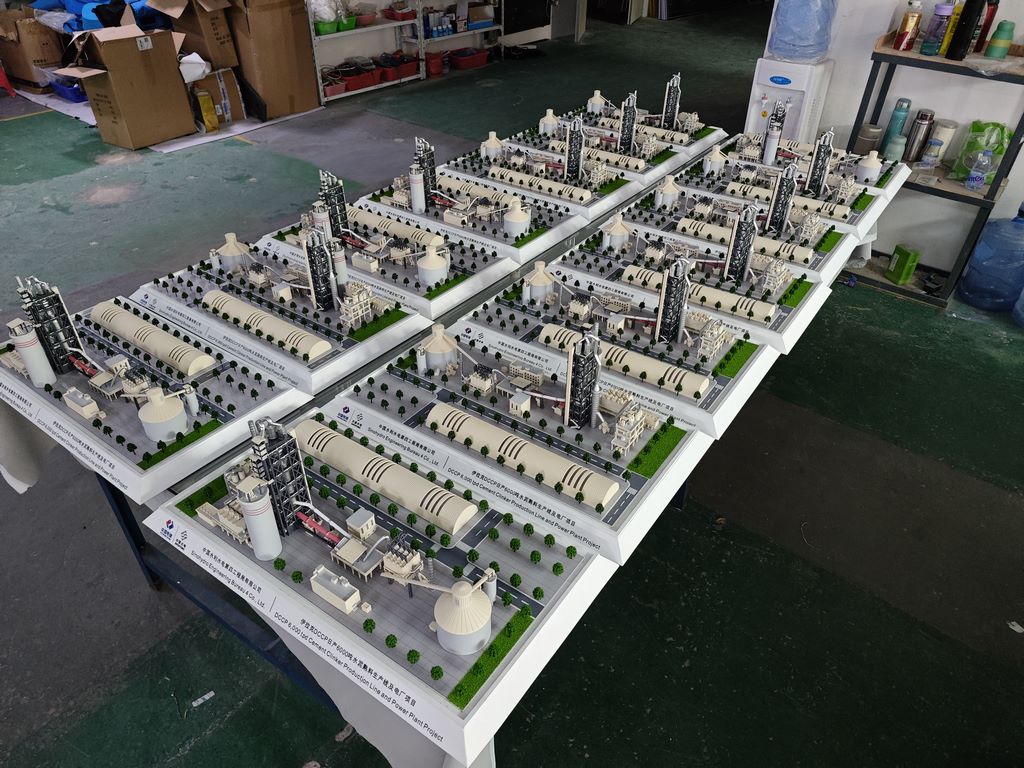
The Cement Plant Dynamic Production Line Sand Table Modeling, which is based on a prototype of the whole process line of the real cement plant, focuses on the four main cores of “process integrity, equipment specialization, dynamic simulation, security compliance”, which cover all aspects of the Cement Plant Production Line and associated facilities (showing extension, safety training, production planning, process research, general awareness, etc.) and integrates the traditional sand making processes, digitally dynamic combinations, fine-coding techniques, cement production process design and plant site restoration techniques, in accordance with industry specifications for construction materials, standards for cement production and the principle of proportional reduction, with a series of specialized processes (showing extension, safety training, production planning, process research, science outreach, etc.), integrating the traditional sand production processes, digitally dynamic technology, fine-coding techniques, Cement process simulation and plant site restoration techniques, using a series of dynamic mapping, process retrofitting, and high-level engineering techniques for the production of the Cement plant.。Its core, which is distinguished from the static model of ordinary cement plants, focuses on “production dynamics, process coherence, equipment synergy, landscape authenticity” and is able to refine the physical structure, specifications and operational features of the original types of cement production equipment and to present clearly, through dynamic demonstrations, the core process logic of the cement plant's “material break-up-average-preheating-preheating-burning-cooling-polling-packaging-ware storage” and the coordinated operational effects of the equipment, links and components, taking into account the demonstration, planning, training and practicality of the cement plant, the cement plant operator, the cement plant, the building materials planning and design institute, the building of a school, the science workshop, and the building materials control department.。As a core tool for displaying and supporting the cement plant production line, it is widely applied to the whole chain of cement plant project planning, staff safety and operational training, production process optimization workshops, cement equipment promotion negotiations, building materials science, industry fair displays, etc., the production process covers matching of needs, site mapping of cement plants, parameter collection, proportionality determination, material selection, core equipment recapturing, site setting, installation of dynamic linked systems, fine detailing, trial collection, post-delivery delivery, etc., as well as the need for fine sand making processes, precision in cement production processes, cement equipment doctrine, safety and environmental norms in the construction industry, perfect integration of process, industry expertise, technological innovations and practicality, and, more importantly, for efficient cement plant operation, efficient production, technology diffusion, project location, and important assistive vehicles.。
Relevant questions and answers
The key to the modelling of the dynamic production line of the cement plant is to balance “equipment reduction accuracy, dynamic interconnectivity fluidity, production landscape suitability” with “durable maintenance, safety compliance”, where users often question the core points of dynamic reduction, landscape adaptation, equipment durability, etc. The following is a detailed answer to the two most core and concise questions, combining industry practice experience to help clients avoid risks and match needs with precision.
Question one: How can the complex process of the cement plant ' s production line, which covers multiple high temperature, high pressure production chains, a variety of different types of equipment and a wide variety of functions (such as core equipment such as rotary kilns, cement grinding, etc.) ensure that model details of production equipment are accurately reduced to the production process, while achieving a dynamic flow of the whole process and fit the actual production scene?
Answer: The core is “production process dismantling + precision mapping + dynamic alignment” and the three are working together to guarantee reduction, dynamic fluidity and the authenticity of the scene, matching the core characteristics of the cement plant production line。First, the coordinated logic of deep decomposition of the cement production process and equipment, which interfaces with cement plant operators, production technical teams and cement equipment manufacturers, defines the size of the cement production line, the core production process, equipment configuration that the customer needs to demonstrate, combing the complete production process of “material break-up-equalize-preheating-preheating-turn kiln preheating-cooking-cooling-cooling-cement grinding-packaging-packaging” and differentiating the functional positioning and equipment configuration of the production chain, such as the burn chain focusing on the rotary kiln, the preheater, the grinding chain focusing on the link between the cement grinding and delivery equipment, identifying the operational tracks of the equipment, the connecting nodes and the production rhythm, and ensuring that the production direction is aligned with the specifications of the real cement production line and construction industry.。Secondly, precise mapping is based on the collection of authoritative information such as design drawings for the cement plant ' s production line, a manual on the parameters of cement equipment, factory layout documents, scene photographs, production process flow charts, the organization of specialized mapping teams into the cement plant area, production line sites, the accurate recording of core equipment such as material shredders, rotary kilns, cement grinders, preheaters, sizes, placements, structural details, as well as transmission lines, equipment interfaces, medium control room layout, environmental treatment facility configurations, using a combination of 3D scan + 3D printing + manual precision, and the fine retorting of core equipment and ancillary facilities, with a focus on the control back of the kiln ' s cylinder structure, cement grinding parts, preheater hierarchy, etc., in order to ensure full accuracy of the data and to eliminate the percentage of equipment lost, process error, production logic deviations.。Finally, the dynamic resonance is balanced with the construction of an exclusive dynamic interconnection simulation system, simulation of the actual production rhythm of the cement plant, visualization of the co-operation between the production chain and the whole process of cement production through light flow, a dynamic demonstration of equipment (e.g., rotary kiln rotation, feedstock transport, cement grinding, packaging operation), simulation of the high temperature scalding effect of the rotary kiln with light evolution, optimization of the dynamic interconnectivity logic, multiple rotation of the operating rhythms of the equipment on a trial basis, ensuring that the dynamic flow of the whole production line is smooth and accurate, both in the original cement plant production line and intuitively presenting the co-ordinate logic of the cement production process and equipment, along with training, planning, displaying, etc., the actual demand for exercise。
Question two: how do we ensure that the models are suitable for complex environments, safe and durable, while allowing for later maintenance?
Answer: Focus on the various types of Cement Fitting Plant use scenarios, taking into account durability, environmental suitability, dynamic stability and maintenance ease, through "situation-based selections + process enhancement + dynamic optimization + long-lived sales "。First, the selected materials fit the complex environmental and dynamic operating needs of the cement plant, giving priority to materials that are resistant to grinding, dust resistance, anti-age resistance and high temperature resistance: the core equipment model selects materials such as high-strength industrial glass steel, grinding alloys, high-temperature engineering plastics, which are resistant to the erosion of the cement plant ' s dust, temperature variability and depletion resulting from long-term dynamic operations and are not susceptible to deformation, erosion, wear and tear;Models for simulating high-temperature components such as rotary kilns, preheaters and the selection of high-temperature-resistant materials to ensure long-term stability of high-temperature simulations;Dynamic-connected components, transmission systems selected with sophisticated durable, low-depletion, dust-proof fittings to ensure long-term stability of dynamic-connection, avoidance of dust, vibration-induced cartons, malfunctions;Disk base is selected with high-strength light material, balancing solidity with portability, different scenes in suitable plant areas, exhibition halls, exhibitions, etc.。Second, process enhancement and stabilization optimized, equipment assembly and scene collage using seamless + multiple fixed processes to reinforce dynamic transfer areas to prevent long-term dynamic operation, looseness, loss and deterioration during handling;Dustproofing, reinforced processing of loss-prone dynamicly connected components, line interfaces, optimization of the layout of circuits and transmission systems, marking of security alerts, avoidance of dust entry, short circuit circuits or stationing of moving parts, etc., to ensure stable operation of the dynamic connection system;The surface is technically resistant, dustproof sprayed, with precision reduction of the actual appearance, industrial tone of the cement plant equipment and scene, which is not prone to fade, scrape and dust, and which is easily cleaner on a day-to-day basis and suitable for the complex environment where the cement plant is dustier;Optimizing the design of dynamic-connected systems, moving components, adding dust-proof sealing devices, reducing energy consumption and loss of components, improving operational stability and service life and adapting to long-term physical exercise and presentation needs。Finally, lower maintenance costs after long-term sale, with training in dynamic connection system operations, equipment maintenance at delivery, with guidance on commonly available spare parts (e.g., gear transfer, utensils, etc.) and dynamic system upgrades, identifying routine cleaning, component repair, system commissioning techniques;Establishment of a 24-hour after-sales response mechanism for fast-track remote guidance or door-to-door processing of modules loose, equipment breakdown, dynamic connection failure, and wear and tear of moving components;Provide long-term technical support and upgrading services, adapt to the need for technological upgrades of production lines at cement plants, equipment adaptations and process optimization, allow for partial upgrading of dynamic interface systems and equipment details of models without the need for a complete back-up, significantly reduce the cost of later maintenance and upgrades, and ensure that the long-term stability of the sandpas plays a dynamic and supportive role。
Core benefits of the modeling of the dynamic production line at cement plants
For clients such as cement plant operators, cement equipment manufacturers, construction materials planning and design institutes, construction materials colleges, etc., the production of dynamic sand table models for cement plants not only creates specialized, dynamic and practical exclusive displays and assistive tools, but also contributes to the promotion of cement equipment, training to land, site planning and branding, providing practical support for high-quality development in the construction materials industry, combining industry practice with the following benefits:
First, visualization of the whole process of cement production and enhancement of impact and science performance。Cement production processes are complex, complex and contain abstract elements such as high temperature burning, and traditional drawings, videos are difficult to articulate in equipment layouts, production processes and dynamic operating logic。Sand Table models allow the cement plant to concentrate intuitive stereomass, core equipment, production scenes, with real dynamic correlations, with a clear picture of the complete production of cement from raw materials to finished products and a comprehensive understanding of the core logic of cement production processes, equipment functions and production within a short period of time, both for the understanding of the enterprise ' s internal staff and for visualization of the production power and standard operating levels of the cement plant to the outside world and the regulatory authorities, breaking the subtle barriers of building materials and displays and raising the visibility of shock and scientific excellence。
Second, it optimizes the planning and production process of the Assisted Cement Plant and reduces the planning error costs. When the cement plant operates, the building materials planning and design complex plans for the construction of new cement plants, the adaptation of old production lines, and the optimization of production processes, it is possible to present the programme in a pallet visual sense, simulate the different equipment layouts, adjustments to production processes, production efficiency, safety compliance and environmental effects under the dynamic interconnectivity model, pre-screen conflict of equipment layouts, poor process interfaces, inappropriate equipment selection and production bottlenecks, without the need for on-site physical error, significantly shortening the planning and retrofitting cycle, reducing the planning error and subsequent overhaul costs, upgrading the scientific, feasibility and practicality of the planning and transformation programme, and helping the cement plant to operate efficiently, safely and environmentally soundly.
Third, adapt to multiple scenarios, enhance tool reuse and practical value。Multiple scenes such as showcasing, staff training, craft workshops, client talks, industry fairs, science education, etc. of the cement factory dynamic production line, need not be duplicated for a single scene to significantly increase reuse。For example, it could be used to train cement plant staff in safety and operations, visualize the operating specifications of equipment, safety precautions, trouble-shooting methods, circumvent the safety hazards associated with high temperature, high pressure, dust from real cement plant production lines, shorten the training cycle, reduce training costs and upgrade staff safety operating skills and emergency disposal capabilities;It can be used in process studies to simulate the effects of different process adjustments, optimize production processes, improve production efficiency and reduce energy consumption;It can be used for customer negotiation, visualizing the suitability and production of cement equipment, enhancing customer recognition and facilitating the extension of cement equipment and cooperation Land。
Fourth, highlighting professional strengths, contributing to brand upgrading and industry development。The model of dynamic production line sandpads in high-quality cement plants is a visual reflection of the professional strength and responsibility of cement plant operators and cement equipment manufacturers。Its precise equipment is reduced, dynamically demonstrated, strictly safe and environmentally sound. It conveys the concept of efficient, safe, environmentally friendly, and normative development. It creates differences and strengths. It enhances brand recognition and industry credibility. It helps enterprises to expand their markets and strengthen their position.;At the same time, the model, as an important vehicle for the diffusion of cement production technologies and building materials knowledge, can help increase awareness of the building materials industry, master cement production technologies, promote cement innovation, process upgrading and building materials professional development, and support the development of high-quality greening materials industries。