Industrial model customization, precision machine-bed model production
Industrial model customization, precision machine-bed model production
In modern manufacturing, the production and application of industrial models are indispensable. As science and technology progress and market demand change, demands on industrial models are increasing, requiring not only precision and functionality, but also beauty and ease of presentation. Against this background, the precision processing of the machine-bed model became a hot topic. This paper will explore in depth the process and technical elements of industrial model customization, in particular the precision-processing process for digital machine-bed models.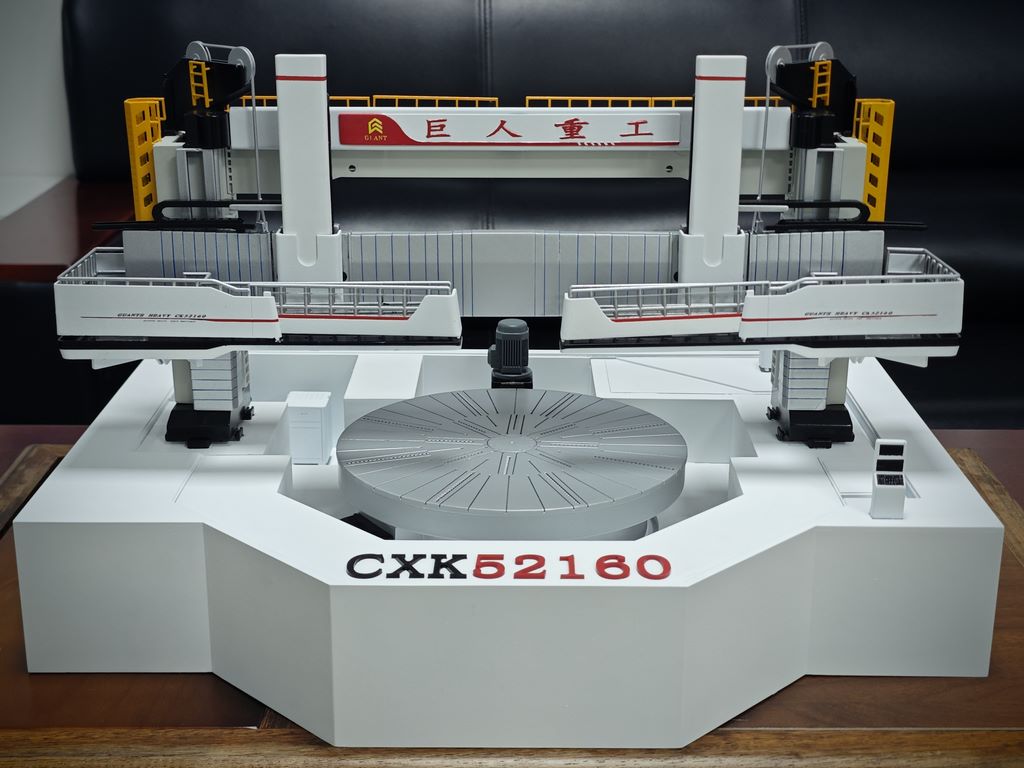
We need to know what industrial models are. Industrial models are tools used in industrial production to simulate, analyse and validate processes, equipment structures, etc. They are usually made of materials such as metals, plastics and glass and are of high precision and utility. Industrial models can be used not only for teaching and training, but also for the company fairs, trade fairs, hand-carrying, etc.
Let's talk about the production of a digital machine-bed model. Digital control machines are a high-precision, efficient automated machines that are widely used in mechanical processing. The numerically controlled machine-bed model was developed mainly through the following steps:
Design drawings: Depending on actual needs and process requirements, designers are required to design detailed drawings for the numerically controlled machine bed model. These drawings include spare parts, assembly maps, processing road maps, etc., which provide the basis for subsequent manufacture.
Material selection: Select the appropriate material for processing, as required by the design drawings. Common materials are aluminium alloys, stainless steel, plastics, etc., and different materials have different physical and chemical properties and need to be selected according to the circumstances.
Digitally controlled programming: the conversion of design drawings into digitally controlled programs for processing through computer-controlled numerically controlled machines. Digital programming needs to take into account such factors as the choice of blades, the setting of cutting parameters and the optimization of processing paths.
Process manufacturing: Process manufacturing according to numerical control procedures. The processing accuracy of the machine bed is very high, allowing for micro- and even nanoscale processing precision. At the same time, digitally controlled machine beds can also perform multiple-axis and high-speed cutting functions, which significantly improves productivity.
Quality testing: Once the process is completed, quality testing is required to ensure that the product meets design requirements and relevant standards. Quality tests include dimensions, surface treatment, performance tests, etc.
In addition to the above-mentioned process, the development of a digital machine-bed model requires attention to the following:
Precision control: The accuracy of the control machine bed directly affects the quality of model production. Therefore, strict precision control is required in the design and manufacturing process to ensure the stability and reliability of the product.
Technological innovation: New materials and new processing technologies are emerging as science and technology evolves. Enterprises need to keep up with the times and constantly innovate to improve the competitiveness of their products.
The production of industrial models is a complex and fine process that requires a combined effort of designers, engineers and producers. The precision processing of machine-bed models is a key component, not only in terms of product quality but also in terms of the productivity and market competitiveness of enterprises. In future development, we look forward to seeing more innovation and breakthroughs to breathe new life into manufacturing development.