Application and design of industrial sandpad models at fairs
Application and design of industrial sandpad models at fairs
As science and technology progress and the process of industrialization accelerate, the fair is increasingly gaining the attention of businesses and professionals as an important platform for demonstrating the latest technological achievements and promoting business exchanges. Against this background, industrial sandpad models have become an integral part of the fair by virtue of their visual and vivid features. This paper will explore the application and design of industrial sandpad models at fairs with a view to providing valuable reference for exhibitors.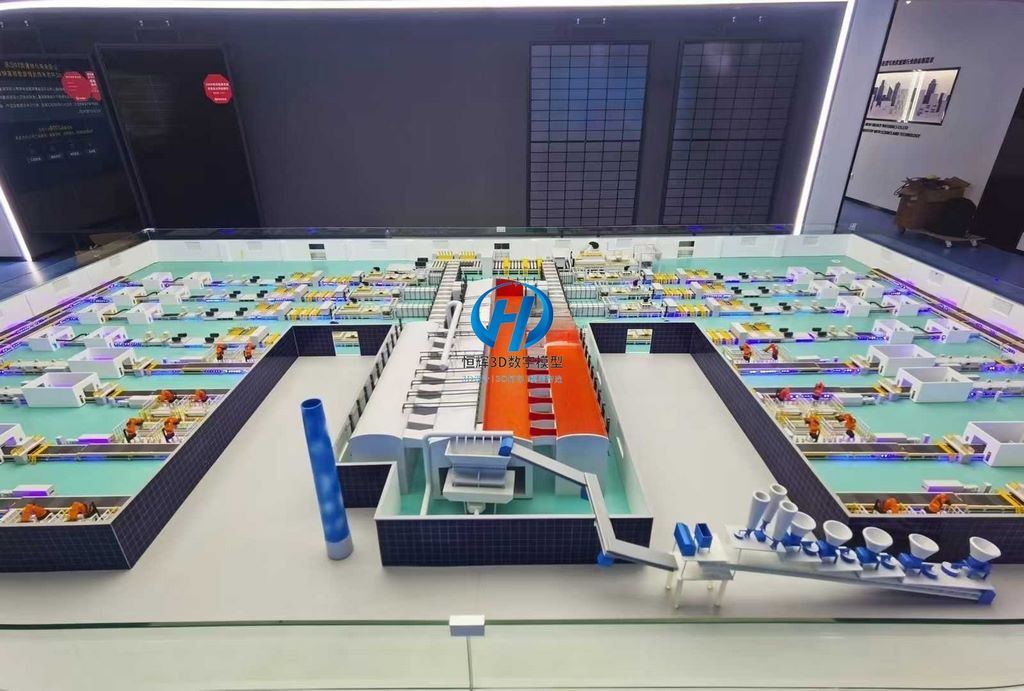
I. Definition and characteristics of industrial sandpad models
The industrial sandpad model is a three-dimensional model to simulate industrial production processes and demonstrate the production process of products. It provides visitors with visual insight into the production process and technical details of the product by means of fine size ratios and authentic material performance. Industrial sandpad models have the following characteristics:
High-resortability: Industrial sandpad models provide visitors with an experience at home by scaling up production equipment, process processes, raw materials, etc. precisely to match each detail in the model with actual production.
Easy to understand: Complex production processes are easier to understand because industrial sandpad models use simplified design techniques. Visitors can quickly master the manufacturing process and key technologies for their products by observing models.
Strong interactivity: Many industrial sandpad models are also equipped with interactive elements such as touch screens, buttons, and visitors can operate to change the parameters or state in the models to better understand and learn from product manufacturing processes.
Demonstrating good results: Industrial sandpad models are usually made of high-quality materials such as plastics, metals, glass, which not only ensure the stability and durability of models, but also provide them with rich colours and photo-effects and enhance performance.
II. Application of industrial sandpad models at fairs
Product presentation: Industrial sandpad models can be used to demonstrate the development process of new products and provide visitors with visual insight into the design concepts and technical characteristics of the products. For example, automobile manufacturers could display an industrial sandpad model of a new electric car at a car show to inform visitors about the design of their batteries, drive systems, etc.
Production line planning: Industrial sandpad models can help visitors quickly understand the productivity and layout of enterprises. For example, the industry sandpad model could be used by pharmaceutical enterprises to demonstrate the distribution of equipment along their production lines, the supply of raw materials, etc., to help visitors assess the efficiency of their operations.
Education and training: Industrial sandpad models can be used as teaching tools to teach students or employees about industrial production, quality management, etc. By looking at industrial sandpad models, they can gain a more intuitive understanding of key steps and concerns in the production process.
III. Design elements of the industrial sandpad model
Accuracy: Industrial sandpad models must ensure that the proportion of all elements is accurate, including the size of the equipment, the size of the pipeline, the mass of the material, etc. This is the only way to guarantee the authenticity and credibility of the model.
Innovative: In designing industrial sandpad models, emphasis should be placed on the integration of innovative elements, such as the introduction of virtual reality technologies, increased interaction, etc., to increase the participation and experience of visitors.
Easy to use: Industrial sandpad models should take into account the needs of visitors of different ages and backgrounds, providing a clear and concise interface and clear narrative so that they can easily understand and use the models.
Practicality: Industrial sandpad models should take full account of actual application scenarios, such as the location of the installation of the equipment, the flow path of the material, etc., in the planning of production lines, and the co-use of assistive equipment, such as light, sound, etc., should be considered in product presentations.
Concluding remarks
The value of industrial sandpad models as an important exhibition tool should not be overlooked. Through careful design and production, industrial sand table models can provide visitors with a more visual and lively learning experience and help them to better understand and master the relevant knowledge and technical points of industrial production. In future developments, industrial sand table models are expected to be one of the important tools for demonstrating industrial production and promoting business exchanges.