Henghui Models specializes in digital model manufacturing. We customize all kinds of miniature models with advanced production techniques tailored to your project.

Service Hotline
18664173363
Modelling laboratory equipment: micro-art and educational practices of scientific instruments
2026-02-05 15:15
7
Modelling laboratory equipment: micro-art and educational practices of scientific instruments
Part I: Introduction to conceptual breakdown
Modelling of laboratory equipmentIt is the professional production of sophisticated scientific laboratory instruments and equipment that are translated into visual, operational displays or teaching tools through technical means such as precision proportional micro-syncs, material simulations and functional streamlining. Such models not only seek a high-level simulation of the appearance, but also focus more on reflecting the working principles, operating processes and safety norms of the equipment, and are important carriers linking abstract scientific principles to visual perceptions.
Core building blocks for modelling laboratory equipment: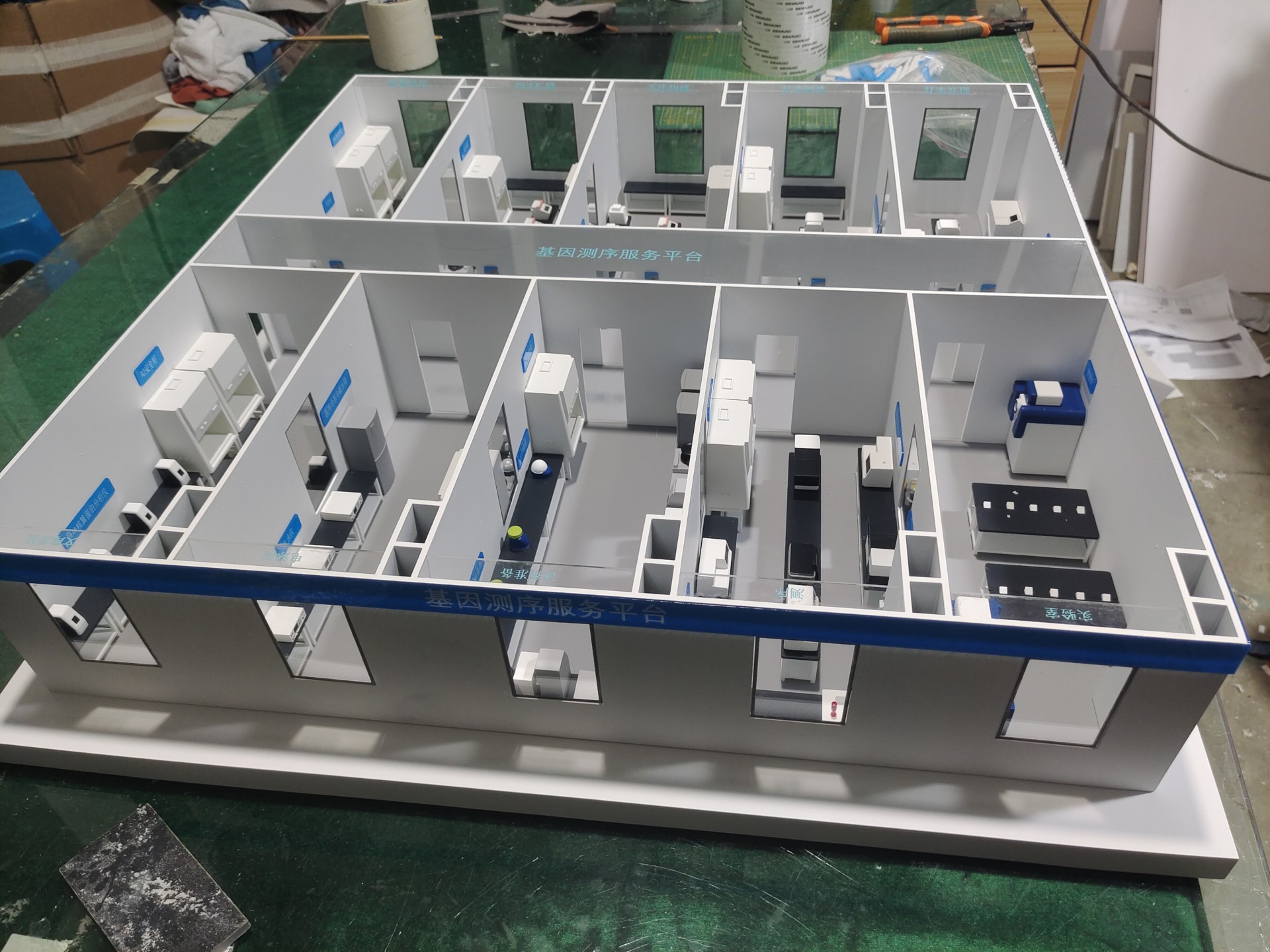
- Structural accuracy and proportionality coordination:
- Proportional selection: selection of ratios ranging from 1:1 to 1:20 based on demonstration needs and complexity of equipment
- Simplification of structure: rational simplification of internal complex structures while maintaining key features
- Proportional coordination: ensure that the ratio between components of equipment is consistent with the original equipment design
- Functional demonstration and operation simulation:
- Presentation of working principles: display of the device ' s work process through visualization design, transparent windows or dynamic demonstrations
- Operation interface simulation: copy key control panels, display screens and operating widgets
- Security feature expression: highlighting safety features, warning signs and emergency control components
- Material suitability and detail presentation:
- Material selection: Selection of suitable alternative materials such as metals, plastics, glass, etc. based on the characteristics of the equipment
- Surface treatment: accurate sensibility, colour and marking of surfaces of simulated equipment
- Details are restored: fine repeats of key details such as tics, connectors, indicators
Part II: Questions and answers
Question one: How to balance operational authenticity with student safety in the production of models of laboratory equipment for teaching?
Answer: Teaching models need to find the best balance between functional simulations and safety and security. On the one hand, the retention of the main operating components and the control interface ensures that students are familiar with the basic operating processes of the equipment. The centrifuge model, for example, should have control features such as speed regulation, time setting, but the actual rotation component could be replaced by a low-speed or manual rotation. On the other hand, safety modifications are made to the factors that may pose a risk: the physical heating of high-temperature equipment is eliminated, low-pressure simulations are used in high-pressure equipment, and harmless alternatives are used in chemical equipment. At the same time, security markings and protective devices are reinforced in models to highlight hazardous areas through red markings, enabling students to develop safety awareness when operating models.
Question two: How does the presentation of complex internal structures of high-precision analytical instruments (e.g. mass spectrometers, magnetic resonators) be addressed when modelling them?
Answer: For such sophisticated, structured instruments, tiered presentations and focused strategies are commonly used. First, the focus of the teaching or presentation, such as the mass spectrometer ' s ion source, the analyser, and the three core components of the detector, are identified. The design was then adopted for "Transparency of the shell + Physicalization of Core Components": the shell was made using Transparent Accleic, internal key components were highlighted with colour materials, and non-critical support structures were streamlined. A more advanced approach would be to design detachable modules that would allow layer by layer to display internal structures. For particularly complex systems, complementary displays of physical models and digital information can be achieved by displaying internal animations and rationales through tablet computer scanning models.
Part III: Benefits of modelling laboratory equipment
Teaching training and skills development value:
- Provision of safe, reusable teaching aids for experimental teaching to reduce laboratory costs and risks
- Help students understand the internal structure and working principles of complex equipment and visualize abstract concepts
- Provides risk-free misperceptions and allows students to learn how to operate correctly in simulations
Scientific preparation and experimental design aids:
- Pre-procurement of new equipment, familiarization with equipment layout and operating processes through modeling
- Auxiliary pilot programme design, pre-planned equipment configuration and experimental process
- As a physical reference for discussions and training of scientific teams to increase the efficiency of collaboration
Safety training and the normative role of education:
- Highlight equipment safety devices and hazardous areas and enhance security operational awareness
- Demonstrating the possible consequences of an error and improving safety precautions
- Harmonization of operational standards to promote a laboratory safety culture
Propaganda and image presentation function:
- Presentation to the public of advanced scientific equipment and working principles in science and technology libraries and exhibitions
- Promoting institutional image and influence as a window of power for scientific institutions
- Stimulating young people's interest in scientific research and developing future scientific talent
Meaning of training in equipment management and maintenance:
- Help maintenance staff understand equipment structure and maintenance elements
- Demonstrating common malfunctions and maintaining operating processes
- To improve efficiency and quality of maintenance as standardized teaching aids for maintenance training
Modelling laboratory equipment is an important tool for scientific education, scientific training and scientific dissemination, transforming complex scientific instruments into intuitive teaching media. Through well-designed models, students can learn to operate equipment in a safe environment, researchers can better plan experiments and the public can understand the tools and methods of scientific research. At a time when science education is receiving increasing attention, models of high-quality laboratory equipment not only enhance the effectiveness of teaching, but also stimulate interest in learning and the development of scientific thinking, as an important complement to the promotion of science and its development. With advances in production technology, laboratory equipment models are moving in a more sophisticated, intelligent and interactive direction, playing an increasingly important role in science education.
Nadimak:
sadržaj:
Kontrolni kod: 
Komentar
Service Hotline: 18664173363
E-mail: henghui3d@outlook.com
Company Address: Room 606, Xuda High-End Intelligent Manufacturing Industrial Park, Xiaweiyuan, Gushu Community, Xixiang Subdistrict, Bao'an District, Shenzhen
Factory Address: Building 4, No. 341 Xiangmang West Road, Qingxi Town, Dongguan
Company branch: Huizhou Chongqing
Scan to follow us on WeChat
Scan to follow our Official Account