Scrap-burning power plant sandpad modelling
I. Introduction to the conceptual decomposition of the modelling of sandpads in waste incineration power plants
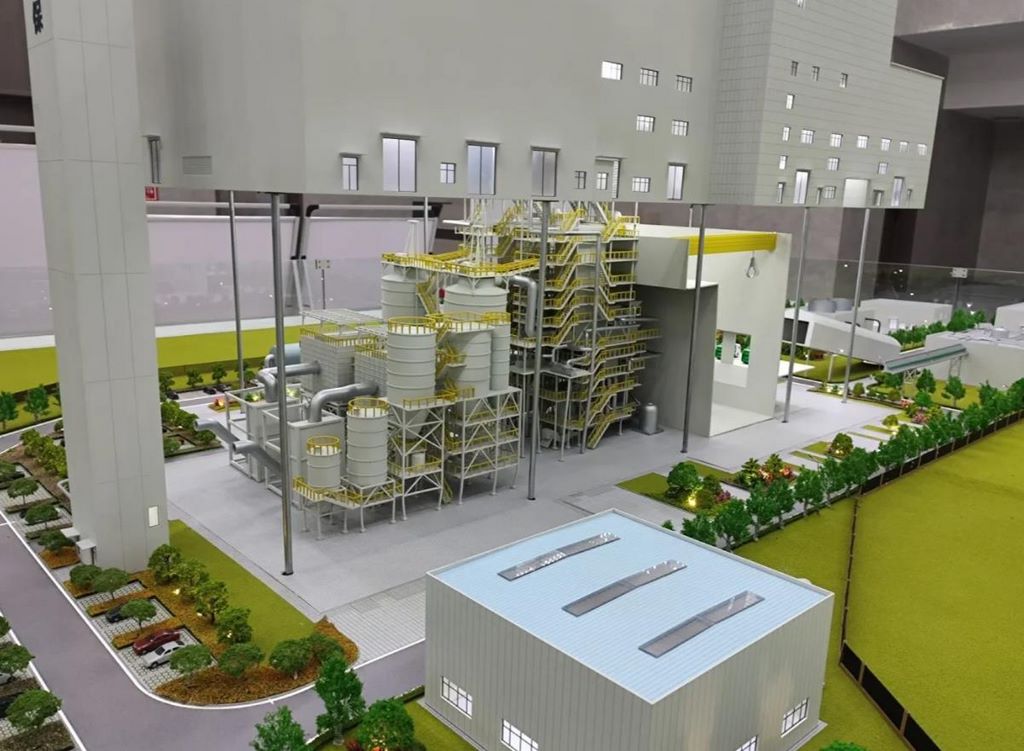
Waste incineration power plant sand table modelling based on the physical layout of the waste incineration plant, the whole process of waste disposal, distribution of core power generation equipment, flow paths of materials (waste, flue gas, ash slag) and the coordinated logic of systems, reduced (or reduced) in proportion to the established scale, using a series of processes, such as precision design, cutting, ligation, decoration and process simulations, resulting in visualization, visualization and extrapolation of vehicles。The core is “the restoration of plant scenes, displaying the coordinated logic of the whole process of waste incineration and equipment”, which requires precision in the physical spatial morphology of the plant area, as well as a clear presentation of the core functional area, as well as distribution and process interface of core equipment such as garbage storage pits, incinerators, residual heat boilers, steam turbine generators, flue gas treatment systems, as well as as grey slag disposal equipment, and is a core tool for the planning and design of waste incineration power generation enterprises, optimization of production processes, dissemination of science, staff training, project reporting and teaching and teaching of environmental/energy sciences at institutions.。
From the conceptual core decomposition, three key dimensions can be divided: first, “share scale”, model scale to be determined in relation to the actual size of the plant area, volume of production units, use scenario (flow evolution, general awareness, reporting presentation), common scale 1:100, 1:200, 1:500, 1:1,000, small production units (e.g., single incinerator system, flue gas treatment unit) with 1:100-1:200, with emphasis on the structure of the core equipment, process interface, etc.;Large integrated waste incineration power plants (carrying, storage, incineration, power generation, flue gas purification, ash disposal full process) with 1:300-1:10000 options to ensure complete coverage of production areas, core facilities and subdivisions, taking into account the consistency of the whole process of waste disposal from the receiving field to the power grid, and the sound handling of ash sludge;Second, “full layout and matching of power generation characteristics” requires full coverage of the core components of waste incineration power plants, including core production areas (waste reception storage areas, incineration areas, residual heat generation areas, flue gas purification areas, ash disposal areas), auxiliary functional areas (medium control operating areas, equipment maintenance areas, office areas, safe protection areas, waste transfer corridors), complex models that can include details such as garbage transfer belts, flue gas pipelines, sewage treatment facilities, safety alert signs, medium control dashboards, highlighting the core requirements of waste incineration for “innocence, quantification, resourceization, environmentalization” and the regulation, safety of production processes;Third, "Function-fitting", the basic model focuses on layout and equipment displays for science outreach, teaching and practical training.;Progressive models can include elements such as light, dynamic marking, and distinguish production processes from equipment operational status;High-end models can be combined with electronic equipment to simulate production processes such as waste incineration, flue gas purification, power generation grids, and achieve high-end needs such as production processes that can be driven, equipment can be demonstrated, pollutant emissions monitored, plant adaptation planning, process optimization, etc.。
The central highlight of the sand table modelling of waste incineration power plants is “Professionality and full process visualization” - not just the recasting of the site, with a greater focus on the full environmental process of waste disposal from receipt, storage, incineration to residual heat generation, flue gas purification, as well as the coordinated operational logic of incineration systems, power generation systems, environmental treatment systems, both visualizing existing plant layouts and production processes, as well as for new plant planning, production process optimization and general presentation, making abstract waste incineration principles, environmental treatment processes, equipment operation regulations, plant layouts pictograms, enabling quick judgement of rationality, production efficiency and environmentally friendly hazard sites.
II. Questions and answers relating to the modelling of sandpads in waste incineration power plants
Question one: How do you determine the appropriate scales and materials by modelling the sandpas of waste incineration power plants? What are the special requirements for waste incineration to generate electricity?
Answer: The selection of scales and materials is the basis for modelling, both for the practicality and beauty of ordinary sandpads, and for matching special needs such as process characteristics, environmental requirements, safety norms, etc. of waste incineration for power generation, taking into account the actual conditions of the plant, the circumstances of use and the budget。The core principle of ratio selection is “Facilitation details and fullness”: if used for production process development, staff training, general presentation (focusing on core equipment structure, process interfaces, environmental process details observation), a larger proportion (1:100-1:200) will be used to present clearly the structure, nodes and material (waste, flue gas, ash) flow paths of the production equipment, and to allow simulation of production processes such as waste incineration, flue gas purification, power generation, etc.;A smaller proportion (1:300-1:100) of small size, easy to carry and set in place can be used for reporting demonstration, overall promotion (with a focus on the whole of the plant, environmental distribution of power generation), or the larger size of the plant (e.g., integrated waste incineration power plants) to present a complete synergetic logic between the production areas and the core processes.;If used for teaching, science (focusing on demonstration of basic environmentally sound power generation), flexibility in adjusting ratios, simplifying complex details and highlighting core production equipment and key environmental processes。
Material selection is subject to the principles of “manufacturing, hyper-impressive, fit-for-power equipment characteristics, environmentally friendly visual presentation”, taking into account safety and durability, matching the characteristics of waste incineration power generation equipment with the site scene, and the selection of corresponding materials in different regions: wood panels, density plates (highly stable, ready for stationary components, flat layout of the plant area, simulating the terrain slope of the plant area);Core production equipment (waste storage pits, incinerators, spare heat boilers, steam turbine generators, flue gas treatment towers, ash waste storage tanks) may be used for the selection of acrystal panels, ABS panels, resin materials (high rigidity, plastics, polishable polishing, imitation high and non-conformity, fine structures and configurations suitable for simulation of power generation equipment, and for the selection of high temperature imitation materials, smoke treatment towers to highlight internal structures with transparent max);Auxiliary facilities (spam transfer belts, flue gas pipelines, sewage treatment tanks, safety fences, medium control operating tables) are available for choice with PVC plates, small metal models, fine wires, transparent Aclik panels (mass matching facility characteristics to facilitate the return of original belt tracks, piping directions, internal structure of environmentally friendly treatment facilities);Markings, text options, waterproof stickers, Akri sculptures (long-term display of sandpad requirements, standardized marking requirements for suitable production equipment, such as equipment number, process name, environmental warning sign, pollutant release mark);Production process simulations can be selected using LED lamps, colour stickers, micro-particles (e.g. red light simulations of incinerator working, blue light simulations of flue gas purification paths, grey micro-particle simulations of garbage, white micro-particle simulations of ash slags), highlighting production processes, equipment operational status and environmentally friendly processes, and matching waste incineration to the core location of “environmentally friendly” power generation。
Special requirements for waste incineration for electricity generation that are to be considered when produced: first, synergy of layout and soundness of environmental protection, strict compliance with plant layout of waste incineration power plants, ensuring proper interface between waste receiving areas, incineration areas, power generation areas and environmentally sound disposal areas, smooth transit routes for waste, close proximity of flue gas and ash disposal facilities to incineration areas, avoidance of secondary contamination, location of medium control areas to allow coverage of plant-wide monitoring and control, compliance of equipment with safe production and operating regulations, ensuring regional and equipment-efficient coordination and integration of environmentally sound electricity generation logic;Second is the consistency and environmentality of production processes, which require the restoration of standard production processes such as waste incineration for power generation (e.g., garbage entry sites called heavy storage and fermentation). Incineration of residual thermal recovery turbines to clean up flue gas and decontaminate ash sludge treatment and network generation) to ensure smooth interface of processes, with emphasis on environmental processes such as flue gas purification and ash disposal, highlighting the core features of “inertification, quantification, resourceization”;Third is the precision of the detail of the equipment, the size ratio of the core production equipment, the outer structure, the colour markings required to match the actual model, such as the chamber structure of the incinerator, the number of layers of the flue gas treatment tower, the outer shape of the wheel generator, and standardized marking, operating buttons on the equipment to ensure the professionalism of the model;IV. Highlighted environmental and safety characteristics, environmental facilities (e.g., flue gas purification systems, sewage treatment facilities, asymmetric treatment equipment) and safety facilities (e.g., fire-fighting equipment, safety barriers, emergency corridors, warning signs) need to be fully restored to the plant area to avoid resetting only the power generation equipment, neglecting the “environmental + safety” core and ensuring that models fit the nature of waste incineration plants。
Question two: How can we accurately reduce the co-production properties of the layout and equipment of the waste incineration power plant by modelling the sandpas? What professional issues are prone to newer production and how should it be circumvented?
Answer: The co-production properties of plant layout and equipment are at the heart of the sandpad model of the waste-burning power plant, and the precise reduction of its form, location and relevance, in particular the synergy between environmental processes and power generation processes, is key to the professional and practical value of the model and is subject to the principles of “mapping accuracy, detail control, logical consistency”。Core reduction method: first, collection of accurate basic information in advance, collection of layout drawings, equipment distribution maps, production flow charts, environmental treatment process maps, showing facilities, size, location, spacing of equipment, identification of waste, flue gas, flow paths of ash, interfaces, and sequencing of production processes, environmental processes, if the plant is a fictional planning category, drawing of normative drawings using industry standards for waste incineration and environmental norms to ensure compliance with production, environmental protection and safety requirements;Second, equipment precision, core production equipment scale-up, with emphasis on the core production of the original equipment and environmental protection characteristics (e.g., incinerator feed, chamber structure, heat-replacement piping for the residual boiler, pyrotechnic layer for the pneumatic treatment tower, as well as the source of the ash treatment equipment), with reference to the equipment scene photographs, model parameters to ensure that the shape, size and colour of the equipment are matched, while emphasis is placed on the matching of the equipment with the equipment (e.g., match of the garbage transfer belt with the burner feed portal, interconnection of the incinerator with the residual heat boiler, interface of the incinerator with the smoke pipe with the treatment tower);Third, layouts and synergetic logic, with production areas and equipment strictly based on drawings, distinguishing production areas, environmentally friendly areas and types of equipment by different colours and markings (e.g., grey in waste storage, orange red in incineration areas, grey in flue gas purification areas, yellow in power generation areas, grey white in ash disposal areas) and modelling production and environmental protection processes with LED lamps and micro-particles, indicating the name of the work process, environmental protection markings and standardized markings, ensuring that the layout of the plant is reasonable and the equipment is consistent in terms of logic, matching the requirements of “environmental priority, safety and efficiency” for waste incineration generation。
The three core professional issues and methods of circumvention that are easily encountered in the production of new hands: first, lack of synergy in layout, incompetence of production, location of equipment, inter-regional distances, environmental logic, such as distance of flue gas treatment towers from incineration areas, failure of ash disposal equipment from incinerators, cross-crowding of waste transport routes, circumvention: pre-production of plant layouts, production processes and environmental requirements familiar with waste incineration plants, cutting, collating components strictly in accordance with precision drawings, calibration of sizes and locations using specialized measurement tools (travel card feet, cornerers) and avoidance of empirical layouts, enabling the development of simple co-production and environmental logic maps;Second is the lack of equipment detail that reflects the dual characteristics of power generation and environmental protection, such as the furnace structure of the unrecovered incinerator, the purification layer of the flue gas treatment tower, the details of the ash treatment equipment, circumvention methods: reference equipment scene photographs, model parameters and environmental process information, refinement of equipment details, selection of high-simulative material, processing of fine structures with small engraving tools, supplementing equipment with standardized marking, environmental handling marking, operational status, etc., and upgrading model specialization.;Third is the confusion of production and environmental processes, which do not fit standardized production and environmental norms, such as unreasonable waste flow routes, missing flue gas purification processes, failure to reflect the harmless treatment of ash sludge, circumvention: pre-empting the core production and environmental processes of waste incineration for power generation, inviting waste incineration and the relevant environmental operators to check the layouts, clarifying the synergistic logic of the various processes and environmental components, and strictly following standardized production and environmental norms to assign equipment and materials to focus on the interface of environmental processes, such as flue purification, as well as dust disposal, avoiding process disconnection or logical error.。
III. Advantages of the development of a sand-paste model for waste incineration power plants
The production of a sand table model for waste incineration power plants, whether for use in the planning of projects for waste incineration power generation, the roll-out of plant operations, or the teaching of schools, environmental awareness-raising, can bring multiple practical values, taking into account professionalism, practicality and taste, and fit the core needs of waste incineration for power generation “innocence, quantification, resourceization and environmentalization”, as follows:
First, visualization of scenario layouts and equipment synergetic logic, enabling planning optimization and process evolution。The layout of waste incineration power plants is highly demanding, production and environmental equipment are abundant, processes are highly regulated and need to be balanced with production efficiency and environmental compliance, reliance on abstract drawings makes it difficult to quickly detect layout loopholes (e.g. insufficient equipment spacing, material flow congestion, inappropriate layout of environmental facilities) and production, environmental hazards (e.g. deviations between incinerators and flue gas treatment towers, irregular slag disposal routes, absence of leak-proof waste storage facilities), while sand table models can transform abstract drawings into image models, visualize the distribution of regions, equipment, interfaces between production and environmental processes, as well as synergy of equipment to allow rapid judgement of the scientific nature of the site, the viability of production processes, soundness of environmental processes, comparison of different planning programmes, process optimization, environmental upgrading programmes, early detection of potential problems, optimization, planning, production and environmental failure, especially for new waste incineration plants, upgrading of old plant areas, and optimization projects for environmental facilities.。
Second, environmental science and training with appropriate multi-species to improve dissemination and training efficiency。Waste incineration for power generation is a core area of environmental and energy integration, with high demand for scientific awareness and professional training on core production equipment, environmental treatment processes, safety practices, traditional science, training relying heavily on text, pictures and video, and a lack of rapid understanding of the principles of electricity incineration, environmental processes and safety practices, and easy “pollution” of waste incineration Misunderstanding。Sand Table models can serve as a central vehicle for public information and training in science, visualizing the role of core equipment such as incinerators, flue gas treatment towers, steam turbines, providing a clear picture of the whole process of garbage disposal, from receipt to incineration to power generation, environmental treatment, simulations of waste incineration, flue gas purification, both to enable the audience (students, crowds, business employees, relevant practitioners) to quickly acquire the core knowledge, environmental advantages, demystification, and to provide schools and power-generating enterprises with demand-appropriate training tools, to improve teaching and training effectiveness and to help staff quickly familiarize themselves with equipment operations, production processes and environmental requirements。
Third, low-cost realization planning versus production, environmental protection programmes to reduce trial error costs。For waste incineration power plant projects, site planning, selection of production equipment, upgrading of environmental facilities and optimization of production processes require significant human, material and financial resources, and environmental facilities and power generation equipment are sophisticated and complex to install and, if planning or programming fails, may not only be extremely costly to correct, but may also be subject to environmental penalties that affect production operations.。Sand Table models can be used as a vehicle for comparison and evolution of programmes by developing models of different planning schemes, production optimization programmes, environmental upgrading programmes, intuitive comparisons of the strengths and weaknesses of programmes, simulation equipment adjustments, process optimization, the operational effects of environmental upgrades, and equipment co-optivity and environmental compliance, without the need for actual work or equipment adjustments, to quickly identify optimal programmes and significantly reduce planning, production, environmental testing and remediation costs, while helping firms to avoid environmental risks in advance and ensure that projects comply with environmental norms。
Fourth, strengthening professional awareness of the environment and energy, building hands and synergizing thinking。Modelling is a detailed, rigorous and systematic process, ranging from collecting plant area drawings and drawing sketches to cutting equipment materials, fusion components, simulations of production and environmental processes. Each step requires a combination of waste incineration for electricity generation, environmentally relevant expertise, precision and detail, taking into account the synergistic logic of equipment, processes and environmental components, and a combination of hands-on and logical thinking, which can help waste incineration operators, environmentalists, relevant professional students to deepen their understanding of plant layouts, production equipment structures, environmental processing processes, and co-production logic, as well as to develop human sensitivity, patience and rigour, high-precision operations, synergistic planning and environmental thinking, consistent with the core requirements of waste incineration for power “environmental priorities, safety and efficiency”