Henghui Models specializes in digital model manufacturing. We customize all kinds of miniature models with advanced production techniques tailored to your project.

Service Hotline
18664173363
Diesel engine anatomy modelling
2026-02-10 15:47
12
Diesel engine anatomy modelling
Introduction to the development of anatomy models for diesel engines
The development of the diesel engine anatomy model, which is the core needs of our plant, such as the teaching of focused machinery, skills training, product development, failure demonstration, based on the internal structure, core parts, assembly relationships, work mechanics of various diesel engines (small vehicles, large engineering, shipboarding), micro-indentation and stratification design based on precision ratios, leading to customized production services such as “anatomy, clarity, clarity of structure”。At its core is “Accurate presentation of internal structures, retrofitting of components, enabling hands-on teaching”, distinct from the normal overall engine model, with the main features of “visualization, disassembly, demorable”, which provide integrated customized solutions through local anatomy, transparent processing, modularization, clear presentation of the internal structure and interfaces of core components such as casks, axes, pistons, cams, fuel jet systems, cooling systems, visualization of dynamic processes associated with engine four-strength work, providing for clients such as vocational colleges, skill training institutions, engine production enterprises, maintenance services institutions, scientific institutions, etc., communication of needs, graphic matching, dissecting design, precision production to post-sales repair, etc., and helping clients to conduct hands-on training, failure mapping, product development, technical training, etc.。
As a professional modelmaker, our diesel engine anatomical modelling has three core advantages and is well adapted to the needs of various types of anatomical presentation and exercise: First, a professional team with a mastery in the internal construction, assembly and assembly of diesel engines, depending on the client's needs, is able to perform a local motor autopsy (e.g., anatomy of the tank, anatomy of the fuel system) or a complete autopsy, restore the internal texture of the component, the gap in the assembly, the movement logic, and match the scale with the actual (common 1:10, 1:20, 1:50, subject to adjustment as required), and restore more than 95 per cent, taking into account professional and physical properties.;The second is that the structure is visible and clear, using transparent materials to process key components, indicating the name of the component, the specification parameters and the moving path, which will allow the core parts to be manually dismantled and assembled, visualizing the component ' s connection and making the abstract internal structure visible.;Third, the customization is highly adaptable, with flexibility to adjust the anatomy dimensions, model sizes, detail accuracy, adaptation teaching, training, development, etc. to client needs, with the addition of additional proprietary elements such as failure simulation modules, component identifiers, enterprise logo, etc., that accurately present the core needs of clients and highlight their professional strengths。
Our production guidelines are “anatomical precision, well-structured, durable and easy-to-do”, rejecting generic homogenous models, each of which is customized, strictly follows the industry standards and anatomical specifications for diesel engines, and transforms abstract engine internal structures, complex motivations, into visual, actionable, demonstrationable teaching and display vehicles, and helps clients to efficiently conduct hands-on teaching, technology dissemination and product development.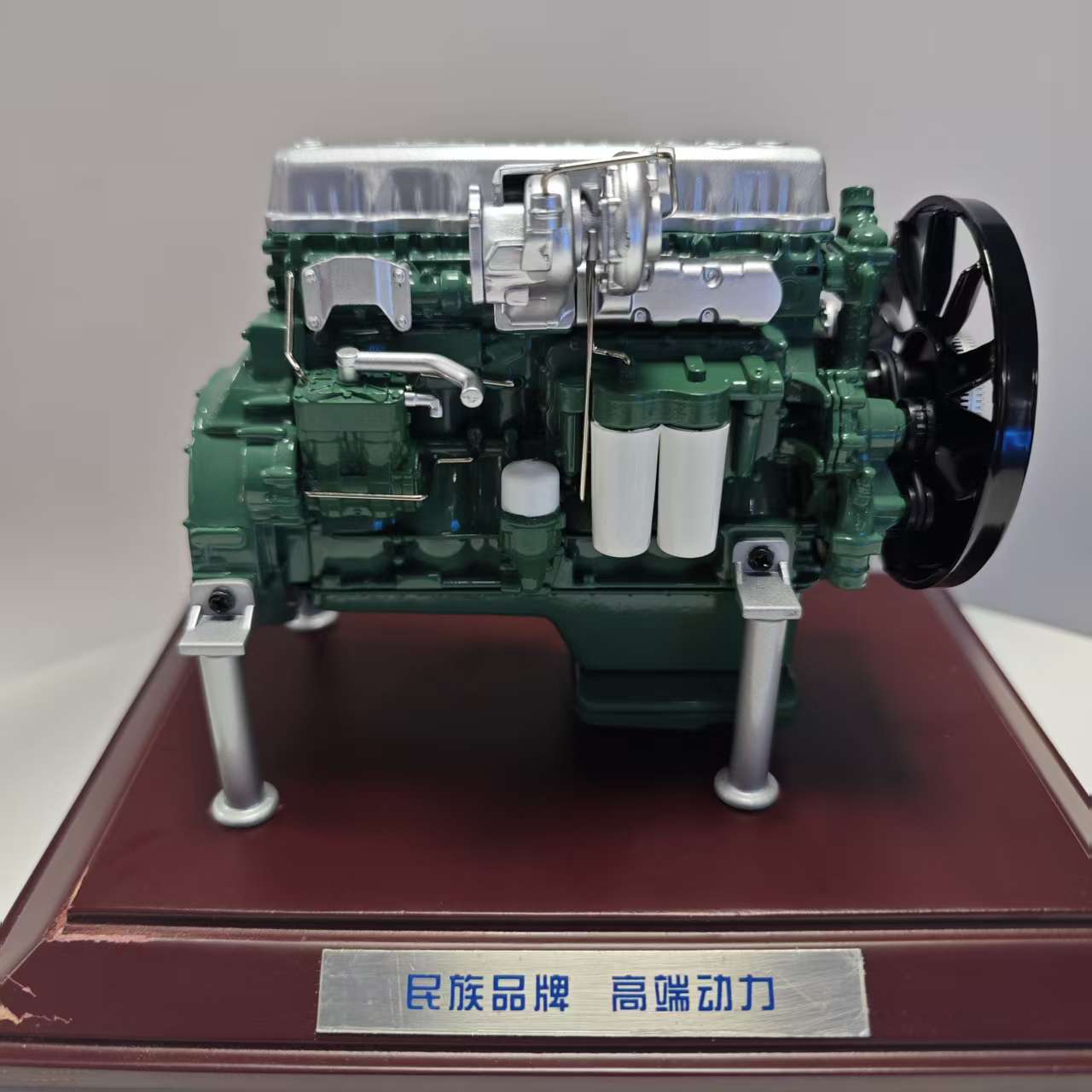
II. Questions and answers relating to the development of anatomy models for diesel engines
Question one: Can your factory accurately recover the internal structure of the different types of diesel engines and achieve a designated section autopsy? How can the specialization of anatomy models be ensured, taking into account structural integrity and integrity?
Answer: Accurately recovers and achieves a designated sectoral anatomy. Proficiency, structural integrity and physical safety are the core competitiveness of our model, and are achieved through triple professional control.。The first is a model and anatomical parts that are fully covered, capable of being accurately restored to the original diesel engines of different models, different specifications, such as those for vehicles, engineering, shipping, etc., and to perform any of the specified parts, such as casks, warpcases, fuel jet systems, depending on the client ' s teaching and training needs, with complete recapturing of the internal structure of the component, moving relationships, assembly logic, obtaining internal drawings of the engine, parameters of the component, deciphering photographs from the recipient prior to production, ensuring that the details of the autopsy and the structure of the component fit the actual engine in each case.;The second is the precision of professional detail, where our design team interprets the principles of internal construction and transfer of diesel engines in depth and designs anatomical programmes strictly in accordance with the physical assembly logic to ensure that an autopsy does not undermine the structural integrity of the core components, while using round-angled, securely connected designs to avoid security hazards during the dismantling process, and adapts to the context of good conduct.;Third, dual calibration optimization, with emphasis on control anatomy accuracy, parts simulation, marking clarity, double calibration against engine internal drawings and industry standards after completion of the finished product, ensuring that models are both accurate anatomical displays and are consistent with ethical safety norms, professional, integrity and safety and can be used directly for teaching, training and research and development。
Question Two: Is it possible to customize an anatomy models for diesel engines to achieve manual parts dismantling and work machine demonstrations? Is it easy to operate at a later stage if the anatomy is to be adjusted, parts replaced or maintained? Are transport installations guaranteed?
Answers: Manual parts dismantling and work machine demonstrations can be performed as needed, late adjustment maintenance can be done quickly, transport installation is guaranteed throughout, and customer concerns about “virtual misconduct, adjustment troubles, transport damage” can be fully addressed. In the area of hands-on and demonstration, the model uses modularized detachable designs, core anatomical components can be manually dismantled, assembled, equipped with improvised transmission devices, simulated four-strength work processes such as motor piston movement, rotor rotations, some models can be embedded in improvised dynamic modules, visual demonstration components are linked to working mechanisms, fit core scenes such as physical exercise teaching, failure demonstrations, etc., can also be marked, and fail-screening training can be facilitated.
For later adjustment and transport installation, we use modular detachment design, which allows individual parts of anatomical parts and assembly modules to be removed, replaced, adjusted without the need for extensive detachment of the main model。Whether to adjust the anatomical parts, add a new anatomical module, or replace damaged parts, or replace additional parameter identifiers, it is only necessary to operate on the corresponding module, with a simple, short-cycle process at a much lower cost than re-orientation。When transported, each anatomic component is protected against collisions, tides, wear and tear, customized buffer packs are used, and specialized logistics professionals follow up;At the time of installation, with a specialized technical team service at the door, fast-track calibration and debugging of hands-on functions without additional input from clients。At the same time, we provide 1-2 years of free quality assurance, free maintenance during quality assurance, replacement of damaged components, and lifelong technical support to ensure long-term adaptation of models to physical teaching and presentation needs and to achieve “one-time customization, flexible adaptation and long-term reuse”.。
III. Benefits of modelling diesel motor anatomy and application scenarios
The choice of our manufacturer to produce anatomical models for diesel engines will allow for the full visualization and operationalization of the anatomical model, enablers to move beyond the limitations of traditional teaching and presentation, and provide multiple additional values, multi-field scenarios, precision in addressing the core needs of clients such as teaching, training, research and development, demonstration, help clients to become more competitive, reduce overall costs, and empower the mechanical industry to develop and upgrade their skills.
(i) Core benefits of producing anatomy models for diesel engines
First, internal structures can be visualized and break the teaching and presentation limits. The internal structure of the diesel engines is complex, the motivational abstract, the general model cannot present an internal structure, and the anatomical model is processed with precision and transparency so that the internal structure of the core components, the transmission relationship, can be visualized, the pain of “unseeable, unattractive” is completely resolved and the efficiency of the teaching, technical training and failure demonstration is significantly enhanced.
Second, it is tailored to demonstrate core strengths. Customizing the engine model, anatomical needs, location and budget scope of the client on a needs-based basis allows flexibility in adjusting the anatomical parts, model ratios, physical functions, incorporating the proprietary elements of the enterprise, such as LOGO, parameters for components, failure marking, both to highlight the client ' s professional strengths in the fields of teaching, research and development, training, and to match the use needs of different scenarios and enhance differential advantages.
Thirdly, it is efficient and cost-effective. We offer integrated customized services, from demand communication, graphic matching, commissioning to post-sales maintenance, and free-of-charge modifications; modularization designs facilitate later maintenance, re-engineering, re-use and avoid customisation by customers because of model upgrades and re-adaptation, while replacing physical engine dismantling, reducing equipment wear and tear, teaching costs and safety risks, and balancing savings, effort and savings.
(ii) Core application scenario for the diesel engine anatomy model
1. Practical teaching and learning scenes: applied to vocational colleges, technical training institutions (mechanicals, motor vehicles, motor engineering, etc.) as core practical teaching aids, allowing students to understand the internal structure of engines, their parts and their motivations through manual dismantling, assembly, visualization, substitution of traditional drawings and actual engine dismantling, reduction of teaching costs, enhancement of the effectiveness of practical teaching and support in the development of professional skills.
2. Enterprise training scenarios: applicable to engine-producing enterprises, maintenance services, for staff skills training, fail-screening demonstrations, to help staff quickly master parts maintenance, fail-screening techniques through anatomical models that indicate failure-prone points, demonstrate failure-creating mechanisms, upgrade professional skills and work efficiency and reduce training costs.
3. R & D and demonstration scenarios: applied to scientific institutions, engine development enterprises, for engine structure optimization, component improvement, failure simulation, visualization of the feasibility of different improvement options, mapping of structural bottlenecks, optimization of component design, reduction of scientific error costs, enabling technology upgrading and product iterative; and for customer demonstration, visual display of internal engine advantage structures.
4. Science and showcasing: it is used in popular science libraries, industry fairs, business fairs, for diesel engine knowledge, product presentation, visualization of engine interiors and working principles through anatomical structures and hands-on presentations to the public and clients, decoupling of cognitive barriers, professional image of enterprises, promotion of dynamic products and industry science.
Nadimak:
sadržaj:
Kontrolni kod: 
Komentar
Service Hotline: 18664173363
E-mail: henghui3d@outlook.com
Company Address: Room 606, Xuda High-End Intelligent Manufacturing Industrial Park, Xiaweiyuan, Gushu Community, Xixiang Subdistrict, Bao'an District, Shenzhen
Factory Address: Building 4, No. 341 Xiangmang West Road, Qingxi Town, Dongguan
Company branch: Huizhou Chongqing
Scan to follow us on WeChat
Scan to follow our Official Account