Rural Home-building Modelling: Re-embracing the country
As the rural revitalization strategy is advanced, rural self-building has become a central need for farmers to improve their quality of living and to build their own homes, and the need for visual customization, construction reference, style presentation and compliance verification is becoming increasingly urgent。As specialized producers in the area of customizing deep-farming models, we are able to observe the core needs of the rural self-building market by focusing on the production of rural self-building models, relying on the multidisciplinary design, structural layout, decorative details, deep decomposition of courtyards and process depositions of rural self-building houses (Chinese courtyards, modern simplifiers, garden styles, traditional residential homes), and making them a central vehicle for the transmission of building ideas, displaying design programmes, supporting construction sites, and promoting the characteristics of the countryside.。
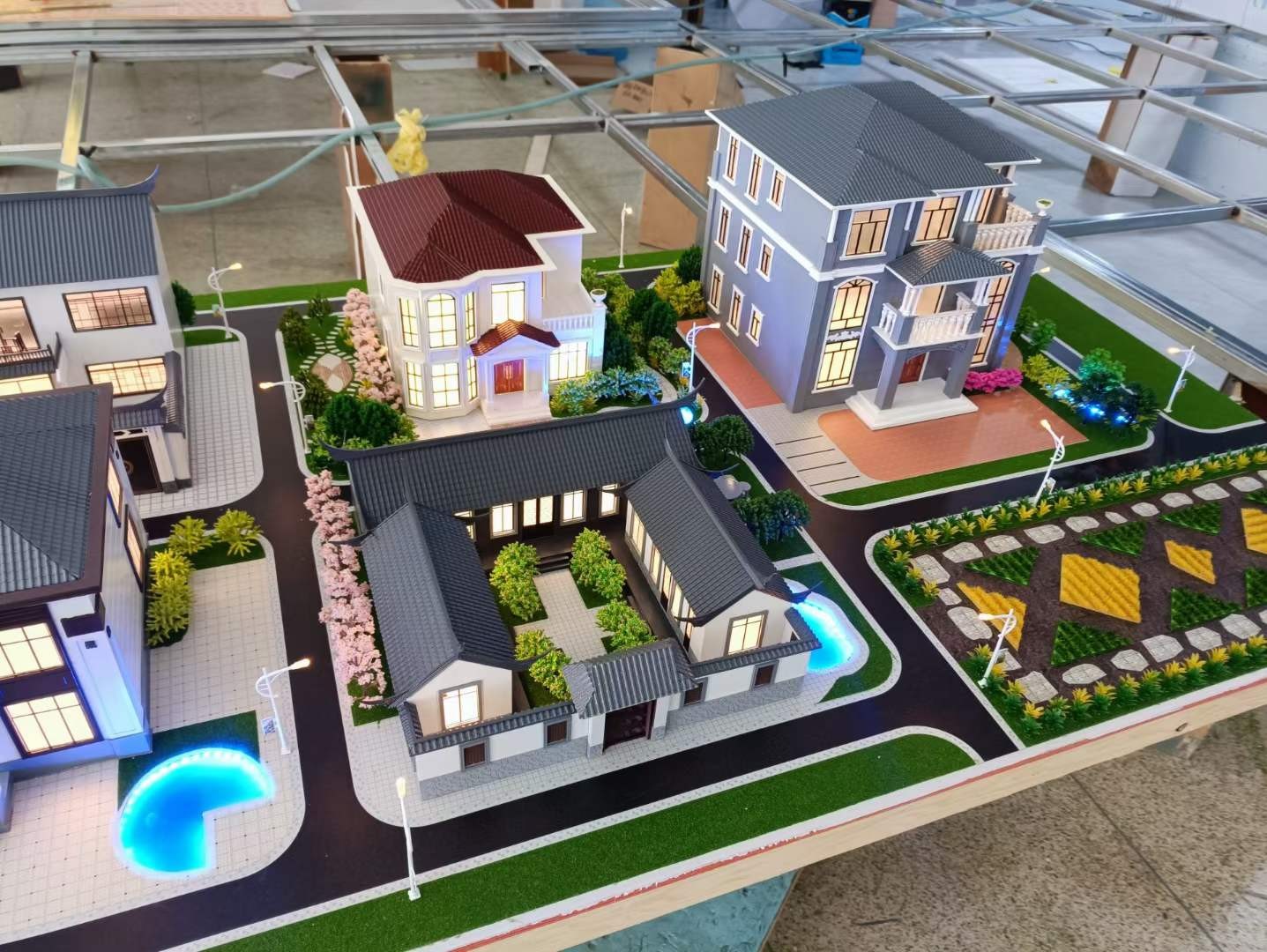
The core competitiveness of the rural home-building model lies in “facility, style and detail” and in the strict retrofitting of the original home-type, structural size, architectural style and, more precisely, the need for the practicality and individualization of rural residence, taking into account professionality and accessibility, and the need for multiple scenarios such as the demonstration of home-building design, construction reference, style selection, etc. We insist on a “demand-driven, tweed-in” model of rural self-building that covers all types of household type and style, whether one-storey, multi-storey or Chinese courtyards, modern simplicity, traditional folk styles, which are flexible and tailor-made according to client design drawings, household needs, style preferences, etc., and that accurately match different scenarios such as design displays, construction reference, family communication and compliance.
In the production process, we have always focused on “exact retrenchment, rural empowerment”, with a prior Depth interface with the client, specifying model uses, house size, architectural style, courtyard design and presentation focus, and precise capture of each of the details of the house's walls, doors, windows, roofs, balconyes, courtyard landscapes, kitchen layouts, etc., through the analysis of building drawings, collection of household parameters, integration of rural building codes, etc., with a strict margin of error within 0.1 per cent and a flexible adjustment of the conventional ratio to 1:20, 1:50, 1:100。Selection of environmentally sound, wear-resistant, high-quality resins, Yakli, wood, etc. on the material to match the natural quality and durable needs of rural houses;Technically integrated digitally controlled carvings, fine-coloured drawings, detailed grinding, landscape restoration techniques, precision reduction of building form, household pattern, decorative details, some of the high-end customized models can be returned to the original window openings, greening of the yard, interior layouts, etc., visualizing the bright spots of the design of the home, the spatial layout and the comfort of the home, matching the actual building and presentation needs。
In the course of many years of service to clients, such as rural housebuilders, rural architects, and construction planters, we have found that customer customization tends to focus on two core questions, combining production experience with rural building codes, providing detailed answers, helping clients to avoid faulty areas, and achieving efficient customization.
Question one: whether the model can accurately reverse the design options and actual building standards and fit the rural building codes with the diversity and variety of styles of self-builders in rural areas, the diversity of building codes, structural requirements in different regions (plain, mountainous areas) and the lack of professional building knowledge among most clients?Potential for household distortions, structural inconsistencies and deviations in size to meet construction reference, compliance and family communication needs?Answer: That's our central focus. There's no such thing as this.。We have a specialized technical team with senior consultants in the areas of rural architectural design and rural housing norms, who will be guided throughout the process, deepen the structure and design logic for the demolition of different family types and styles of self-building, strictly follow the local rural building codes, and restore the details in accordance with the high precision process.。Household size, structure size, style details are highly consistent with design options, with clear indications of key information such as house size, structural parameters, compliance points, and perfect coverage of scenarios。
Question Two: The rural self-building model is used mostly for family communication, construction reference, building materials selection, compliance, etc., and is frequently carried, displayed, partially refined, with potential exposure to dust, minor collisions, availability of quality stability, accuracy of detail and ease of subsequent maintenance?Answer: We begin with the full consideration of rural landscape needs, the sustainability, stability and maintenance of the full range of models。High-hard, wear-resistant and clean quality materials selected for material, which are reinforced with model houses, detail components, courtyard landscapes;Painted surfaces have been solidified in multiple ways, not easily faded, scraped, suitable for rural outdoors, frequent carrying, etc.;The overall design of the model is easy to carry, facilitating family communication, construction docking and compliance reporting。After sale, complete security is provided and daily maintenance guidance is provided free of charge, and spare parts can be quickly repaired and replaced in case of damage to the parts, loss of details, etc., while customized model details can be adapted to meet individual needs based on customer design。
For clients such as rural housebuilders, rural architects and building materials, customizing rural self-building models can bring multiple core values and apply a wide range of landscapes to suit rural self-building needs in the context of rural renewal.
The core benefits of customization include three points: first, helping design to reach a consensus with families, visualizing the household pattern and style effects of home-building, enabling families to communicate ideas, identify options, avoid late construction re-entry and reduce the cost of building; second, helping to build reference and compliance, refining the structure and size of the building, providing visual reference for the construction team, while also serving as supporting material for compliance, ensuring that the building is compatible with local norms; and third, helping style displays and building materials that can visualize the mix of different styles and different building materials, helping customers to quickly select, and also providing tools for building plant-based household products.
Its applications fit into reality and cover the entire rural self-building process: Rural building houses can be used for family communication, construction reference, style selection, identification of building needs and circumvention of construction errors; rural architects can be used to design project displays, match-up of clients and assist with programmes; construction planters can be used to display product packages, visualize the use of building materials in self-built houses and help promote products; rural construction services can be used to promote building codes, agricultural household guidance and help to regularize rural housing construction; vocational colleges can be used as teaching aids, adapted to specialties such as rural construction and civil engineering, and to raise awareness of student practice; and exhibitions can be used as core exhibits to build rural housing subject areas and match rural renewal advocacy needs.
As a professional modeler, we have been working in the field of rural home-building modelling, based on rural renewal and rural building needs, with one-stop tailor-made services based on the core concept of “precision, tailor-made needs, craftsmanship, rural empowerment”. Follow-up the entire process, listening to clients ' needs, optimizing tailor-made programmes, ensuring that each rural self-building model is tailored to the customer ' s actual situation, highlights the characteristics of the village, complies with building norms, helps clients to create their own homes, and enables the individualization, standardization and quality of rural self-construction.