Site planning sandpads: efficient display of the overall layout of industrial parks
Site planning sandpads: efficient display of the overall layout of industrial parks
In modern industrial development, the planning and construction of industrial parks played a crucial role. An efficient and sound industrial park planning not only promotes collaboration and resource sharing among enterprises, but also significantly enhances the level of regional economic development. To achieve this goal, the use of specialized plant-planning sandpad models is indispensable. Through this visual and dynamic presentation, the overall layout of industrial parks can be clearly presented to decision makers and the public, thus contributing to more scientific and rational development planning.
Plant planning sandpad models can help decision makers to fully understand key information about the geographical environment, transport conditions and infrastructure distribution of industrial parks. By transforming abstract planning drawings into concrete physical models, decision makers are able to capture more visually the spatial layout and functional partitions of the park and provide a solid basis for subsequent detailed planning.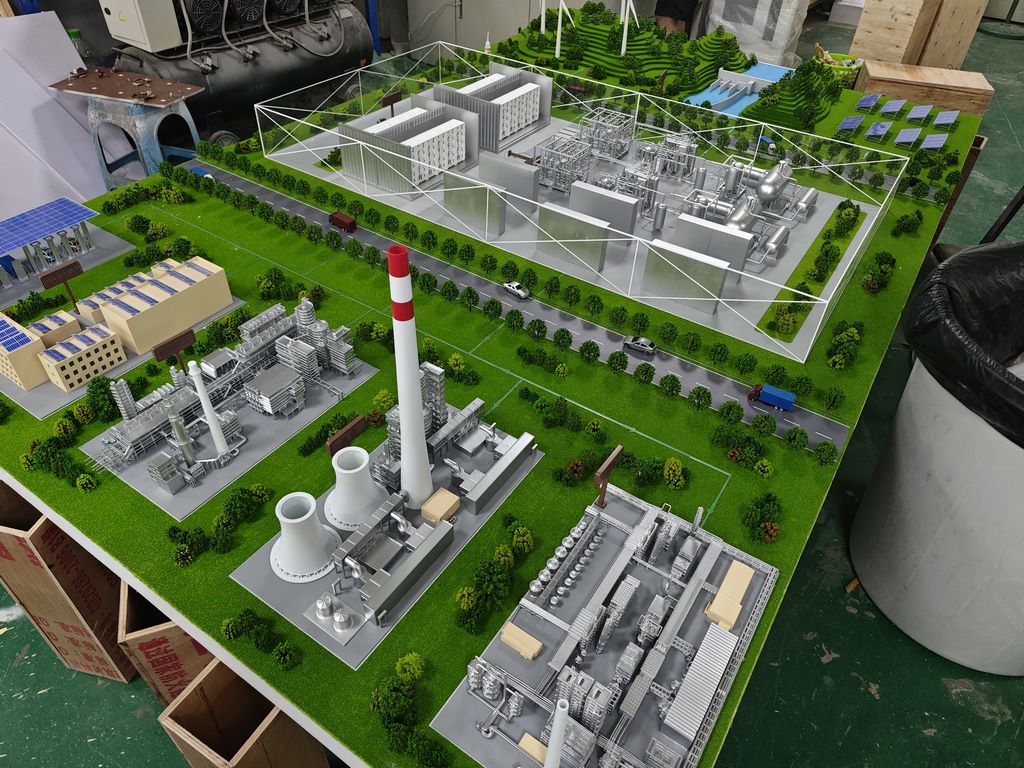
The use of sandpad models also helps to increase public understanding of and support for industrial park planning. Through on-site visits to the sandpad model, the public is able to visualize the layout of the park and understand the functional positioning and expected benefits of each region, thus making it easier to accept and support the development of the park. In addition, sandpad models can be used as promotional materials to inform the outside world about the advantages and potential of industrial parks and to attract more investment and enterprise presence.
How do we make a practical and efficient model of plan sands? This requires a combination of factors, including the size of the model, the level of detail, the manner in which it is presented, etc. In general, model ratios should match the size of actual industrial parks in order to better present the overall layout of the parks. At the same time, the level of detail of the model needs to be determined according to actual needs, both to ensure that key information can be clearly presented and to avoid an overly complex perception of impact. As for presentation, dynamic presentations and interactive experiences can be achieved through the combination of multimedia technology and models, enabling viewers to feel the charm of industrial parks more vividly.
In addition to being practical and efficient, the design of sand table models for plant planning should be innovative and artistic. A good sand table model not only accurately reflects the layout and characteristics of industrial parks, but also presents unique design concepts and cultural connotations. For example, the functionality and characteristics of different regions can be expressed through the use of different colours, materials and textures, or the usefulness and appreciation of models can be enhanced by the addition of creative elements. Such a design would not only enhance the artistic value of the sand table model, but would also attract more attention and interest and thus better serve its advocacy and educational role.
As an important planning and demonstration tool, the Sand Table Model for Plant Planning is important for the planning and development of industrial parks. It not only helps policy makers and the general public to understand the layout and characteristics of the park, but also enhances its image and attractiveness. Therefore, we should give high priority to the design and application of sandpad models, constantly explore new design concepts and technical tools, and work to create practical and efficient sandpad models for site planning, and contribute to the development of industrial parks.