Large industrial sandpad modelling process and attention
Large industrial sandpad modelling process and attention
In modern industrial designs, sand-paste models have become indispensable tools. They are used not only to demonstrate complex industrial systems but also to provide engineers and designers with an intuitive way of understanding and analysing complex machinery or structures. However, the production of a high-quality sand table model requires careful planning, design and implementation. This paper will provide a detailed description of the processes involved in the production of large-scale industrial sandpad models, as well as the issues that need attention in their preparation.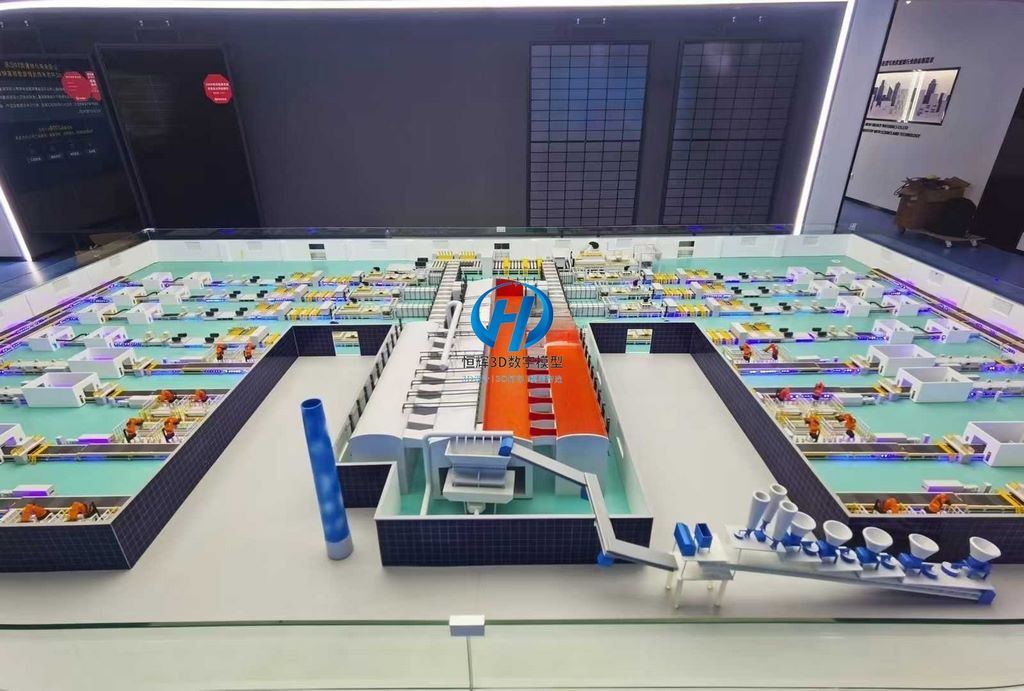
We need to be clear about the purpose of producing large industrial sand table models. This is usually intended to simulate the actual industrial environment so that engineers and designers can test and evaluate it before it is actually produced. The model should therefore reflect, to the extent possible, actual industrial size and complexity.
We need to consider the material selection of models. In general, large industrial sandpad models require the use of durable and easily maintained materials. Common materials include plastics, metals, glass, etc. These materials can provide sufficient strength and durability, while maintaining some transparency to better demonstrate the details of the model.
Once the material has been identified, the next step is to design the basic structure of the model. This includes determining the size, scale and layout of the model. For example, a small car model may be much smaller than a large aircraft model. In addition, we need to consider how to combine these different components in order to form a coherent whole.
In the design process, we also need to consider the maintenance and accessibility of models. This means that models should be sufficiently simple to enable non-professionals to understand their working principles; at the same time, models should be designed to take into account operational needs to ensure smooth operation in practical applications.
We're going to the modeling phase. This phase requires specialized technical staff. They need to use a variety of tools and techniques to produce various components of the model in accordance with design drawings and technical requirements. For example, laser cutters could be used to cut metal plates or 3D printing techniques could be used to manufacture plastic components.
In the production process, we also need to pay particular attention to the processing of details. Large industrial sandpad models often contain many complex mechanical and electronic equipment, and it is important to ensure that all components are accurately assembled. In addition, we need to pay attention to the surface treatment of models to ensure that they are clean and clean.
When modeling is completed, we need to test and evaluate it. This includes checking the stability, accuracy and operability of models. If any problems are identified, adjustments and improvements are needed in a timely manner.
The production of large industrial sandpad models is a complex undertaking that requires a combination of factors. By following the above-mentioned processes and attentions, we can ensure that high-quality sand table models are produced, providing valuable references and assistance to engineers and designers.