Transparent auto modeling.
Transparent car modeling
I. Decomposition of the concept of transparent car modelling
Transparent car modeling is a three-dimensional model creation process based on the prototype of a real car, proportionally scaled, using transparent or semi-transparent materials (e.g., Yakli, PC plates, transparent resins, etc.) as core materials, which precisely recaptulates the car ' s profile, chassis structure, interior layout, total power generation, and pipe direction. Its core feature is the integration of “structural visualization” and “material penetration”, distinct from ordinary physical models of cars, with a focus on visualization of the interior mechanics, parts assembly relationships and space layout of vehicles through transparent materials, and a central vehicle for the teaching of the automobile industry, the demonstration of technological development, the promotion of spare parts and general science education.
From the point of view of the object of production, all types of vehicles, including passenger cars (cars, SUVs, new energy vehicles), commercial cars, racing cars, etc., can focus on the whole body of cars and on the core components of engines, speedboxes, chassis, etc.; from the point of view of application, they are used extensively in the teaching of automobile colleges, in the technical training of automobile manufacturers, in the promotion of spare parts products, in the teaching of automobile museums, in the presentation of vehicle modification programmes, etc.; from the point of view of production, they integrate the principles of car construction, material formation, manual carving, mechanical processing and surface processing techniques, as well as mechanical rigour, the beauty of materials and the practicality of displays, and are important agents for connecting the physical structure of vehicles to the presentation of the scene.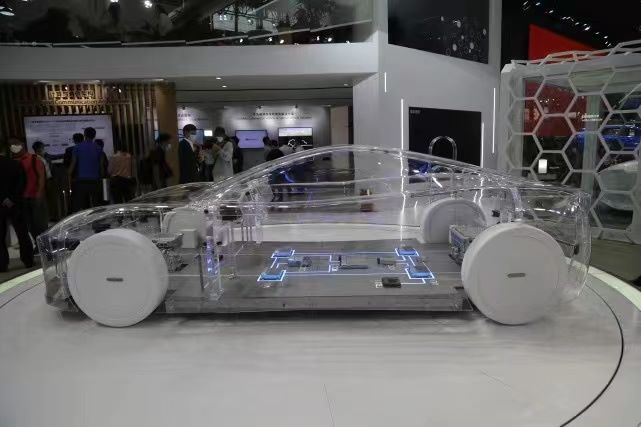
Relevant questions and answers
Question one: How can transparent car models choose material and control transparency in order to balance structural strength with internal construction performance?
Answer: The core principles are “selection of materials on demand, graded control”, material selection and transparency control require adaptation of model uses and demonstration focus. In terms of material selection, there is a need to combine model scale, difficulty in making and use: Small scale (1:24 et seq.) models or interior details, with a preference for high-transparent substrate (PMMA), with a perforation rate of more than 90 per cent, easy to cut plastics and suitable for fine structure; large proportion (1:18 et seq.) body body or receptor components, with a PC plate (polycarbonate), with high light and shock resistance, to avoid model vulnerability; and small components such as engines, pipes, which can be constructed with transparent resin and adapted to complex configuration requirements.
Transparency controls require a hierarchy of processes: the outer casings of the vehicle can be selected with fully transparent materials, maximizing the internal structure; the chassis, interior frame can be selected with semi-transparent sand material, distinguishing the structure level and avoiding a multiplicity of internal components; and the perimeter of the core mechanical parts (engine cylinders, gearboxes) can be partially radiantly processed and focusd to display the focus. At the same time, material defects need to be circumvented by screening non-foam-free, impurity-free and transparent raw materials for procurement, and by increasing light penetration through polishing, ensuring that internal structures are clearly identifiable, while ensuring that models are well structured and are not susceptible to deformed.
Question two: How exactly do transparent vehicle models reset internal structures while avoiding scratches and damage during transparent material processing?
Answer: The three-dimensional programme “Accurate mapping + fine processing + protective treatment” is used to balance construction reduction with material integrity. In the case of recapturing, detailed drawings of the prototype car (body structure, chassis layout, total power size, line direction, etc.) must be obtained and, if necessary, physical data collected by means of a 3D scanning technique to ensure that the components are proportionally accurate and that the assembly relationship is consistent with the real vehicle structure; in the production of internal components, priority is given to 3D printing or precision engraving processes, retrofitting of fine structures such as engine pistons, gear transformer gears, line interfaces, etc., and labelling of key components to enhance the professionalism of presentation.
Scratches and breakbacks require a full range of protection: at the processing stage, transparent plate cutting, grinding with special blades and sandpapers (800-2000 eyes), operating with no dust sheeting, avoiding impurity scratching surfaces, and after polishing with ointment for mirror treatment; at the assembly stage, selecting special transparency glue (e.g. UV glue) to avoid the impact of glue residuals on light perceivability, packaging of soft materials with assembly tools to prevent bumping and break; at the completion stage, spraying of model surfaces with skin-proof coatings and storage with special anti-fouling masks, use of custom foam packaging for removal, focus on edges and transparency, and extension of model life.
III. Benefits of transparent car modelling
1. Intuitive presentation of internal structures and reduction of the costs of teaching and training: complex internal structures of real vehicles, hidden components, difficulty of visual observation in maintenance training or teaching, transparent models that clearly demonstrate core structures such as power aggregates, chassis lines, circuit layouts, quick understanding of components assembly relationships and working principles, no need to dismantle real vehicles, and a significant reduction in teaching costs and operational risks, especially for practical training at auto colleges and for new employees of automobile companies.
2. Supportive technology promotion and product presentation: when a car spares enterprise promotes new engines, speedboxes or retrofitting components, it can visualize the product structure, adaptation methods and advantages through transparent models, which are more visual impact than graphics and textual presentations, allowing customers to quickly recognize the value of the product and increase the rate of cooperative conversion; when a car manufacturer displays a new energy vehicle battery layout or electrical structure at an exhibition, transparency models can become a central display vehicle and demonstrate technological strength.
3. Auxiliary R & D and programme optimization: In auto development or retrofitting, internal parts layout rationality, wiring scientificity and space utilization can be verified through transparent models, prediscovery of component interference, poor heat channels, optimization of design options, reduction of test costs and cycles of real sample vehicles, and retrofitters can also use model simulations, visual assessment of modifications and avoidance of retrofit risks.
4. A combination of collection and science, suitable for multi-scene re-use: Transparent car models have both the specialization of mechanical structures and the appreciation of transparent materials and have some value in their collection; they can also be used as general science exhibits to spread the principles of car construction and power to the general public, bringing vehicle technology closer to the public. The modular design allows flexibility in dismantling the display of components, suitable for use in multiple scenarios such as teaching, fairs, collections, etc., with high value for money.
IV. Detailed steps in the modelling of transparent cars
Step 1: Needs research and programme design
Identification of core needs: Determination of prototype model (specific vehicle type, year), scale size (common 1:18, 1:24, 1:43), presentation of focus (corporate structure/core components), transparency dimension planning, need for disassembly functions, budget scope and delivery cycle。Collect core information: obtain official car-type drawings, internal tectonic photographs, technical parameters and, if necessary, interface with car manufacturers or dismantling agencies to ensure data accuracy;If you need to display a specific component, collect details of the size and configuration of the component。Establishment of specialized teams (car construction consultants, structural designers, material engineers, manual producers, 3D printing technicians) to develop a detailed programme to establish a list of materials (transparent Akl/PC plates, transparent resins, special glue, ointment, scraping coatings, etc.), process processes (cutting, 3D printing, carving, polishing), parts split design, production of impact and construction maps, start-up of production with confirmation on the demand side。
Step 2: Material preparation and pre-processing
Under the programme, all types of materials are procured, with priority given to materials from high transparency, low impurity, suitable processing processes: The main body selects high-to-exceed occult or PC plates, internal micro-components select mobile transparent resins, adhesive materials select non-white, low residual UV and epoxy glues, supporting materials include polishing, scraping coatings, dustless cloths, specialized cutting tools, etc. Pre-treatment of materials: trim and reverse angles of transparent sheeting to remove edges of the piping; make prototypes of internal components through 3D printing, and make grindings; debugger resin raw materials to avoid embroidery to produce bubbles; pre-debug processing equipment to ensure cutting, engraving accuracy to prepare the basis for subsequent production.
Step 3: Core component production and fine processing
Submodules for core components: transparent plate cutting, hot bending, precise recapitulation, window configuration, grinding of edges to smoothing, photolysis enhanced through polishing;The chassis and interior frame is made with semi-transparent materials, and the seat layouts, medium console structures, chassis racks are restored, indicating where the key components are installed;Internal mechanical components (engine, gearbox, battery) are structured using 3D printing or resin and finely reduced structures such as gears, pistons, pipe interfaces, etc., and the components are coloured as necessary (local metallic spraying, separation of mechanical structures)。Fine processing: multi-wheel grinding of all transparent components (800 drapes 1,200 drapes) with ointment for mirror polishing to make sure that the surface is not scratched and mist free;Pre-assembly internal components, adjust size deviations and ensure alignment Yes.。
Step 4: Integrated assembly and protective treatment
(b) Layer assembly: assemble in a sequence from the inside to the outside, first fix the chassis structure, then install power aggregates, pipe lines, interior fittings to ensure that the parts are located and connected to nature; and finally install transparent car casings, glued with UV glue, and control the use of glue when adhesiveed to avoid residual spills, while leaving open the interface (e.g. doors, hoods) to allow display of the internal structure. (b) Protective treatment: uniform application of the surface of the model coating to enhance the resistance to grinding; cleaning of adhesive areas to remove excess glue and impurities; fixing of internal components to avoid shaking off; overall photolysis and structural stability check once assembly has been completed, minor correction of defective areas is made.
Step 5: Optimization of detail and acceptance delivery
Details optimized: additional detail identifiers with names and specification parameters on the surface of the core component; finely refined interiors (e.g. seat texture, medium console key simulation); adjusted transparent material reflections to avoid influencing internal observations under strong light; combined with special floors and dust masks to enhance the display of quality. Receiving and inspection delivery: Team self-checking to check structural reduction, photometric, component assembly accuracy, surface smoothing to ensure no scratches, air bubbles and no structural easing; invitation to demand-side inspection and acceptance to optimize adjustments in a timely manner for details. Following acceptance and acceptance of the standards, specialized packaging, cleaning tools and restoration accessories are provided, maintenance training is provided to ensure that the models are properly maintained and displayed.
V. CASES OF PRACTICE
Case I: Transparent chassis model for new energy vehicles (scale 1:18, special for teaching)
Customized for a vehicle vocational college, focused on the new energy vehicle chassis structure, using a fully transparent PC board to create a chassis framework, semi-transparent Accumulation batteries, electrics, electrical control systems and plumbing layouts, labeling and functionality of core components, supporting hoods, doors to be removed, and facilitating hands-on instruction. After the study, the problem of the hidden and intuitive structure of new energy vehicles was resolved, with the correct rate of understanding of battery layout and electrical transmission logic increased from 58 per cent to 92 per cent; training efficiency was increased by 40 per cent in practical training courses through modelling failure screening, with a cumulative service of over 800 students, regularly maintained, with a useful life of more than six years and adequate for multiple batches of teaching needs.
Case II: High-performance engine transparency demonstration model (scale 1:10, spare parts promotion)
Customized for a car spare parts enterprise to promote new high-performance engines at industry fairs, with transparent resins for engine cylinders and caps, Yakli to make gas tubes, exhaust tubes, 3D to print reductive pistons, curved axes, etc., with low-speed electrics to simulate pistons back-to-back, visual displaying engine work. The model was featured in three car parts exhibitions, attracting over 200 car companies and retrofitters to consult, clearly communicating engine structural innovations and performance advantages, reaching 12 on-site cooperations of interest for over $40 million, and making it a demonstration when it was easily accessible to customers, significantly increasing its outreach efficiency and becoming a core extension tool for enterprises.
Case III: Classic car full transparency collection model (scale 1:24, collection and science applications)
Customizing for a car museum, recapturing the full size of a classic car, using high-transparent Akli for body parts, windows, interiors, chassis, power-driven preformation, metallic and wood-coloring for local components, increasing appreciation and matching custom lights to enhance presentation. After entering the museum exhibition, it became the core of the Automotive Architectural Collection, which received over 50,000 people in total, helping the general public to visualize the internal structure and mechanics of the classic car, reaching 96 per cent of the satisfaction of the general public, and also having the value of a collection, which is included in the museum ' s classic model collection series, maintaining good light and structural integrity through regular cleaning.