One-by-one car chassis modeling.
One-by-one car chassis modeling.
I. One-to-one car chassis modeling conceptual decomposition
One-by-one car chassis modeling is a large stereo model creation process based on a real chassis model of a given vehicle type, which is reset at a scale of 1:1 and is accurate to reverse the original chassis frame, suspension system, transmission sum, brake system, switch to system and pipe layout. Its core feature is a combination of “full size reduction” and “structural functionality”, distinct from the downscaling model, with a focus on full alignment with the true chassis in terms of size, component interface, layout logic, and some models can achieve simulations such as diversion, swinging, etc., and are the core carriers of maintenance training in the automobile industry, technological development, hands-on teaching, and component adaptation tests.
From the point of view of the object of production, it covers a variety of types of vehicle-type chassis, such as passenger cars, SUVs, new energy vehicles, commercial vehicles, racing cars, etc., which can focus on the overall chassis structure, or on a core system (e.g., new energy chassis battery layouts, land-crossing system); from the point of view of application, which is widely used for practical learning at automobile colleges and universities, maintenance training, research and testing of chassis components, validation of vehicle retrofitting programmes, demonstration of industry technology exchange, etc.; and from the point of view of production properties, the integration of vehicle construction principles, mechanical processing techniques, metal welding processes, hydraulic/gas-dynamic simulation techniques, combined with structural rigour, practicality and sceneal suitability, which are important vehicles for connecting theoretical and real bottom operation.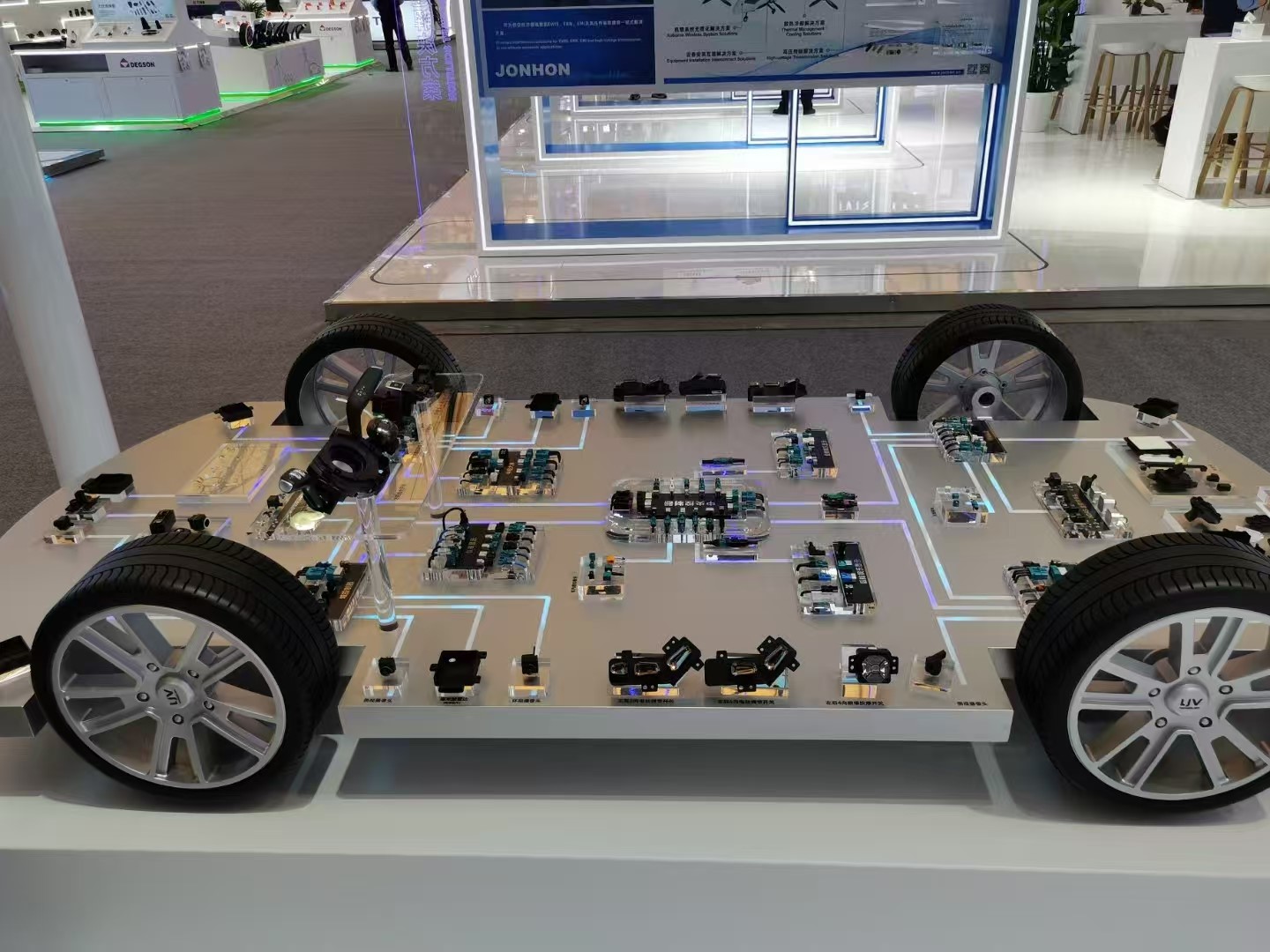
Relevant questions and answers
Question one: How does a one-to-one car chassis model balance the accuracy of the structure with the feasibility of production, and how does the core dilemma break?
Answer: The core principle is that "accuracy is not broken and the process fits well ", which combines control and feasibility optimization. Accuracy control is based on the original chassis official drawings, three-dimensional scanning data to ensure that the frame size of the chassis, the configuration of the components, the porosity of the lines, the spacing of the systems and the true chassis are fully consistent, and the size of the core components (e.g., transfer node, defibrillator, thruster) is controlled within <0.5 mm, and the threads of the key connective parts, and the button structure is properly re-repeated to ensure the disassembling and suitability of the components.
The core difficulty break can be achieved in three ways: first, material suitability, the choice of high-strength steel (e.g. Q235) for weight and stability in the main frame, the replacement of non-receptive components (e.g. tube protections, fixed racks) with aluminium alloy or engineering plastics to balance weight and cost; second, process optimization, the application of a complex curved and pressured structure, the use of CO2 gas protection welding in the welding area, and the avoidance of deformation and later adjustment; and third, functional extraction, pure teaching display models that simplify some dynamic structure, focus on exterior and layout, and the maintenance of hands-on models that focus on operational components, ensure a sense of exercise and make it difficult to optimize as needed.
Question two: How can a one-to-one car chassis model achieve a simulation of dynamic functions (direction, swinging) while guaranteeing security of use?
Answer: Adopt a “similar motion structure + secure design” programme that combines dynamic effects with physical safety. The dynamic function achieves different system characteristics: the shift system is adapted to different system characteristics: the shift system is driven to the wheel by a manual or small electric drive through a repeat switcher, a puller and a shift to the knot, leading the wheel to the left and right, and the shift to the angle is consistent with the real chassis; the assembly logic of the repulsive spring, the shock-mitigator, the lower arm, ensures that the wheel can move up and down, simulates the suspended feedback under real road conditions, and some models can be fitted with hydraulic pressure devices to regulate the suspension.
Safety security is subject to full process control: first, structural reinforcement, detection of injuries following welding of the chassis frame, installation of reinforced panels on key bearings to prevent the use of deformation; second, power control, with electric drive, the selection of low-voltage direct flow generators (12-24 V), the installation of independent switches, overload protections, the transfer of parts with protective panels and the avoidance of operational wounds; and third, operational specifications, models with clear operational instructions, denoting prohibited operating areas, and locking devices for critical components (e.g., brake systems) to prevent damage as a result of faulty operations, while pre-screening corridors for daily maintenance.
III. Benefits of a one-to-one car underboard modeling
1. Equipping physical learning to improve the effectiveness of training: the size and complexity of real car chassis and the problems of component damage and oil pollution in maintenance hands-on training, a model-by-mixing of the chassis structure, support for repeated de-assembling, failure simulations, visualization of systems and maintenance processes, especially for the training of new staff in auto colleges and universities, and significant improvements in the efficiency and safety of training.
2. Auxiliary R & D tests to reduce the cost of testing: When a car manufacturer develops a new chassis or optimized component, it can verify the rationality of the configuration of the component, the scientific orientation of the pipe and the ease of assembly, the prediscovery of the intervention of the component, the difficulty of dismantling, etc., and optimize the design; at the same time, they can be used for component adaptation tests to avoid damage caused by direct testing on the real chassis and to reduce the cost and periodicity of the R & D test.
3. Aided retrofit programme validation to avoid retrofit risks: in the automobile retrofit industry, a one-to-one chassis model can serve as a simulation carrier for the retrofit programme, pre-test the suitability of suspension upgrades, brake system modifications, battery packs (new energy vehicle types), visual assessment of the retrofit effectiveness and structural stability, avoidance of structural conflicts, safety hazards of direct retrofitting of real vehicles, and precise reference for retrofit construction.
4. Multi-species suitable for re-use and value-for-money: use of modular design, flexibility to remove system components, adaptation to multiple scenes such as hands-on instruction, R & D testing, technology demonstration, etc.; replacement of corresponding component modules with no need to re-manufacturing as a whole, while models can be used repeatedly over a long period of time, and can be maintained on a regular basis, taking into account practicality and cost control.
IV. Detailed steps in the preparation of a car chassis model
Step 1: Demand research and programme design (20%)
Identification of core needs: determination of model prototypes (specific vehicle type, year, chassis type), production uses (teaching/R & D/retrofit testing), need for dynamic functionality, range of removable components, budget scope and delivery cycle。Collect core information: obtain official three-dimensional drawings, lists of components, technical parameters of the corresponding car-type chassis, map real chassis in situ as necessary, collect core component data through 3D scans to ensure accuracy。Organization of specialized teams (including auto construction engineers, mechanical designers, welding technicians, numerically controlled processors, electricians) to develop detailed programmes to establish lists of materials (steel, aluminium alloy, engineering plastics, electric generators, hydraulic parts, welding materials, etc.), process processes (digital cutting, welding, flushing, grinding), dynamic system design, parts fragmentation programme, production of construction maps and assembly manuals, start-up of production on demand-side confirmation。
Step 2: Material preparation and pre-treatment (15 per cent)
Under the programme, priority is given to materials suitable for 1:1 ratio, with high-strength steel selected for the master frame of the chassis, grinding alloy steel selected for core moving components, light quantitative aluminium alloy or engineering plastics selected for non-reception components, low noise, high stability low voltage and hydraulic components selected for dynamic systems, welding materials selected for welding strips/welders matching steel. Pre-treatment of materials: numerically controlled cutting of steel, aluminium alloy plates, reverse angles, rust removal, bending of pipes, pre-manufacturing of common connections such as screws, nuts, clamps, debugging of digitally controlled processing equipment and welding tools, ensuring that the processing accuracy and weld quality are met and laying the foundation for subsequent production.
Step 3: Core component production and frame welding (30%)
Production of core components in submodules: positioning of beams by drawing and fine-processing chassis, and beams in a digitally controlled bending process to ensure framework size accuracy;Production of core components such as hanger systems (springs, shock-mitigators, lower arms-stamping), shift systems (rollers, poles, steering discs), moving systems (rolling axes, speed-drive casings), complex components for grinding after numerically controlled processing or 3D printing, indicating component numbering and installation position。Frame welding: Collapse chassis and beams in order of assembly, welding using CO2 gas to protect the welding, welding followed by injury detection to ensure that welding is free, Nigel.;Upon completion of welding, correction of the frame, removal of welding stress, welding of the welding to level, securing of the straightness and stability of the chassis frame, and subsequent installation of the chassis support and fixed seat。
Step 4: Component assembly and dynamic system debugging (20%)
Layer assembly components: assembly from inner to outer, from core to auxiliary, first installation of a moving system, transition to a system and suspension system, and precise alignment of components to ensure a smooth shift and flexible swing;Installation of auxiliary components such as brake systems, pipelines (oil pipelines, lines) and fixed racks, line direction and fixed-formation of real chassis, leaving room for overhaul。Dynamic system debugging: to test the angle of diversion, the swing range in accordance with design expectations, to debug the fluidity of the moving components and to optimize control switch sensitivity when equipped with electrical, hydraulic devices, access to power supply and control systems degrees;Comprehensive inspection of the accuracy and robustness of the assembly of the various components, reinforcement of the loose parts, grinding of the Cardon components, screening of safety hazards and ensuring that protective devices are installed bit。
Step 5: Optimization of detail and acceptance delivery (15 per cent)
Details optimized: overall grinding, rusting, paint treatment of chassis models, reduction of colour and taste of real chassis, addition of widget name, numbering and operational guidance;Lubrication of removable components to ensure easy to unassemble;Pedagogic models can be equipped with failure simulators and markings, and models can be developed to reserve test interfaces to enhance utility。Receiving and inspection deliveries: Team self-checking to check structural reduction, component assembly accuracy, dynamic functional integrity, safety to ensure welding defects, loose parts, operation of Cardon, etc. against the construction chart and list of requirements;Invite demand-side acceptances and optimize adjustments in a timely manner for details。Following acceptance and acceptance of the standards, a statement of use (including the installation of dismantling methods, dynamic functional operations, maintenance elements) is issued, specialized tools and spare parts are provided, and operational and maintenance training is provided to ensure that the user is independent in performing physical and daily maintenance。
V. CASES OF PRACTICE
Case I: hands-on training model for new energy vehicles (1:1 ratio, special for teaching)
Customized for a vehicle vocational college, a new mainstream energy SUV chassis structure, precision reduction battery layout, electrical power, electrical control systems, suspension and diversion systems, support for complete parts dismantling and failure simulations, simulation of hands-on training projects such as battery packing, electrical overhaul and system failure mapping. After teaching, the problem of high-cost, high-risk and non-dismantling core components of real and new energy chassis was resolved, with the pass rate for the practical training of students increasing from 62 per cent to 91 per cent; the efficiency of the practical training courses increased by 50 per cent, with a cumulative number of students serving over 1,200, suitable for multiple batches of teaching needs, regularly maintained, structural stability and integrity maintained, with a life expectancy of more than eight years.
Case II: R & D test model for Land Cruiser-type chassis (1:1 ratio, dedicated to R & D)
Customized for a vehicle, for the optimal development of a new type of Land Cruiser-type chassis hanger system, 1:1 double-check the chassis framework, the hanger system and the moving structure, and reserve hydraulic control interfaces to test the passability and stability of the chassis under different tripped parameters. The model helped the R & D team to detect in advance three problems with the suspension of components, optimized the angle of the lower arm-strangling structure and the installation of the defibrillator, avoided the re-engineering of the real sample and saved R & D costs of approximately $1.5 million; and was also used for component adaptation testing, validated the suitability of new types of differentials and transfer axes, provided accurate data support for chassis production and accelerated the R & D process.
Case III: Commercial chassis retrofit validation model (1:1 ratio, specialized)
Customized for a vehicle retrofitting enterprise to reset a heavy commercial undercarriage structure for the certification of a retrofit programme for the loading of specialized cargo containers and hydraulic lifts. Model tests optimized the layout of the container's fixed slabs and the direction of the hydraulic piping route, avoiding the risk of unequal weighting of the modified chassis and wear and tear of the piping; and simulated the undercarriage under different road conditions, adjusting the suspension parameters of the system to ensure stability and safety of the modified chassis. After the model-based retrofitting programme landed, the retrofitting period was reduced by 30 per cent without any structural failure feedback, and subsequent multi-fitted commercial vehicle conversion projects were extremely useful.