Drum modeling of terminal buildings
Drum modeling of terminal buildings
I. Decomposition of the concept of sand table modelling in the terminal building
The station building sand table modeling is a fully process-based civil aviation hub site customizing service by model producers for airport terminal buildings and their ancillary areas, based on terminal building drawings, airport operating codes, passenger movement line design and customer custom requests, with the core of “building accuracy recapturing, process panorama, functional dynamic adaptation”, through drawing resolution, three-dimensional modelling, subregional landscape-building, modular assembly, simulation coating, system retrofitting, etc. Its core value lies in the transformation of the terminal from a complex system of building structures, passenger movement lines, movement of luggage, flight security to air-side land-side connection, into a visual, demonstrationable and demagogic sandpad model to “archive imaging, transparency of operating processes and visualization of planning”.
From the point of view of the target audience, the core elements of the terminal and the accompanying scenes are covered, including the building owner (departure floor, arrival level, transit level, VIP room, security area, access corridor bridge), operating facilities (valid counter, baggage sorting system, security equipment, boarding bridge, baggage extraction pallet), air side areas (lipad, taxiways, aircraft model, ground handling security equipment), land side areas (car lot, traffic hub, passenger distribution square, access facility) and control systems (flight information screen, broadcast system, control point);In terms of the core dimensions of production, three main elements need to be taken into account: first, proportionality matching (1:100 to 1:500 tailored to demonstration needs, balancing building details with the airport ' s global view), second, process recouping (passengers on mobile lines, baggage flow paths, flight warranty processes in line with actual airport operations), and third, functional matching (capability dynamic demonstration, light-lighting, voicecasting, flight simulation, etc., restoration of terminal operations);At the same time, different standards, such as adaptation planning, general awareness, project reporting, operational training, etc., will be used by manufacturers to meet the needs of a variety of scenarios in areas such as airport construction units, civil aviation administration, science fairs, scientific research institutes and civil service enterprises.。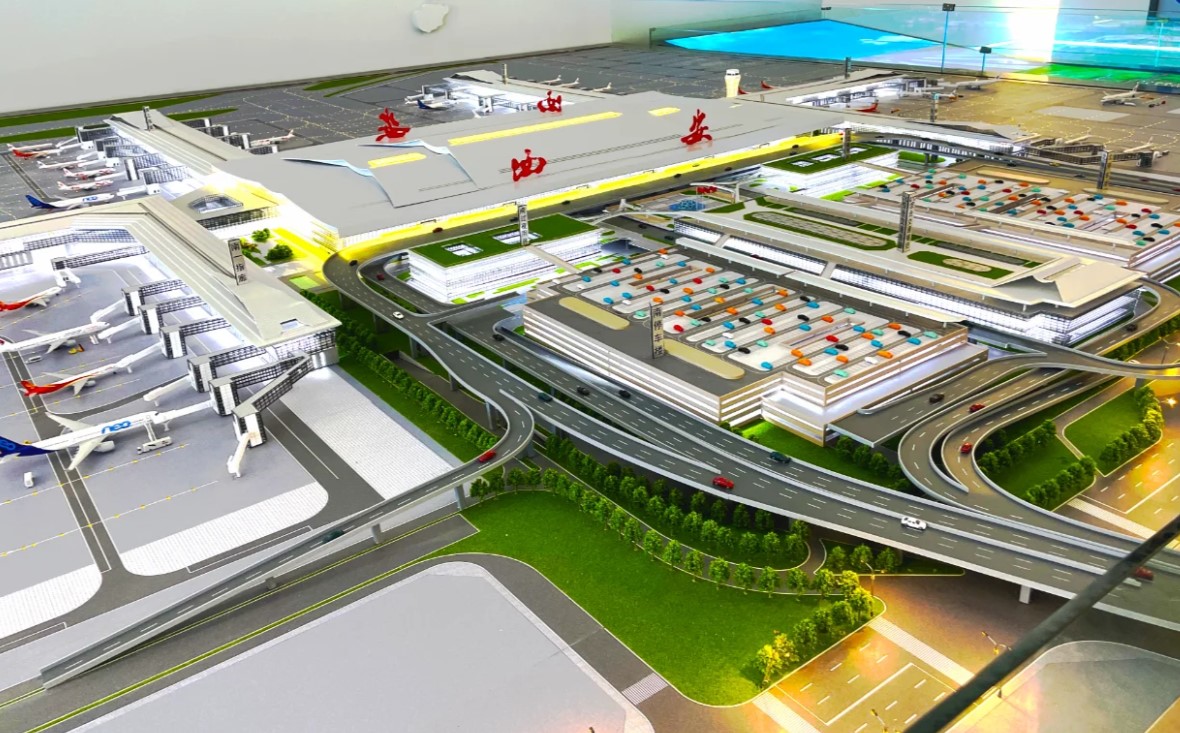
Common Questions and Answers for Sand Table Modelling in Terminal Buildings
Question one: The complex structure of the terminal building and the cumbersome operating procedures, would the model be able to accurately reverse the logic of passenger movement and flight security, taking into account the practicality of the planning exercise?
Answer: As a professional model maker, we can achieve the double-standards of architectural retracing and operational roll-over, perfect fit for air station scenes.。In the lead-up to the production phase, the technical team will work with civil aviation operators, building designers and the acquisition of terminal construction drawings, business process manuals and wiring design options, providing on-site field surveys, scene scanning services if required to restore existing terminal buildings, collecting sophisticated data on building profiles, space layouts, facility locations, etc. through 3-D laser scanning, and restoring the full process logic of passenger travel, baggage flow, ground handling security through the operation of a simulation software to ensure that links are aligned with the actual operations of the airport。In detail, strict stretching of the bridge, the baggage separation system structure, the layout of the security corridor, and even fine-tuning to the server counter identification, the entry door information screen style, the movement trajectory of the luggage transfer drive;Planning for fit-out by supporting users in adjusting the layout of the facility, testing the efficiency of the kinetic line and optimizing the safeguarding process through mobile facility modules, editable kinetic light systems (discretional colours marked, arrival, transit lines) with voice broadcast of analogue flight notifications, taking into account the retrofitting of buildings and the usefulness of planning。
Question two: How can models for different uses (planning exercises, science campaigns, project reporting) be differentiated in material processes to suit demand?
Answer: We will customize different materials based on the core needs of the scene and the characteristics of the terminal, balancing durability, demonstration and adaptation of the scene。Planning scenarios (airfield construction units, design agencies): focus on millability and planning flexibility, with the main subject being the use of high-intensity engineering plastics with metal fittings, the core modules of terminal floors, corridor bridges, service area, etc., which can be split, the facility model can be re-adjusted and positioned over time, surfaces made for smoothing, shock-resistant treatment, pre-set line-marking interfaces and data entry ports, and support for rapid iterative planning programmes;The Kopp Publicity Site (Television, Campus): Focus on visual impact and interaction, with the main object using light quantification of ABS engineering plastics with transparent Akili (showing the inside structure of the baggage separation system, the layout of the terminal collage) to ensure architectural accuracy through CNC processing, with static drives, seven colour LED light systems and touch interactive modules, to simulate the dynamic effects of passenger movement lines, dockings, flight departures, etc., and to communicate with the public about civil aviation, appropriate high frequency visits and interactions;Project reporting scenarios: focus on accuracy and quality, use of flame retardant resins, metal materials to build core elements, restoration of the proportion of the structure to the building drawings, facility points, size error control within > 0.1 mm, synchronized with high-clean display screens to display core data such as terminal capacity, wiring efficiency, appropriate for formal reporting scenarios。
Core benefits of sand table modelling of terminal buildings
For airport construction units, civil aviation authorities, science fairs, scientific research institutes, custom station-building sand table models are of significant practical value and are at the centre of our focus:
1. Assistive planning for landing efficiency efficiency: Terminal planning involves complex issues such as motor optimization, layout of facilities, matching of capacity, and traditional drawings are difficult to visualize. The model allows for a “low-cost, iterative” planning exercise that helps design teams to quickly identify dynamic line conflicts, optimize facility layouts and validate capacity suitability, pre-empt the risk of back-to-work construction, shorten the planning landing cycle and increase the efficiency of terminal operations.
2. Efficient dissemination by the Civil Aviation Section: knowledge of civil aviation operations is highly specialized, and public awareness of terminal functionality and flight processes is limited. The model enhances public awareness of civil aviation travel through dynamic demonstrations, interactive experiences and retrofitting, transforming abstract civil aviation business logic, flight processes into visual scenes, both to spread civil aviation knowledge and to demonstrate the hub value of the terminal.
3. Supplementary project reporting and operational training: in the air terminal project declaration, negotiation, airport staff training landscape, the model visualizes the architectural bright spots, operating models, core strengths and carrying capacity, helps to quickly assess project value at the decision-making level, while providing standardized training carriers for new airport staff and enhancing their mastery of terminal layout, emergency disposal and service processes.
IV. Cases of sand table modelling of customer terminal buildings and results
Case one: A new airport terminal is planned for the drawing of the sand. Production
Client needs: Customization of a 1:200 new airport terminal panorama sandpad to plan for rollover and design optimization and requirement for the restoration of the 3-storey terminal mains, 8 access corridor bridges, baggage separation systems, empty aprons and ground-side transportation hubs, with kinetics, facility layout adjustments, capacity measurement, modules to be split and re-engineered into multiple layout designs。Upon request, the joint construction design team and civil aviation experts surveyed the site, built the main terminal structure with high-intensity engineering plastics, ground handling facilities such as metal-materials for the construction of the bridge, aircraft models, achieved the dynamic effects of the stretching of the bridge through a programmable control system, the movement of the baggage disk, the lighting of the flashlight, etc., modularized design to support the adjustment of the values counter, the security corridor layout, the marking of the capacity nodes and the area of warning of the movement line conflict at key locations。Result: Modelling team optimized version 3 design, successfully circumvented 5 passenger movement line congestion risks, 2 baggage sorting bottlenecks, clearly communicated design highlights in project declarations, facilitated successful approval of the project, followed by an additional upgrade to the Sand Table for construction progress。
Case two: An interactive sand table at a civil aviation library Production
Client demand: Customization of an interactive sandpad for the Civil Aviation Section ' s General Pavilion, with requirements to cover the full process scene of passengers travelling on aeroplanes with tactiles, speech sessions, dynamic demonstrations, analogies, check-ups, boardings, baggage extraction, etc., and public insulation experience。We use ABS engineering plastics with transparent mags, through CNC processing interior layouts and facility details, transparent material displaying the baggage sorting system, plus touch control modules, seven colour LED lights and voice systems, to support viewers to trigger the airport view manually, follow the light line to understand the process, operate a corridor bridge to simulate a mock flight, model aircraft with static drive, simulation slides, docking actions, surface simulation to reset the airport scene.。Result: The model became the core interactive exhibit of the gallery, receiving an average of over 40,000 visitors per year, an increase of 65 per cent in the audience ' s awareness of the flight process of civil aviation, highly appreciated by the civil aviation administration and the public, followed by the addition of two special pallets for the gallery (cargo terminal, airport ground handling)。
Case III: Deck customization for an airport operation training
Client requirements: Customization of two 1:180 terminal operating training pallets for training of new airport staff, requirement for restoration of core terminal areas and emergency scenes, passenger movement guide, flight security simulation, emergency disposal exercise, materials for milling and repeated operations, training packages and test criteria。We use high-intensity fire retardant plastics to make the main scenes, core facilities (valor counters, security equipment, baggage transfer disks) to resize and simulate, set up 10 types of common operating scenes through the control system and 6 types of emergency work (flight delays, passenger passage, equipment failure), support participants in the development of skills such as orientation, emergency response, process interfaces, key points of operation and performance criteria, and support teachers with standardized training and performance guidelines.。Result: A 45 per cent reduction in the induction cycle for new staff, a 50 per cent improvement in service flow standards, the completion of core skills without reliance on terminal field training, savings of approximately $150,000 per year in space occupancy and equipment movement costs for the airport, and acceptance by the airport human resources and operations as a designated complementary model for regional airport training。