Modelling drones
I. Conceptual decomposition of drone modelling
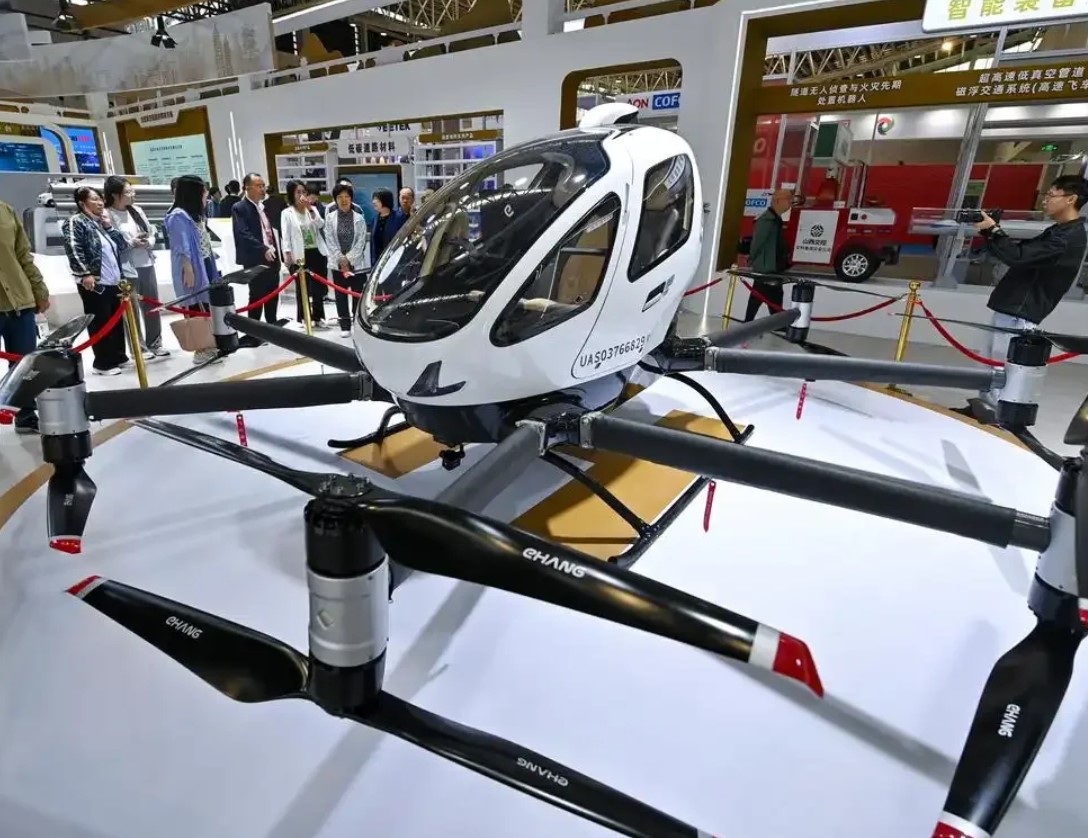
Modelling of drones based on prototypes of various types of drones, such as multi-rotored drones, fixed-wing drones, helicopter drones, vertical lift-off drones, and the production of three-dimensional models of structural authenticity, functional imitation, landscape suitability, using precision modelling, light quantification of plastics, power/flight simulations, and detailed restoration, in conjunction with core requirements such as aviation science, hands-on training, competitions, product presentation, video proprietors, etc.。Its core value lies in the simplification of the complex aerial structure of drones, their visualization, professional functional landscape, the focus on key components such as airframe frames, rotary systems, power units, flight control modules, mounted equipment, taking into account aviation specialization, structural stability, appearance reduction and safety of use, which meet the needs of diverse scenarios such as aviation science in primary and secondary schools, air studies in higher education, the marketing of drones, preparation for youth competitions, and is a reflection of the dedicated integration of aerospace technology, modelling processes and drone applications。
From the core dimensions, the production process consists of three core modules: first, demand positioning and specification control, with the need to specify model uses (scientific/teaching/matching/demonstration), type of drone (multi-rotational/fixed-wing/helicopter) and scale specifications (commonly 1:5 to 1:20, taking into account details and portability), core key indicators for the prototype size, structure layout, appearance features, core functions, etc., synchronized integration functional requirements (e.g., rotor rotation simulation, flight interface simulations, retrofitability of mounted equipment, disassembleability);Second, the core elements are recapturing, covering the body structure (frame, arm, fuselage, tail), the core system (spiration/propelling, electric, battery, flight control module), the supporting components (cloud, camera, landing gear, light, antenna), the scenery fittings (reception box, simulation, display of base) and are at the core of the features of the drone model;Third, process and material adaptation, which includes precision 3D modelling, laser cutting, 3D printing, manual grinding of assembly, coating beautification, integration of functional modules, etc., materials with light quantification, structural strength and landscape needs - - Body frames are made of carbon fibreboards, light ABS plastics, EPO foams, taking into account the need for rigidity and weight reduction, rotary wings are made of flexible nylons, carbon fibre composites, power/fly-control simulations are repeated with micro-impressors, 3D printers, essentially a simulation of the integration of UAVs by structural restoration and functional empowerment。
Relevant questions and answers
Question one: How can drone modelling balance structural reduction, functional simulation and scenario suitability?
Answer: The three-pronged dynamic balance needs to be achieved by following the principle of “structure back to core, functional simulations of needs, scenes fit in detail”。The structure is reduced to the core characteristics of the prototype drone, such as the size of the body, the configuration of the arm, the number of rotary wings, the shape of the landing gear, the control of key parameters (e.g. the length of the arm, the diameter of the wing, the length of the axle, the angle of the tail), within 3 per cent of the protometric error, and the application of the ratio to the prototype of the same material in the core load structure (on the rack, on the arm link) to avoid structural distortions resulting from simplified design to ensure that the model accurately conveys the logic of the unmanned aerial structure。Functional simulation, design based on use difference: teaching/symmetric model, enhanced core functional simulations, such as low-speed rotor rotation, flight-controlled signal-linking, cloud-top adjustment, battery hatch opening, etc.;The science/show model focuses on appearance and basic function presentation, streamlining internal complex structures, maintaining visual effects such as rotor rotation, light demonstration, etc.;The video tracker model combines appearance reduction and safety, weakens power simulations and enhances bump-proof design.。In terms of fitness of scenes, the user model uses light quantitative materials and foldable structures to facilitate carrying and displaying;The hands-on model of teaching uses modularised and decomposable designs to facilitate the decomposition of structural principles;The game model enhances structural strength and flexibility and corresponds to the demands of the playing field;The demonstration model focuses on appearance and static stability, with a special display of bottom enhancement.。
Question two: How do drone models fit different types of drones and use scenarios through material and process selection?
Answer: Dual fit between professional and practical by “material matchmaking + process precision enabling”。Material selection, matching drone type and use requirements: the hangers of the multiple-wing drone model are made of carbon fibreboards, light ABS plastics, balancing structural strength with weight reduction, rotary wing with flexible nylon or carbon fibre composites, avoiding bumping damage while turning;Body casings for fixed-wing drone models are made of EPO foams, EPS foams, fit-for-wing flow line plastics and light quantitative requirements, reinforced by wood bars and carbon fibre poles;The tail oars of the helicopter drone model are made of metal rods to ensure the stability of the rotation, and the body is polished with ABS plastic。The core components of the teaching/matching model are provided with interchangeable materials, such as detachable carbon fibre tubes for hands-on calibration and maintenance;The exterior components of the science/show model are made of high-light ABS plastics, and Aclik, and are coated with mimics to improve quality.;Video and video propule models use flame retardant, bump-proof EVA foams, soft resins to ensure safe use。Process design, using type-differentiated processes: Body frames ensure size accuracy by laser cutting, CNC engraving;Complex components (e.g. clouds, flight control modules) are produced by high precision 3D printing to restore detailed features;Appearance beautification using spray, water paste, hand painting combinations, recapturing prototype coating, marking, LOGO;Functional module integration using hand-assembly and circuit debugging processes to ensure flow of functions such as rotary-wing rotation, light connection, etc.。At the same time, the use of card-button connections to enhance the disassembly of teaching needs;Strengthened structural integrity in response to race demand, using adhesive + bolt fixed combinations;In response to the presentation of demand for enhanced appearance precision, fine grinding and dumming/high-light partition coatings are used to fit the full range with different types of drones and multiple scenarios。
III. Benefits of drone modelling
1. Enabling aviation education to be universal and lowering the cognitive threshold
In traditional aviation teachings, drone structures are abstract, flight principles are complex, real-life costs are high and risks are high, making it difficult for audiences to understand intuitively. The drone model allows for the conversion of abstract aviation structures, power principles, flight logic to imaging entities, allowing the audience to visualize the synergies of arms, rotary wings, flight controls, clouds, etc., through decompositionable designs, functional simulations, and quickly establish the basic knowledge of drones by hand-drive the rotary-wing rotation, light-linking, etc. The basic teaching of aviation, which is particularly appropriate for both primary and secondary aviation and higher education, can effectively lower the cognitive threshold, stimulate interest in the aerospace field and build bridges between theory and practice.
2. Preparation and upgrading of skills in support of competitions
For youth drone competitions and trade skills competitions, real-time training is costly, perishable and subject to space and weather constraints. The drone race model allows for precise recapturing of the machine size, operation logic, pre-matching training, tactical exercises, structural debugging requirements, familiarization of participants with aircraft characteristics in low-cost, low-risk environments, optimization of operational techniques, and debugging programmes. At the same time, the modelling process enhances the hands-on, structural and problem-screening capabilities of the participants, strengthens the competitiveness of the competition in all its dimensions and lays a solid foundation for the real-time competition.
3. Enhanced product presentation and branding
UAV manufacturers display portability, operation restrictions, wear and tear during product promotion, displays, customer interfaces, etc. The drone display model allows for precision recapturing of product appearances, core structure and marking features, small size portables, quick displays at fairs, customer sites, and visual transmission of product ' s structural advantages, functional features, design bright spots through static displays, dynamic function demonstrations (e.g. rotary-wing rotation, light association). At the same time, sophisticated models can serve as brand gifts, exhibition hall displays, enhance brand image, enhance client recognition and memory of products, and contribute to market outreach.
4. Adapting to multi-species needs and enhancing practical value
The drone model can be tailored to the needs of different scenarios, extending the range of practical values. In the video scenes, light quantifying, bumper-proof trophies can be created to replace the reality machine with a close-up, collision, etc., to reduce the cost and risk of filming; in the emergency field, simulations of drones can be produced, simulations of UAV reconnaissance, material delivery, etc., can be simulated, and complementary exercises can be conducted to land; in the scientific scenes, scaling models can be produced for use in the front stages of wind tunnel testing, structural strength testing, etc., to provide data support for real aircraft development and significantly reduce the cost of research and development.
IV. Drone modelling step-by-step process
Step 1: Needs interface and data collection
Clear customization of core requirements: validation with clients (schools, manufacturers, race organizers, video teams) of model-fitting drone types (multi-rotor/fixed-wing/helicopter), usage (scientific/teaching/racing/demonstration), scale specifications (commonly used: 1, 8, 1:10), functional requirements (rotation/lighting/disable/mountable), appearance requirements (painting, marking, mass perception) and delivery cycle。Collection of core information, including the UAV prototype ' s official drawings, size parameters, high profile maps, core structure diagrams, functional description documents, etc., combustration of customized features (e.g., priority reduction components, functional priorities, material preferences, safety requirements), development of detailed design programmes, material lists, process nodes, clarification of chain quality standards, start-up with client confirmation。
Step 2: Precision modelling and programme optimization
3D modelling based on demand and information, using modeling software such as CAD, SolidWorks and so forth, to build a pre-defined 3D model of core components such as drone body, arm, rotary wing, landing gear, cloud pad, tail wing in proportion, to control the size ratio of components, connections, structural details, to ensure structural restoration in accordance with the model parameters。Designing built-in space for functional needs, pre-positioning power generators, circuits and connectors, optimizing structural soundness and ease of assembly。Upon completion of the modelling, generate parts split maps, assembly diagrams, visual rendering maps, optimize communication with clients (including aviation technicians, teaching teams), focus on restructuring details, functional suitability, appearanceal senses, confirm non-objection locking in the final model scheme and export production processing files。
Step 3: Core component production and plasticization
Make core components by split programme, with priority for size accuracy, structural strength and light quantification。Body structure component: hanger, arm of aircraft made from laser-cut carbon fibreboard, ABS plastic sheet, fixed wing reinforced by an EPO foam through heat pressure plastics, wooden skeletons, helicopter tailings with metal poles, ABS plastics, pre-positioning of bolt holes, card buttons at key connections to ensure that they are robust。Core component component: Wings produced through 3D printing (Nylon material) or CNC carving (carbon fibre material) to reduce arc and detail of oars;Clouds, cameras, batteries are printed with high precision 3D printing, smoothing and leaving open and adjusted structures;The landing gears are made of metal poles, ABS plastics and fit the body load requirements。Functional component components: assembly of mini-engineers (drive rotor rotation), LED light (simulation of flight-controlled lights), simple circuit module to test electrical velocity, light-linking effects to ensure stable functions;A powerless simulation model that omits electric machines and produces static rotary wings and decorative lights。Auxiliary component: production of special display floors, receivers, imitation mounted (e.g. fire extinguishers, camera models), accompanying identification stickers, water stickers, preparation for subsequent installation and beautification。
Step four: assembly integration and beauty debugging
Drive in the order of " Structure assembly -- functional integration -- exterior beauty -- debug optimization "。Structure assembly: first assemble the body frame and arm, with bolts fixed, buttons attached or adhesive adhesives to ensure that the connection is robust and loose;Re-installation of landing gears, tails, clouds, etc., to adjust position accuracy to ensure compliance with airframe levels, rotary-wing symmetry, tail angles。Functional integration: Embedding of mini-engineers, circuit modules, LED lights into the fuselage as designed, connecting power sources (cells or off-site power), debugging rotor-wing fluidity, light-link logic, cloud-bed flexibility, optimising interoperability for teaching/race models and setting automatic demonstration procedures for display models。Appearance beautification: fine grinding of fuselage, parts, tectonics, defects;Re-carrying of prototype coatings with spray, painting techniques, pasting of markings, LOGO, water patches, restoration of detail features;Molybdenum/high-light treatment based on demand to improve appearance。Debug optimization: a comprehensive check of structural solidity, functional stability, appearance integrity, adjustment of rotary-wing spin noise, light level, gap between components to ensure compliance with predefined standards;Optimizing mass and folding structures for portable scenes, adjusting static stability to displays, enhancing disassemblyability for educational scenarios and ensuring overall adaptation needs。
Step 5: Corporate acceptance and delivery
Receiving and inspection by the " Size Precision - Functional Integrity Test - Appearance Quality " process。Size precision detection: test key dimensions such as axle length, arm length, rotor diameter against protometric parameters and modelling drawings, and error control in standard range Internal;Functional integrity testing: repeated debugging of rotary-wing rotations, light-linking, component adjustments, etc. to ensure running fluidity and responsiveness;Appearance quality acceptances: check coating homogeneity, marking accuracy, parts sharpening accuracy, no scratches, degels, deformation, etc.;Situation adaptation validation: simulation of actual use scenario, testing portability, operability, stability to ensure compliance with customer needs。After receiving and inspection, the accompanying production of use manuals, maintenance guides (including cleaning, debugging, maintenance elements), pack boxes, display floors, spare parts (e.g., rotors, screws, stickers), delivery to clients as agreed, and provision of necessary use guidance and technical support。
V. CASES OF PRACTICE
Case I: Aeronomy model for primary and secondary schools
A primary and secondary school has customized a 1:8-scale four-wing UAV model for the implementation of air science for all-campus activities, with core requirements being light quantification, disassembly, functional visualization, safe and sustainable use, appropriate classroom lectures and interactive presentations。Prototyped as a consumer-grade four-wing drone, using EPO foam to make body casings, carbon-fibre pole reinforced racks, soft nylon to make rotor wings, integration of micro-low-speed electric machines and LED lights, support of rotary-wing manual stoppages, light-link demonstration, card-button modular design, quick decomposition into four large parts of the fuselage, arm, rotary wing, cloud stand, with cards indicating the name and function of each component。After the model became operational, the cumulative service for more than 2,000 students increased students ' perception of the UAV structure and flight principles from 30 per cent to 85 per cent through visual dismantling and functional demonstration, effectively stimulating youth aviation interest and becoming a core school curriculumr。
Case II: Model presented at the UAV Fair
For participation in the International Air and Space Fair, a UAV vendor customises a 1:10 scale industrial grade six-wing UAV demonstration model with core needs to be deformed, functionally dynamic, portable, highlighting product carrying capacity and structural design advantages。Prototyped as a commercial-industrial drone, using high-light ABS plastics, carbon fibreboards to make body and arm, precise details of clouds, mounted interfaces, radar antennas, integrated mini-engineers and automatic demonstration programs to achieve spin-wing velocity, cloud-top adjustment, body-direction lights, and a mock-up of material mounted model (small fire extinguishers, high-clean cameras), which is modularized and can be assembled within 15 minutes and equipped with industrial wind display base。On-site, the model has attracted the attention of a large number of exhibitors and buyers through fluid dynamic demonstrations and sophisticated appearances, helping producers reach 12 cooperative intentions, increasing product advice by 40 per cent over previous fairs and effectively communicating product core competitiveness。
。