Demonstration modeling at high-level stations
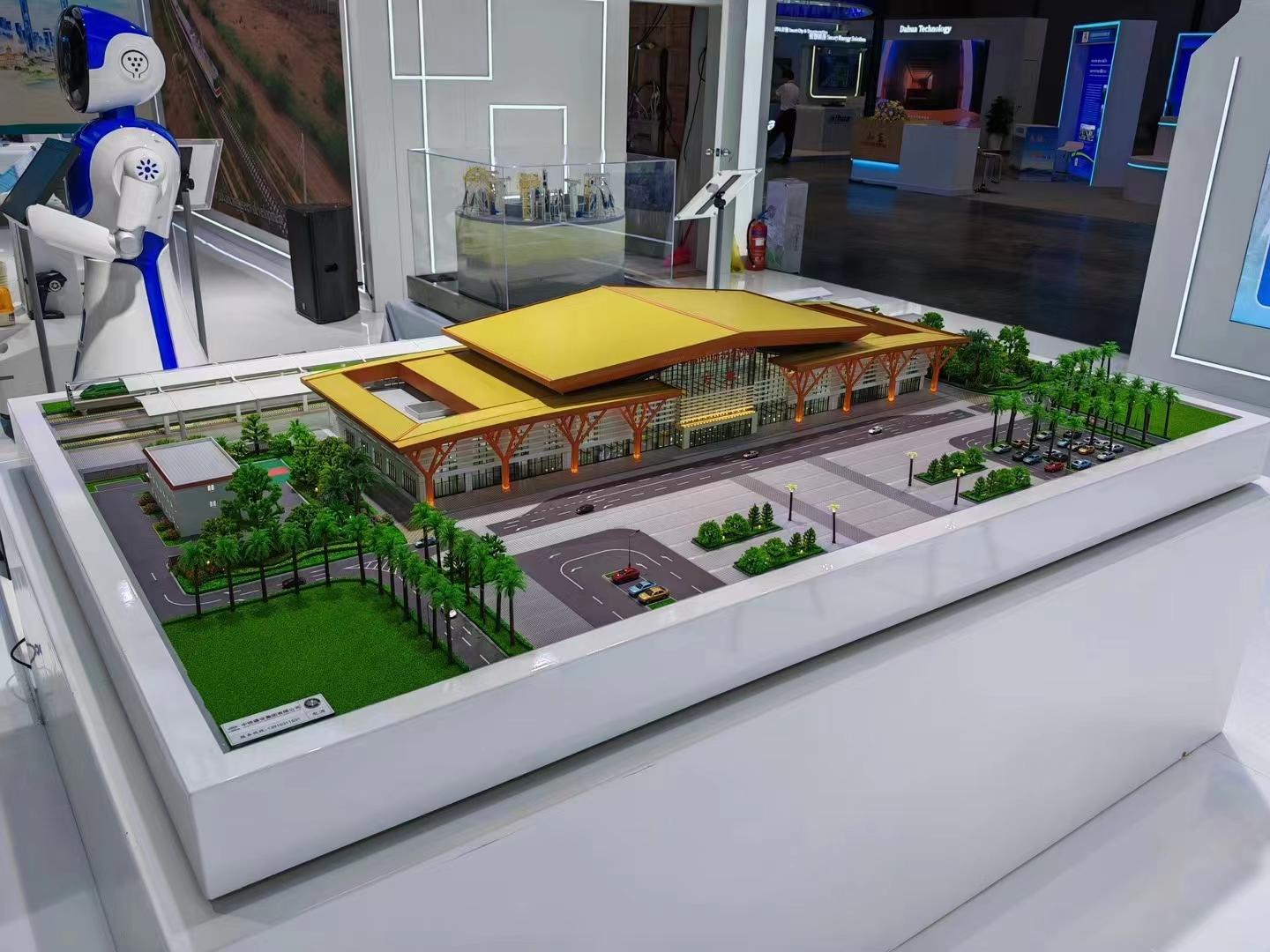
High iron station demonstration modelling is a multi-dimensional process that reduces the size of high iron station complexes, site layouts, orbital systems, ancillary facilities and passenger flow scenes at established rates and integrates architectural recapturing, landscape simulations, light simulations, detailed grinding, and produces visualization, scenery, demonstrationable integrated demonstration model carriers。Its core value lies in breaking the “large, complex and open space” limits of high iron stations, transforming the architectural aesthetics, functional layouts, operating logic of high iron stations into an observationable, interpretable and experienceable physical model, visualizing the core functions and contemporary features of high iron stations, which are widely used in the demonstration of railway construction enterprises, the validation of high iron station planning, the professional training of school orbital traffic, the curriculum of urban planning, the promotion of fairs, and the display of a communications tour, which is an important visualized bridge linking the design, operation management and public awareness of high iron stations, and helping people to quickly understand their architectural features, functional layouts and operating models.。
I. Decomposition of the core concept of modelling at high iron stations
High iron station demonstration modeling, distinguished from the replicating of general building models or station simplifiers, the core of which is “building precision, functional integrity, scenery work”, is a complex integration of architectural, material, light engineering, landscape aesthetics. Its core concept can be broken down into three key dimensions, each of which is rounded and synergistic, both to ensure that models fit the architectural shape and functional layout of a real high iron station, and to highlight the core features of a high iron station “constructed atmosphere, functionally functioning, efficient and easy to travel,” taking into account professionalism, demonstration and practicality.
First of all,Scale design and overall layout restoredThis is the basic premise of modelling.。Proportional selection needs to be combined with the size of high iron stations, model uses, display space and detail, with core adherence to the principles of “compatibility and integrity” - - Large models for urban planning displays, fairs, with a smaller proportion (1:200-1:500), with a focus on the interface of the entire structure of the high iron station to the surrounding traffic, the integrity of the overall layout of the station, and highlighting the urban landmark properties of the high iron station;Models for hands-on teaching, detailed displays, with a large proportion (1:50-1.150), with a focus on restoration of building details, site functional partitions, orbital interfaces and layout of supporting facilities to fit the functional logic of the operational scene。At the same time, the overall layout of the high-level stations, including the main station, waiting hall, platform, orbit, entrance and exit points, re-routing channels, garages, ancillary businesses, etc., needs to be accurately considered in the light of official design drawings, site layouts, physical images on the ground, and the overall layout of the high-level stations, including size ratios and location relationships of core areas such as the main station, parking areas, ancillary businesses, etc., to ensure that the model corresponds to the height of the real high-level stations, highlighting precisely the layout characteristics of the main station's air conditioning, clear site partitions, easy access, etc., so as to avoid the imbalance of proportions, mispositions, regional omissions, etc.。
Next.Core building and functional detailsThis is the soul of the model.。The presentation model of the high iron station needs to focus on the four core components, taking into account the “building aesthetics” and “functional relevance” of the main station building: the first is to refine the main station building with the look, structure and design of the main station, including roof form (e.g., flowline, dome), glass curtain wall, stone wall surface, identification of loGO etc., symmetrical, modern sense of the original building, and an accelerator of the high station.;The second is the core functional area of the site, where the waiting hall, ticket office, ticket gate, station, track, towed power supply facilities, etc., are restored to the waiting lobby seat, help desk, display screen, platform shielding door, indicator signage, orbital routing, turn-off, etc. to ensure that the functional layout is consistent with the actual high iron station;Third is an accompanying facility, which repeats access to and from stations, shifts to hubs (subway, bus connections), parking lots, ancillary businesses, bathrooms, service stations, etc., matching the functional requirements of the “one-stop shift, full-space service” at high-stations.;Four are scenario elements, including a simulation of passenger flow, a model of a high-terrestrial train, a model of a serviceer, an indicator mark, a green landscape, etc., which fills the static model with a lively operating air, highlighting the intensive, efficient and easy-to-efficacy character of the high-rail station.。
Finally.Material selection and process applicationsThis is the core guarantee of model quality and performance.。The selection of materials needs to take into account the characteristics of “building simulations, displays of suitability, qualitative presentation”, the regions and components of the station: The main building owners used ABS plates, resins, max plates, glass curtain walls used high-to-exceed max panels to simulate glass penetration and reflection.;The surface of the stone wall is selected using imitation sheeting or texture resin, and the mass and texture of the stone is reduced;Rooftops, frame structures commonly used in metal thin or thick ABS sheeting to increase stereophile and stability of buildings;Metal bars or rigid PVC plates commonly used in orbits, with the site ground being selected using imitated tiles, imitating marble plates to fit the actual material Sensor.;Common resins, fine engraving patterns and clothing in customer flow, service staff models;Green landscapes are commonly imitated with grass, microbrushes, matching real green planting patterns。Processes involving drawings, building dismantling, material cutting, plastic collage, polishing, polishing, light installation, scene decorating, etc., with the colour of a real high iron station (mostly light-colored main station, visible colour for markings, silver grey in orbit) and grinding of the architectural interface to ensure seamless connection and no hair Stab;The light system is the core light point of the model and requires the installation of a layer of light, soft and main lights for waiting halls, stations, glass curtain walls, markings, LED contour lights, orbits, trains, dynamic lights, simulations of the light effect of day and night operations at high iron stations, enhancement of the demonstration and atmosphere of the model, and some high-end models to add simple flow of passengers, train entry and exit simulations to enhance interaction。
II. Questions and answers in the modelling of high iron stations
High iron station demonstration modelling, due to the “complex structure of the building, the number of functional partitions, the complexity of the light system and the need to balance architectural aesthetics and performance”, often faces the twin challenges of recapturing the building and adapting the light system, with the highest degree of doubt as to the precise retracing of the main station building and the rational layout of the light system. The following is a combination of actual scenes, with detailed answers, combining practical and operational, helping to solve pains and improve the quality of models.
Question one: How can the construction of buildings in the main station of the high iron station be complex (e.g. flow-line roofs, large glass curtain walls, heterogenesis) ensure that the details of the buildings are refined and that modern aesthetics and permeability of the original buildings are not distorted by morphological deviations and physical distortions?
Answer: At the heart of the regraving of the main station building is "precision analysis of drawings, reasonably selected materials, fine polishing of details", balancing detail accuracy, architectural aesthetics and quality appearances, highlighting the architectural features of the high iron station。First, a precise analysis of the architectural drawings and the details of the structure — before the production, a detailed study of the architectural drawings, the floors, the profiles of the main station, identifying the core details of the roof configuration, the layout of the glass curtain wall, the radians of the heterodox surface, the texture of the stone wall, etc., and drawing 1:1 a chart of the structure decomposition and detail, indicating the dimensions, arcs, textures of each part, with emphasis on the radians of the control line-type roof, the way in which the glass wall is aggregated, avoiding morphological deviations caused by experience.;For alien structures (e.g. dome, arc pane), modeling with CAD software, precision measurement of radians and dimensions, ensuring rectangular accuracy。Second, rational selection of material, suitable for architectural senses - glass curtain wall selects high-to-truck panels, post-cut polishing, simulation of glass penetration and light-reflection, use of invisible glue in the collages, ensuring seamless connections, and avoiding cracking impacts. Sensor.;Fluid roofs are selected with resilient ABS plates or resins, heat plastics, precise restoration of the arcs and contours of the roofs, smoothing of surfaces and aesthetics of modern buildings;The stone wall is selected using imitation of graphite resin or sticker, which is precise to recaptulate the texture and colour of the stone, avoiding texture distortion and colour deviation;Architectural frame selection of metallic sheeting to improve the 3D perception and stability of buildings。Finally, finely sharpen the details and optimize the aesthetic presentation - after completion of the collage, emphasis is placed on grinding the collage, the edges, ensuring that no thorns, no bumps, and a smooth line to the building.;When the glass curtain wall is pasted, adjust the angle to ensure that the reflection is even and simulates the visual effects of the real glass curtain wall;Add fine lines, markings, restoration of building details of the main station on the surface of the building, roofs, while avoiding overdecoration, highlighting the simplicity of the high iron station, the aesthetics of the atmosphere, and ensuring that the model is accurate in recapitulating the details and the modern quality of the original building。
Question two: how can the demonstration model of a high iron station be rationalized to ensure that the light is soft and natural, clear, while avoiding problems of blindness, dimness and wiring, and that the light atmosphere in which the high iron station is actually operating is matched by the light system?
Answer: At the heart of the light system layout is "divide, layer control, details to hide", balancing performance, visual comfort and wiring, matching the light atmosphere of the real operation of the high iron station Round。First, partition light, clear light function - plan for different light layouts based on the functional partition of the high iron station model to achieve "delineated and functionally fit": soft, warm white LED lights in waiting halls, ticket offices, simulation of indoor lighting, low light, avoidance of puncture;Glass curtain wall, main station contour with colour LED contour lamps (e.g. white, light blue) highlighting the outer contour of the building and modernity Sensor.;Stations, orbits with cold white LED lamps, dynamic lights with train models, simulation of site operating climates Round;Access to stations, re-engineered hubs with soft lights, indicating the direction of the corridors and matching practical requirements;Accompanying commercial areas with warm LED lamps to create a warm business climate Round。Second, layer control, optimization of light effects - using layer control switches, separate control of light in different areas, depending on the demand for demonstration, separate light in a given area, or full light, flexiblely adjusted for presentation;Lights are subject to modifiable resistance control to adjust light levels to show the intensity of light in the environment, to ensure balance of light and darkness, and to avoid problems of local overlighting and dimness;Add a flexible light mask to the light installation, weaken the light, make it softer and natural, and match the real lighting of the high-level station. Round。Finally, the hidden circuit, which regulates the layout - the light line selects small copper wires, hidden inside the building, below the platform or inside the model base, to avoid the appearance of the line affecting beauty.;Lines are organized and insulated to avoid disruptions and short circuits.;Set up a line on the side of the model base to facilitate electrical access and maintenance, while adding heat-dispersion devices inside the base to avoid the permanent use of heat damage model components in lighting and ensure that the light system is both functional and safe and durable。
III. Advantages of custom-made demonstration models for high iron stations
Compared to standardized, generic station models, customized high-station demonstration models, better suited to the client's specific high-station models, planning programmes, use scenes and presentation needs, the core values of the demonstration, hands-on training, planning and science programmes are being fully utilized. The core benefits are focused on three main areas: “adaptability, relevance, practicality”, precise solutions to the pain of use of different scenarios, maximizing the demonstration and practical value of the model, and facilitating the dissemination of railway construction, urban planning and orbital traffic.
First, it's highly adaptable and precise to fit the station and scene needs.。Customized models can achieve “one-on-one fit” by adapting their architectural details, functional layouts, light systems and additional features in a manner that is fully consistent with the client-specified high iron station model, planned design drawings, scale requirements, use of scenarios。For example, railway-building enterprises, high-station operators customize high-station buildings, station layouts and restore core features (e.g., iconic building models, exclusive LOGO, feature-exchange systems) for displaying, operational training, planning optimization in enterprise fairs to help clients understand the building features and operating patterns of high-stations;Schools custom-made to fit orbital traffic specializations, focusing on site functional partitions, orbital interfaces, light systems for the rectification of details, design of removable building components, demonstration light systems, easier for students to observe learning, simulated operation management, adapted to the needs of hands-on teaching;Urban planning, science institutions customized to focus on the interface between high iron stations and urban transport, overall planning layouts, simplification of complex details, presentation of a mix of functional and planning concepts in each region, appropriate for rapid public understanding of the planning significance and functional value of high iron stations;Exhibits, civil service displays tailored to the size of the display space, model ratios and patterns, highlighting the marking features of high iron stations, upgrading display slots and avoiding the problem of a standardized model, “site mismatches and inadequate scenery”。
Second, it's focused and highlights the need for high iron station characteristics and individualization.。Customization models can focus precisely on the core needs of clients, highlighting the unique features of different high iron stations (e.g., emblematic architecture, geographical cultural elements, feature layout) and meeting individualized customization needs。For example, the focus on a core feature (e.g., the iconic roof of a high iron station, the geocultural decorations, the new system of switching) can be tailored to the needs of the client, highlighting the unique glamour and geographical characteristics of a high iron station;Personalized elements can be added, such as the name of the firm LoGO, the name of the station, the logo of the core plan, customised floors (the concept of planning, the time of construction), which can be used for showcasing and showcasing of the company's strength and high station characteristics, as well as for personalization.;At the same time, model functions could be adjusted as needed, such as increased station dynamic simulations, flow flow simulations, speech presentations (presentation of high iron station planning, functional layouts), light dynamic demonstrations, enhanced demonstration and interaction of models, and improved performance and experience Sensor.。
Third, there is a multiplicity of practicalities that combine multiple values with higher value for money.。Customized high-station demonstration models, which are not mere display displays, but have multiple practical values such as demonstration, hands-on training, planning, science, promotion and “one model multi-purpose”。For railway-building enterprises and high-wire station operators, models can be used as a tool to support planning demonstration, to simulate the layout, functional suitability of high-wire stations in advance, to screen for planning gaps, to optimize design options and to reduce planning costs;As a training tool for staff in running operations, help staff quickly master the main points of site layout, light control, traffic orientation, etc., to shorten the training cycle and enhance professional competencies;It serves as a central vehicle for client negotiation and brand promotion, visualizing the planning concept and building features of high-wire stations and helping to facilitate project engagement and enhance brand impact。For colleges, models can serve as hands-on teaching aids for the orbital transport profession, linking theoretical knowledge and practical practices, helping students quickly understand the design, functional layout, business logic of high iron stations and improving the quality of hands-on training。For urban planning, science institutions, models can be used as a pictogramal science tool to make abstract urban planning, orbital traffic knowledge readily understandable and to help spread knowledge about science.。In addition, customized models can provide flexibility in selecting materials, processes and functions based on client budgets, with the option of selecting the base (with emphasis on building and functional layouts) or the option of selecting the high end (with emphasis on light demonstration, dynamic simulation and detail precision), taking into account practicality and economy.;At the same time, custom model processes and materials can be upgraded as needed, have a longer useful life and can be reused over a long period of time, with value for money well above standardized, generic models。
In summary, the demonstration of the high-station model is a professional, demonstration and practical exercise that helps to promote the high-quality development of the railway transport industry, urban planning optimization and the dissemination of orbital traffic through the demonstration of railway construction enterprises, training in the operation of high-station stations, practical training in institutions, and the popularization of urban planning sections.