
Integrated Energy Sandpad Model Customized Plant, New Energy Sandpad Modelled Source
Case of integrated energy sandpad modelling
Background of the project
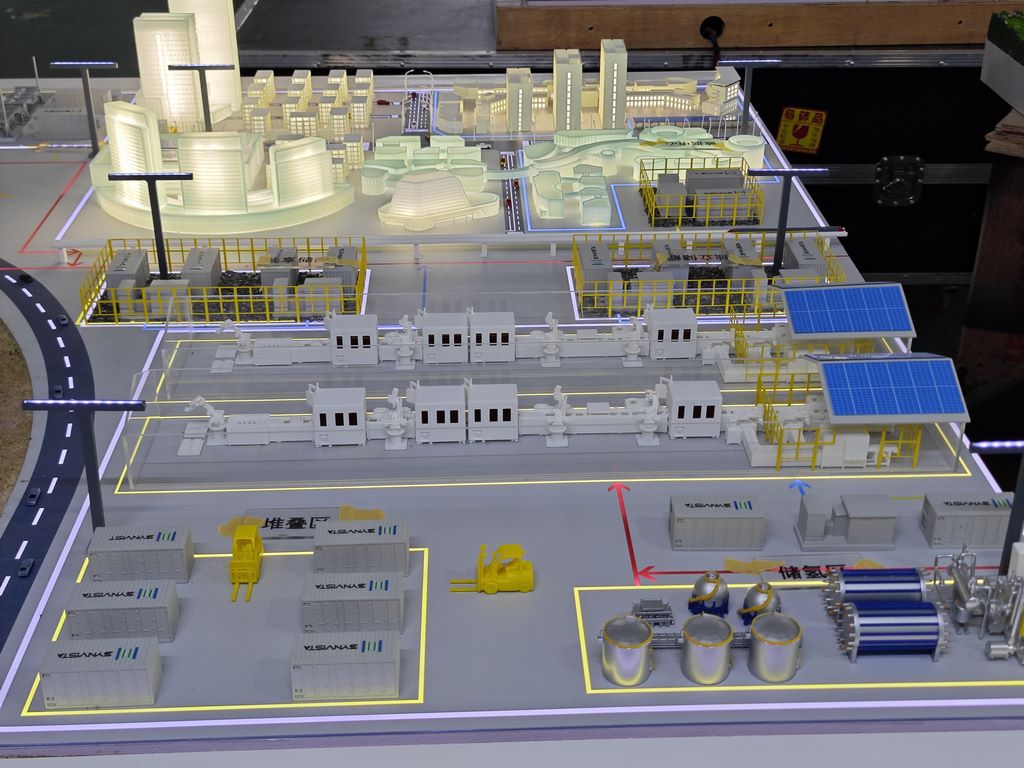
An energy technology enterprise that plans to participate in an industry summit will need to customize an integrated energy system to display sandpads for visualizing the full chain energy ecology of "windlight storage integration + smart micronets + industrial applications". The model requires a high-level reduction of core elements such as photovoltaic arrays, wind generators, energy storage facilities, industrial parks and urban complexes, with a trueness of more than 90 per cent, taking into account the need for static displays and dynamic functional demonstration.
Core production process
1. Layerd partition printing and precision assembly
Dismantling sands is divided into five main modules of energy production areas (photo/wind power), energy storage areas, industrial parks, urban complexes and terrain base. Precise components, such as photovoltaic arrays and wind blades, are printed independently and are collated with the magnetic suction structure through a card button to ensure easy assembly after transport.
Plants, pipelines, etc. in industrial parks are printed in layers, leaving empty structures such as roof vents, equipment stubs, etc.; urban buildings are organized around real blocks and the floor space and height are strictly reduced to design drawings.
Dynamic functionality and interactive design
The wind generator's leaves can be rotated manually to simulate the operation at different wind speeds; the LED beads are pre-positioned on the surface of the optical voltage, and the light absorption effect can be demonstrated when electrically activated.
The mini-control panel model is configured next to the energy storage facility (cells/gas tanks) and presses the pressure button to trigger the “surveillance charge” light (red/green switch); the transmission belt in the industrial park is driven by a micro-engineer and slow to operate the simulation material delivery process.
Material selection and adaptation
1. Material for main and functional components
Photovoltaic arrays, wind towers, etc., exposed structures are printed in high-resilient photo-sensitivity resins and surfaces are sprayed with dumbness Ash + Blue Gradient coating, simulation of PV glass and metallic senses; wind generator leaves are printed in transparent resins, internal pre-embedded fibre-optic guidance, and "mobile light" at night.
Equipment such as energy battery units, gas tanks, etc., are printed in rigid resins, surfaces are used for old treatment (light brown paint + point wear marks) and industrial senses are restored for long-term use; pipelines in industrial parks are supported by fine support, and welding interfaces and French disk details are maintained.
2. Sites and marking materials
The topography base is printed in granular resins, imitating plaster and grass powder, modelling mountains and green belts; the windows of the urban building complex are embedded in micro-accumulators, and the LED lamp belts at night light the “city night view”.
The operating warning signs for wind and photovoltaic stations are printed in 3D soft-jet 3D on the surface, with filamental mirror warning stripes; the “energy flow” microfiche panel for industrial parks is printed in laser engraving + UV, with clear text and arrows.
IV. Post-treatment and topography
1. Surface refinement and qualitative reinforcement
All print items are manually grafted and sewn, focusing on details such as the arc of wind blades, metal connectors to light-volts to ensure that the edges are not punctured; the building walls are covered with duds and local dotted stain spots (manual brushing) simulate old equipment.
The grasslands at the base of the terrain are pasted with electrostatic flavour, with natural ups and downs; trees in the green belt are wrapped around green fumes with fine copper wire, with roots buried in soft gel floors, solid and realistic.
2. Details and functional identifiers
Optical voltage “power generation” electronic screen models are printed in transparent resins, with LED light bead cycles in place to display data; and the “capacity status” indicator panel of energy storage facilities is carved with Aklik, spraying red/green two-colour paints to distinguish discharge status.
The piping valves in industrial parks are embedded in mini-ABS and manually rotate to simulate switch actions; small components such as roof air conditioners, solar water heaters, etc., in urban buildings are printed and pasted to enhance the authenticity of the scene.
3. Dynamic effects implants
The wind blades of the wind field open the LED guidance fibre at night to simulate the "stellar flow" effect; the LED lamps of the light-voltaic arrays can regulate brightness by remote control to simulate the intensity of light over time.
The “energy flow” signal belt (Blue LED) of the energy storage facility is paved along the pipeline and is powered with a “energy transfer” dynamic path; the “product stacking area” at the end of the conveyor belt in the industrial park is set up to show the material output process manually by sliding panels.