
I. Core programme framework
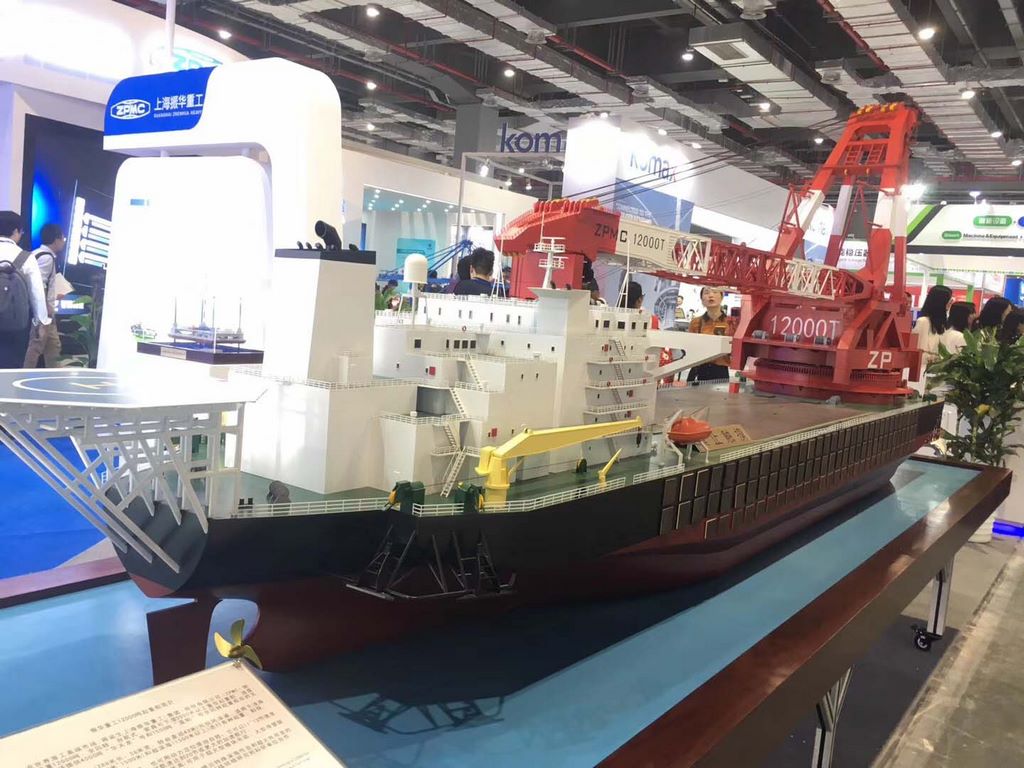
Around the Tilt“Accurate reduction of the technological characteristics of heavy vehicles in large countries, integration of educational sciences and industrial aesthetics”The modeling programme, which covers the three dimensions of design, production and presentation, achieves the twin objectives of “technology visualization” and “cultural values transfer”.
(i) Design dimensions: anchor technology and aesthetic balance
Technical characteristics reduced
Structure: Following the real parameters No. 30 of Jinhua (320 metres in length, 58 metres in width and 28 metres in depth) by reducing by a scale of 1:1,000, ensuring that the contours of the ship, the configuration of its arm, and the actual equipment are at a height.
Functional Details: The layout and quantity of the reduced self-avigation capability (short thruster model), the DP2 power locator system (simulation locator structure) and 12 thrusters (2 side pushers, 6 full-turn thrusters, 4 pod thrusters) to make the model a “touchable technical slice”.
Visibility of suspension: Enhancement of the core function through the “12,000 tons” marking, simulation of the “mm-grade” technical logic (e.g. the angle of the arm, simplified presentation of the weighting system) at the time of the suspension operation, to give the viewer a visual sense of the accuracy of the “Power heavyweight”.
Industrial aesthetic expression
Colours and Materials: The hull uses white (reducated real coating), a red (enhanced visual focus) for the crane arm, and parts such as thrusters, decks, etc. distinguish between functional areas through materials such as metal colour, wood texture, etc., in response to both industrial quality and appreciation.
Space level: hull stratification design (tail propulsion area, central operating area, bowing area) to restore the “stereospace” of a real ship through a high and wrong deck, chamber structure and model “microengineering theatre”.
(ii) Production dimensions: dual breakthroughs in process and detail
Material Selection
Shipowners: Select high-intensity ABS resin, taking into account light quantification and structural strength, and simulate the “hard load” of a real vessel;
c. Hanger and thruster: use of the aluminium alloy framework + resin outer layer to restore the industrial sense of “high-strength steel” while achieving light quantification;
Decks and details: using PVC plates, metal sheeting, etc., finely sketched micro-components such as bars, cabin doors, lifeboats, etc., to make the model “details readable”.
Processes
3D Modelling and Printing: a three-dimensional model based on the CAD software, followed by a 3D printing module to ensure structural accuracy (e.g., the angle of the arm to the hull, the location of the thruster);
Manual grinding and assembly: The "modular construction logic" of a real ship is simulated by grinding, polishing, assembly through a dice structure, glue;
Details: The markings on deck, the equipment in the cabin (e.g., control room, module simplifier model) are presented through hand painting, stickers, etc., so that the model “story is full”.
(iii) Presentation dimensions: integration of scenery and interaction
Scene setup
Simulation of the marine environment: The base is designed to be a “blue pool” model with a ripple-lined road, restoring the operational landscape at sea;
Functional division: The model is surrounded by a “technical parameter display” (marks core data such as total length, shape width, lifting capacity, etc.), “application case display” (suffying cases such as the Hongjua Bridge, the Greenwater Windworks, etc.) to make the model a “mobile science classroom”