
Case of a new integrated energy use planning sand table modeling
I. Project background and needs
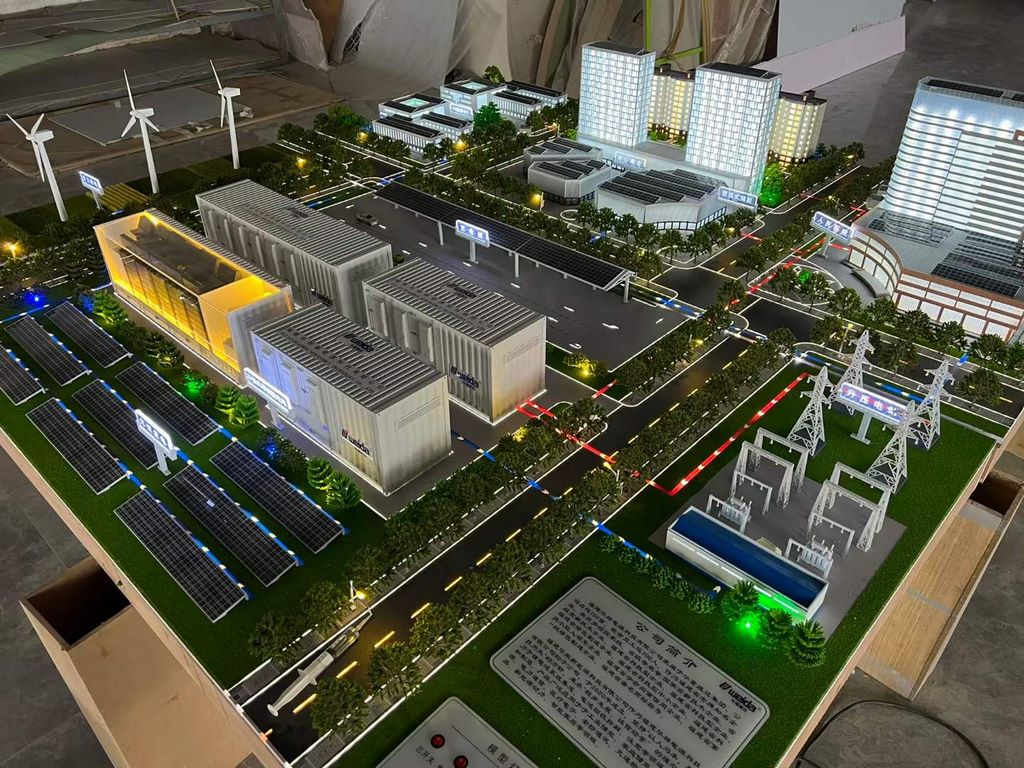
An urban planning design institute commissioned our Division to produce a scale new integrated energy use planning sand table model to demonstrate the overall layout of urban renewable energy systems. The customer provided complete planning drawings and design impact maps requiring the model to accurately present the synergy between wind generators, optical matrixes, storage power stations and urban buildings, with overall reduction of over 90 per cent and dynamic demonstration functions.
Production processes and processes
Graphic analysis and 3D modelling
Based on client-provided planning drawings and building CAD data, three-dimensional reconstruction using specialized modelling software. Focus on key elements such as the location of wind generators, the angle of the light voltage installation and the direction of the road to ensure that the model is fully aligned with actual planning.Main Structure Production
Topography base: The geomorphological features of the landscape are projected using high-density foam engraving, with surface covered with a plaster mixture to shape the natural ups and downs and downs and downs.
Building complex: ABS plate laser cutting building outside, window frames are etchinged and high-rise buildings are embedded with LED lamps to simulate night lights.
Wind power generation team: The pylons are shaped by a car with aluminium alloy, 3D-printed resin parts for the cabin, and the oars are shaped by thermal pressure of carbon fibres.
Optical Array: Customized Aclytic UV-printed crystal silicon texture, with the tilt angle strictly adjusted to the drawings.
Energy system details
The transformer plant is assembled using metal etchings, and the transformer's radiator is formed by copper stacking
Road systems are graded according to plan: the main road is paved with grey PVC plates and threaded lines, and the pavement is marked with imitated plasters
The green belt uses electrostatic herbiving techniques, and the wood is dyed with sponges and implanted in copper silk trunks
Surface treatment and coating
Industrial coating standards
Wind generator: RAL 9010 white sprayed with pylons and dark gray luminous paint in the cabin
Photovoltaic plate: surface plating of the film to avoid reflection, bordering for anode oxidation
Architects: The main object is light-camel sandstone pamphlet and the glass curtain wall area has a gradient film
Environmental integration
Add mini-transport lights (3mm LED) at intersections
Security warning fences around power storage stations (0.3 mm stainless steel welding)
Riverways use multiple-storey resins to demonstrate water body transparency
Special effects achieved
Wind generator oars with low-speed no-brusher driver (turn speed 5rpm)
Optical zone configuration light sensor system to automatically adjust LED brightness with environmental light
Put fibre-optic simulator tracks on the main track.
IV. Dynamic system integration
Smart control system
Use PLC programming to achieve three demonstration models for switching (day/night/emergency)
7-inch touchscreen embedded program dynamic presentation video
All circuit systems hide wiring and access power through the model base.
Fault Simulation
But it's manually triggered by the "snow of light".
The energy storage system when simulating grid fluctuations. Response
Showcasing equipment protection mechanisms under extreme weather