
Outdoor demonstration of aircraft modeling factory, Guangdong modeling factory
Outdoor demonstration aircraft modeling case: C919 case reduction and protection practice
In the outdoors of an airline estate.90% reduction.The C919 model of the Zoo became the focus. From material selection to later protection, the entire production process is consistent with real process logic and takes into account the durability of outdoor displays, and the complete production case is broken down below.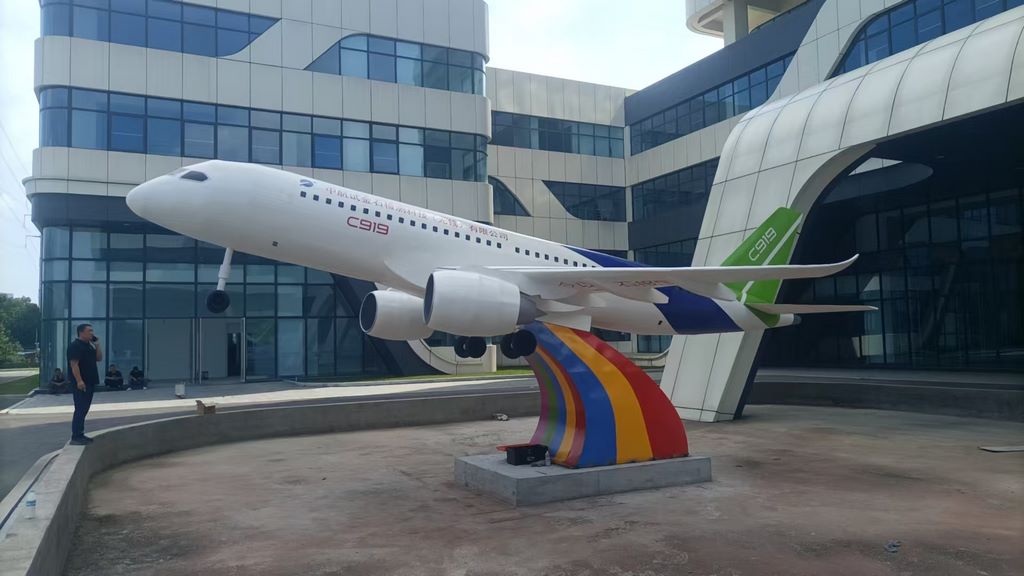
Material selection: balancing reduction and tolerance
Model core material forLight foam (e.g. polystyrene foam)Accompanying “light quantification” with “manufacturing” characteristics; and acoustic skin covering, wings, etc.High-intensity plastic sheetingZirconium (e.g. ABS plate) simulates the structural strength and taste of a real aircraft.
Foaming material is used in the body body framework to ensure that the “light” needs for outdoor handling are met by cutting, collating and quickly constructing the profile of the aircraft;
Plastic sheeting is used for receptor components such as wings, tails, etc., to achieve a "hard edge" sense by grinding, adhesion and to restore the structural details of the real aircraft.
Production process: a fine recapitulation from frame to detail
1. Framework construction: precision reduction of aeroplane structure
First you cut out the contours of the body, wings, tails, and then go through the twilight.Thermal melt.It binds the parts and forms the aircraft “bones”. In doing so, it is necessary to compare the size of a real aircraft repeatedly (e.g., the length of the aircraft, the extent of the wings, the height of the tails) to ensure that the framework ratio is consistent with the actual aircraft.
Detailed shaping: breakthroughs from shape to God
Wings and tails: Cutting the three-part structure of the wings (inner, middle, outer) on plastic sheeting and making “inner skeletons” with wood bars to enhance the strength of the wings; and emulating the anti-shock designs of real aircraft by sticking little bamboo on the front edge of the wings.
Getting up and getting up.: The use of colour plastics to regulate landing frames to ensure support intensity and display excavation through colour matching (e.g., rainbow colour); the support frames are reinforced by metal frames to ensure that models are stable under outdoor wind and ground shocks.
Identification and Text: With No stickers.The markings "C919 " "CSAIR" are pasted to simulate the painted text of the real aircraft; the body number "B-001F" is reduced by hand-written simulators to make the details more authentic.
Post-treatment and top colour: from model to art Change
Milling and cleaning: "Bed colour" for top colour
Steams, plastic surfacesMulti-layer grinding.(b) Zirconium (coarse grinding and polishing), removal of cutting marks and stings, smoothing of the surface as the paint of a real aircraft, and complete cleaning with alcohol after grinding, removal of oil and dust to ensure even colour.
Colouring: Reverting the true coating logic
Underground: Spray firstWhite underpaint, to fill the small pore of the surface and to enhance subsequent paint;
A lacquer.: Sub-regional spray based on actual aircraft coatingGreen (wing), white (body), blue (tail)(a) The main tone of the thorium, which requires multiple checks of colour homogeneity to avoid colour differences;
Painting: Last sprayHigh light varnishZirconium, which increases the varnish glossy while forming “protective membranes”, enhances the anti-UV, corrosive properties and prolongs outdoor display life.
IV. Outdoor protection: making the model “affordable”
To cope with the outdoor sun and rain, the model requires additional protection:
Surface protection: I'll spray another one outside the paint.Anti-UV coating(a) zirconium, slowing the ageing of the paint;
Structure consolidation: Pre-burial reinforcement, preventing the dumping of models by external forces such as strong winds and earthquakes;
Regular maintenance• Quarterly inspection of model paints, structural connections, timely re-painting and reinforcement to ensure long-term stability.