
Modeling of rotary-wing drones
I. Pre-preparation: materials and tools
Producing a rotor drone model requires the preparation of materials and tools. ZeniumMaterialsOn the side of the argon, the main body selects light-quality, processable foams (e.g., EVA foam, robust, plastic); hard-quality plastics (e.g., PET plates, high strength, wear resistance); metal poles (e.g., stainless steel or aluminium alloy, support); and marking stickers (used for returning original body text, pattern). ZeniumToolsIn the case of platinum, it is required to be a scissor, scissors, thermo-melted gun, sandpaper, acrylic pigment (with white, grey, red, black, etc.), hair pen, palette, canteen (for later colour).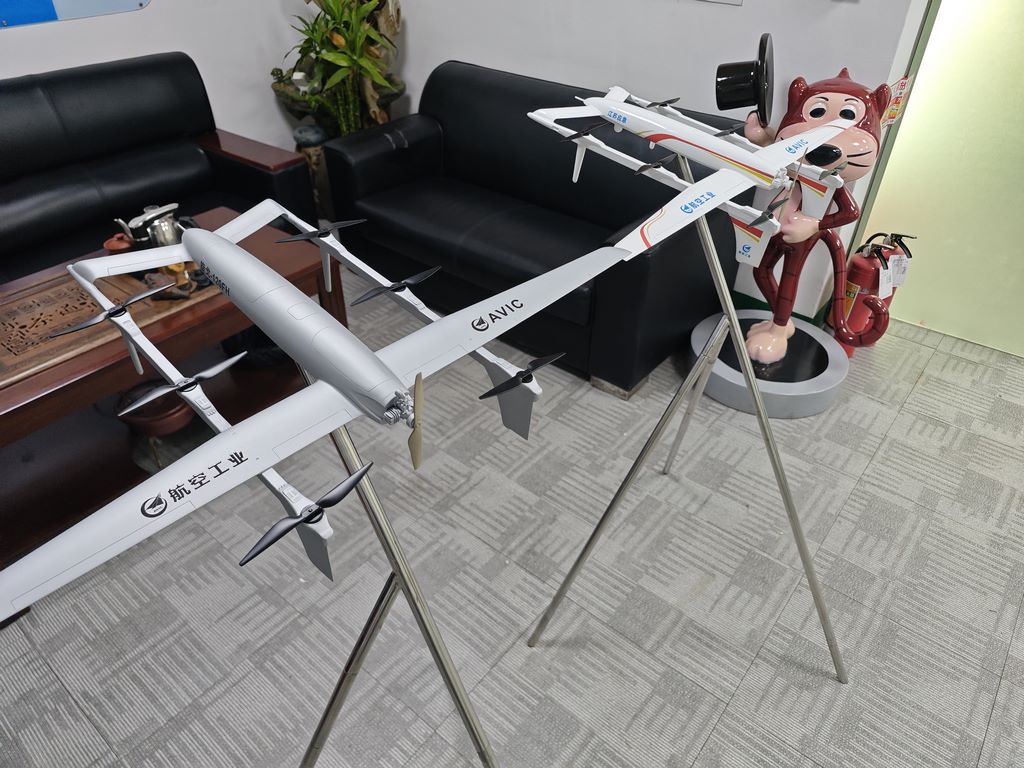
Production process: step-by-step reduction structure
1. Body shape
Cuts the foam out of the main body contours, refers to the flow-line structure of the real drone, and fixes smooth arcs with a work knife. If markings such as “AVIC” “Aviation industry” are to be restored, a pencil can be used to lighten the outline on the foam sheet and then a thermo-melt will fix the sticker to ensure clarity and accuracy of the text.
2. Wings and rotary wing installation
Wings: The plastic sheet cuts out the wing shape, the edge is polished with sandpaper, it is fixed with thermal smelting glue and adjusted to the reference drone.
WingsZirconium: Plastic slices of rotor blades, metal poles for rotor axes, which are glued to the aeroplanes with thermal melting glue, are installed to match the direction of the rotation to the true drone.
3. Arrays and detail processing
Metal poles are made of support racks, which are fixed with thermal molten glue at the base of the fuselage to ensure that the model is firmly displayed. If the metal sense of the original shelf is to be restored, the silver acetylene pigmentation may be applied lightly at a later stage.
Post-treatment: colour and detail grinding
1. Synthesis
The body mass is painted with white acrylic paint, which, after drying up, is shaded with grey paint (simulating the photo layer of the real drone), followed by red paint to draw the body stripes, black paint to draw edges and reinforce the visual comparison.
2. Details
The marking of the edges of the sticker to be filled with black paints and to remove rubber marks;
(b) Silver paints for rotor blades if they are metal-sensitive; and plastic colours if they are plastic-sensitive;
Light spray paint with a canteen to simulate a true drone ' s mute or bright surface.
IV. REPRESSION CONTROL: THE CURRENT COLONIAL OF 90% RETURN
We need to focus on Zen in production.Structure (sized and location of fuselage, wings, rotary wings), Identification Details (text, resolution of pattern), Colour MatchZirconium (the main tone of the fuselage, striped color and reference drone). The goal of 90 per cent reduction is achieved through the process logic of “plastic-to-color” “step-to-detail” to ensure that the model is at a visual and structural level back to real drones.