
Combat aircraft modelling programme (approx. 90 per cent reduction)
Production process
Combat aircraft modeling is subject to tiding."Step by step, layer by layer"The logic of the platinum, from the core structure to the detail decoration, layers of propulsion to ensure its restoration.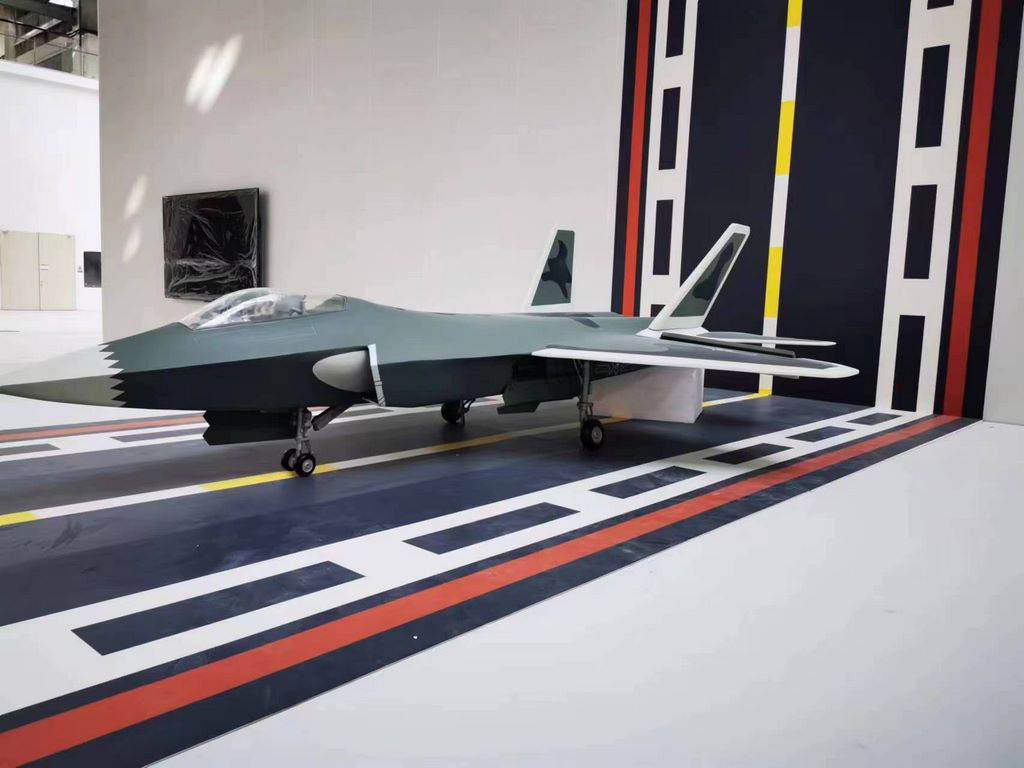
1. Bottom structure
Bones and bodyzirconium: Core frameworks such as airframes, wings, tails, etc., are constructed using light alloys (e.g. aluminium, titanium alloys) or high-strength resins, which are constructed through a process of precision cutting, welding or binding. Repeated comparison of machine photographs is required to ensure that the ratio, radians and real aircraft are consistent (e.g., the current-line-type, double-tailed layout of the aircraft in the picture).
Key widget interface: Components such as landing gears, compartments, vents, etc. use the method of “separated + precise docking” to complete the details of the individual components individually (e.g. wheeled rim texture of the landing gear, transparent glass sense of the compartment) and then to bind to the subject through a brake, dice or light glue to ensure that the structure is strong and the appearance is unmistakable.
2. Add pipe and detail
Pipe Selection: Selection of materials based on plume size, function (e.g. hydraulic tubes, wires) - plumeIlssy.Zirconium (soft and easy to bend, with Zirconium Mask Operation); coarse lined ZirconiumCopper wire.Zirconium (multi-wire wires can be tied directly, thin copper wires can be strapped); Zirconium is used where bend is requiredMetal fabricZirconium (which can be used to extract copper wire from the middle for large radians).
Revert Details: Reference is made to the direction of the warplane ' s pipeline in the picture (e.g., the airway, the lower wing line) and to the means of pasting it, such as slings, pliers, etc., to ensure that the route is consistent with the actual warplane. At the same time, specifics such as nails, seams, etc. (e.g. simulation of nails with small pieces of metal, grinding of metallic senses with fine sandpaper).
3. Joint line processing
The model collages with a "column line" (industrial lacerations) and uses a "polymer"The sandpaper's covered in water.Twilight, completely flatten. The grinding takes place in multiple stages, with rough and fine grinding, to avoid damage to the surface and to “sweetly connect” parts of the airframe, wings and so on.
Material selection and characteristics
The material needs to be balanced with “regression” and “operability”, with the following core material:
Subject Materials: Light-quality alloys (e.g. aluminium, titanium alloys) or high-strength resins, the former being lightweight, high-intensity and suitable for large structures; the latter being easy to process, low-cost and suitable for detailed components.
Pipeline material: Welded Cess (soft and easy to bend), copper wire (multiple wires can be used directly), metal knitting lines (large radians bent), lined lines (sorted large lines).
Details: Small metal pieces (simulated nails), fine sandpapers (carrying lines), transparent resins (seat glass), metal platings (reflection details on wing edges).
III. Post-treatment and topography
The later stage is the key to the "return" and needs to pass through.Layer spray, detail hand painting, ageing treatmentSteps such as twilight to change the model from a model to a warplane.
1. Painting basis Colour
Bottom Colour Spray: Spray the grey as the background and enhance the focus and hierarchy of the follow-up colour.
Main Colour Spray: Based on the main color of the aircraft in the picture (e.g., dark ash, light blue, etc.), select a model paint corresponding to the colour, with multiple thin sprays (after each layer has been dried through) to ensure that the colours are even and no flow marks.
2. Details and stickers
Handmade Details: Colouring of the fine hand with a pen, etc., to simulate the mass of the parts of a real fighter aircraft (e.g. metal glitter of a lever, typography of the dashboard).
Poster application: Wing number, force identification, etc. text/form, usedWater stickerIt's fine to paste, it's clear and it's neat.
3. Old-age and qualitative treatment
It's old.: Following dilution of paints with corroded + ivory black paint, randomly scrubbed the surface of the model, highlighting the details, increasing the sense of hierarchy and simulating traces of the use of real fighters.
Metal sense 笔 笔 笔Very light cleaning.Metals, such as the edges of the wing, the vents, and so forth, are shown to reflect the light and reflection of the metal.
IV. 90 per cent realization logic
Through the "Oxy"Structure accuracy (bones + components interface) + detail enrichment (pipeline + nails) + process precision (collide grinding + layer spraying)The Triple Guarantee allows the model to be “scaled, modeled, detailed” at a high level with a real fighter. For example:
Structurally, acoustic radians, wing chording fully match the original machine;
In detail, the direction of the line, the distribution of nails and the real aircraft are not significantly different;
Colours and tastes, through old, metal-sensoring, make the model “like a jet that has just come out of the hangar”.