
High Iron Train Modeling Case: Renaissance Team Demonstration Model
The case is carried by a 1-32-scale Renaissance motor group model, which reproduces modern high iron flow-line appearances and fine details through a precision production process, focusing on the accuracy of the design and marking systems of the car body industry, leading to approximately 90 per cent physical recovery.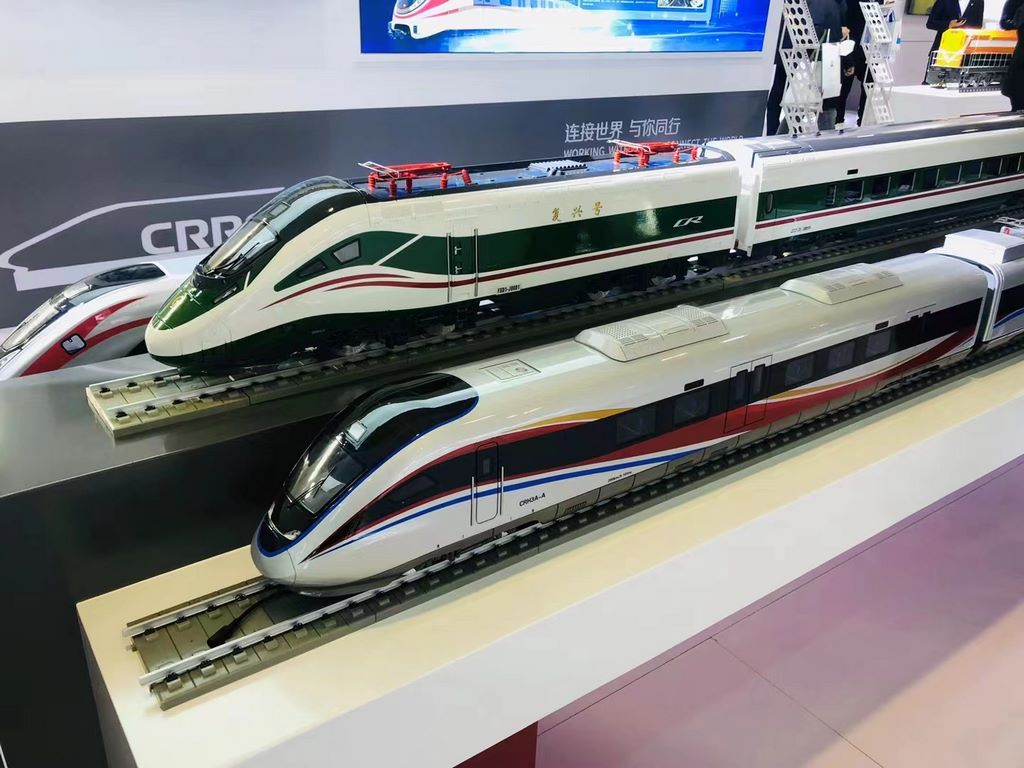
Material selection and car construction
The main body is formed using zinc aluminum alloy to ensure a sense of weight and structural stability. The epoxy resin plastic was used in the front-flow line in part, with five grindings of polishing to form a seamless face. The windows are shaped by a 2 mm macboard with a 2 mm vacuum and a dark blue membrane-proof interior. The chassis shifts to a nylon+bite composite to ensure that the suspension system is both heavy and flexible. The orbital base is selected to outsource ABS engineering plastics to ensure that the platform is flattened.
Precision assembly processes
The "Step Modularization" assembly programme consists of three main modules, first, of trains by front, power and trailer. The head is assembled with special attention to the seamless embedding of front windshields with the body, with a mini-plug to maintain an equal suture of 0.1 mm. Positioning moulds are used to ensure that all wheels are in contact with orbital surfaces. The compartment connections use a hidden magnet-sucking structure that ensures integrity and enables segment presentation. The electrocutor is made of stainless steel etchings and lifts are performed through springs.
III. Painting process
Implementation of a seven-layer coating system:
1.
Bottom treatment: white epoxy base paints sprayed throughout the vehicle and scratch marks removed by 1,200 perm
2.
Colorbelt partitions: use of lasers to cut the precise partition of the covering, first spray the main white and then dry the second cover after 72 hours
3.
Colour implementation: Chinese red, gold and techno-blue sprayed three times, adding 5% of platinum per layer of paint to enhance the sense of quality
4.
Decoding: Production of Renaissance and CR markings using silk-based printing techniques, manual repair of edges
5.
Painting protection: overall amino oil sprayed and polished after 48 hours of solidification
Detailed presentation techniques
The focus is on the details of the high iron features: the interior of the window is covered with a thin print covering, and the seat layout and frame structure are reproduced. The headlight group uses micro-LED guidance strips for real lighting and guides light through 0.3 mm fibre-optic catheters. Underground equipment uses photographic carvings for additional tube details, and brake surfaces for cast iron processing. The roof insulation is made of transparent resins, with internal additions of metal guidance to simulate real structures.
Overall impact integration
In the final phase, overall coordination was carried out: graphite powder was used to scrutinise the base of the vehicle to simulate the running dust, and the wheel slightly sharpened the ground floor of the metal. The edge of the window is enhanced by a small amount of black laundromat, and the car number sign "CR400AF" uses water-reprinting decal to achieve integration with transparent paint. Shows the orbits for old treatment, weathered wood colours are partially coated on the pillows, and the top of the tracks is polished with metallic polishing.