
Chemical equipment model custom manufacturer, industrial equipment modeling plant
Industrial equipment modeling for full process recording
I. Project context and objectives
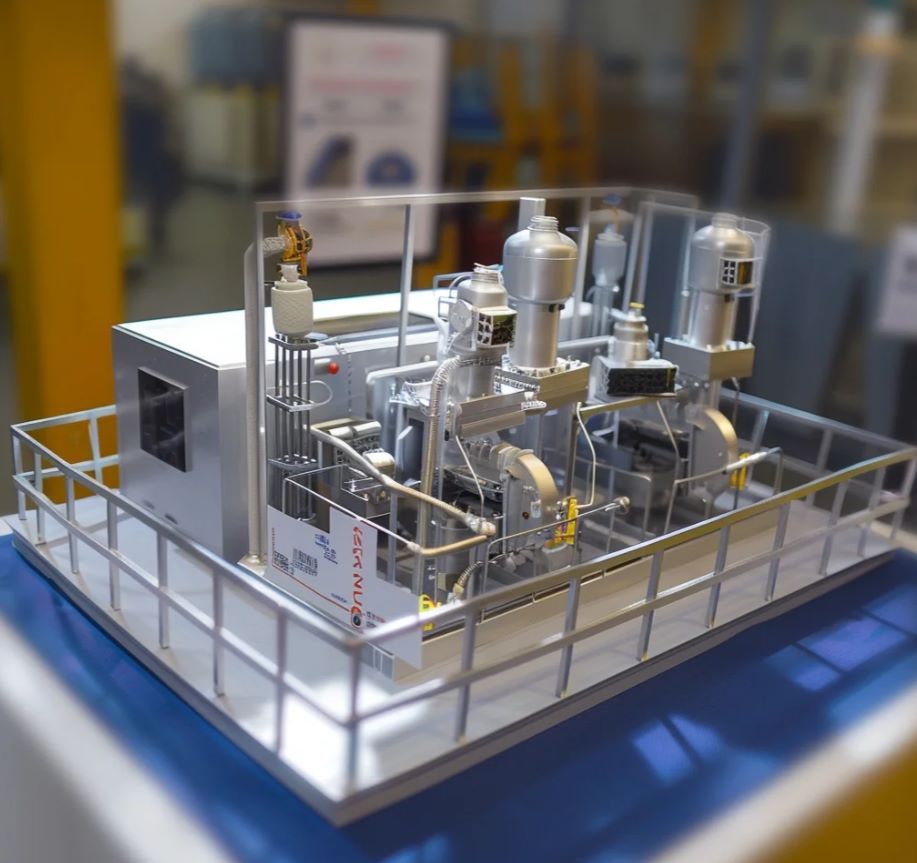
This model of industrial equipment is based on a prototype of a chemical plant ' s core response unit, requiring the reduction of the equipment ' s piping layout, mechanical structure and sense of industrial quality to over 90 per cent overall. The model will be used for display at the Enterprise Fair, with both visual precision and durability.
Core production process
Main Structure Form
Produced using "division modularization": decompose the equipment into four main modules, which are split into sub-seasons, pressure containers, piping groups, and control tables, and are then shaped with lasers from ABS plates to ensure that structural dimensions vary by 0.5 mm.
Complex curvature parts are combined with manual carvings using 3D printing (photo-sensitive resin material), such as valves, French connection points, etc., which are turned over through silicone moulds.
Pipeline system restored.
The lead lanes are made of copper troughs (ranging from 3 to 15 mm in diameter) and the branch pipe is thermalized by flexible PVC tubes, with a fixed direction angle through a special kit.
Connections are made of brass, which is processed by numerically controlled carbeds, and the surface car removes a real screw structure to ensure that the interface is physically consistent.
Mechanical structural strengthening
(b) A stainless steel skeleton of 304 inside the bearing area, and welding points are polished;
Transferable parts (e.g. valve wheel) are designed to be rotateable using micro-axis.
Criteria for selection of materials
MasterABS engineering plastics (high-intensity, easy to process), brass (pipe connections), aluminum (framework structure)
Supplementary material: epoxy resin (filling seams), atomic ash (surface repair), Yakli (enrichment transparency)
Special handling: pressure container internal lined blocks to enhance modeling stability
IV. Surface treatment process
Basic treatment
The whole model is grinded through the 800-2000 sandpaper steps, eliminating the print layer and the seams;
Spray cans of bottom paint (grey water-filled soil) to check surface defects and partially to repair the soil.
Industrial quality presentation
The main device is coated with multiple layers of dumming paint (RAL 7035 industrial ash), with pipes coloured by medium type:
Blue (cycle water system)
Yellow (process gases)
Red (high temperature steam)
Corrosion effects are addressed by "sweeping + dry cleaning": first, the dent of a deep-coloured shampoo and then the dry cleaning of metal edges with silver powder.
Identification system restored
(b) The printing of security alert signs using water-reprinting techniques;
The dashboard scale simulates real readings by laser engraving transparent Aclik+backlight LED.