
Boat modelling case — 1:50 scale business customization model
A 1:50 scale demonstration model has been customized for a yacht business for use in exhibition rooms and exhibitions. Direct client supply3D design drawingsThe plant, based on photo-sensitized resin (high accuracy details) + ABS (structural support) composite materials, combined with 3D printing and abbreviation processes, was delivered within 45 days and reduced to over 90 per cent, with core processes as follows: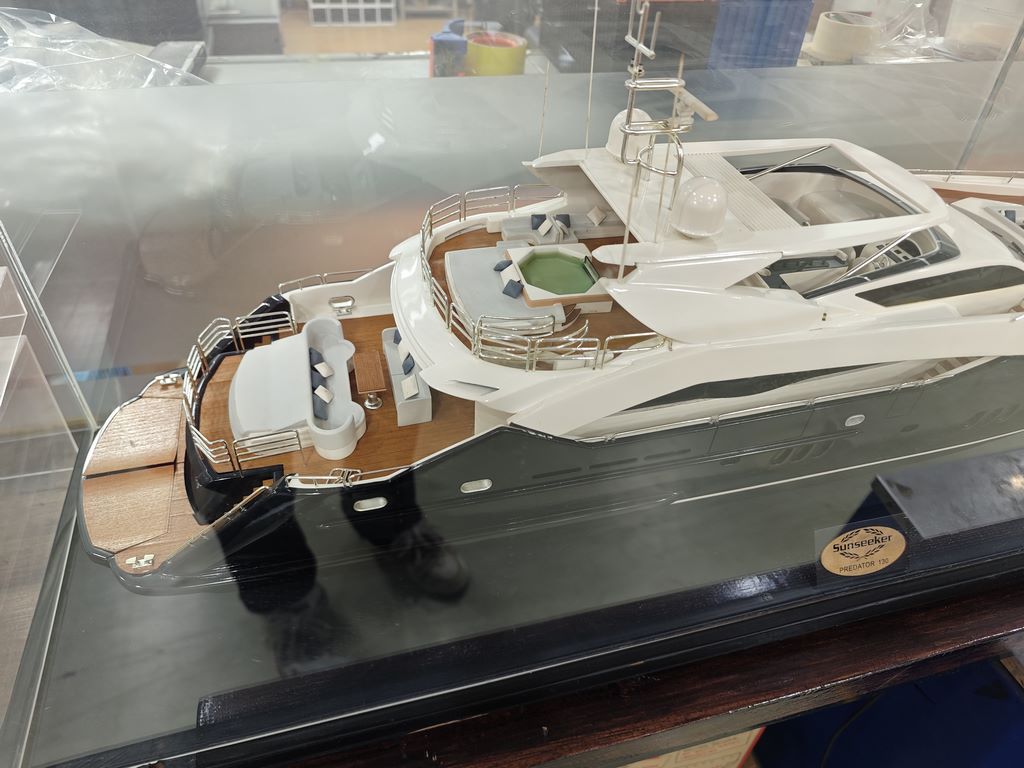
Data interface - client 3D drawings directly produced
The 3D drawings provided by the client (including hulls, cabin layout, detail dimensions) are the core basis. Plant passes.Professional software (e.g. Geomagic)Light quantification of drawings, extraction of key parameters (e.g., radian radius of the hull, length of side window) and simultaneous generation:
•
Data on photo-sensitized resin components(high precision details such as vessel casings, propellers, bow windows, etc.);
•
ABS Structure Data(Framework, deck floor, etc.)When the data is confirmed by the client, direct import of 3D printers and abbreviations avoid secondary mapping errors
Material fit-up - precision matching widget function
Select the division between photo-sensitive resin and ABS based on the parts function indicated in the drawing:
•
Luminosine: used to mark the "high accuracy reduction" area in the drawings (e.g., outer surface of the ship's shell, propeller leaves, side window frames) - - The resin is luminous (simultaneous yacht paints are luminous) and gives clear details of 0.05 mm-grade drawings (e.g. paints, handwriting);
•
ABS: Area for “mass/structure” in drawings (framework, deck floors, internal support) - high intensity (anti-transport vibration resistance), shock resistance (high frequency use in adaptation halls) and low bulk emulation costs.
Core production - 3D printing + Apostille efficiency Land
Based on client 3D drawings, the plant quickly achieves volume production using a combination of "High-Accuracy Printing + Size Aggression":
1.
Photo-sensitive resin component production:
Shells, propellers, etc.SLA light solidification 3D printerDirect printing - Printers read STL files of client 3D drawings, solidified on a 0.05 mm layer by layer, without needing to open a model; after printing it is cleaned with alcohol (de-sterilized resin) + secondary solidification (enhanced hardness), the surface fineness fully matches the drawing requirements.
2.
ABS Structure Process:
Structures such as framework, deck base passABS Note ModelQuantities - The moulds are processed according to the CNC of 3D drawings (equipment ± 0.1 mm) of the client, at a plastered temperature of 230-250°C (assuring material mobility), and deformed after cooling, the ABS components are equal to the size of the drawings.
IV. Assembly and later - Revert drawing details
1.
Accurate assembly:
The luminous resin casings (printed by drawings and curved data) are docked with the ABS framework (formulated by drawing structure data) through the positioning hole/snail hole indicated by the drawings, and workers check key sizes against the drawings (e.g., the hull and frame gap of 1 mm) to ensure that the structure is consistent with the original ship.
2.
Surface and Colour Restoration:
•
Photo-sensitized resin components: grinding by "dum/high" area difference (e.g., mid-hull high-light, marginal-dumb light) on drawing paper using 400-2000 sandpapers and sprayingTransparent UV paint(Improving shaving resistance) and reducing the paint quality indicated in the drawings;
•
ABS component: Following flame treatment, paint matching (coloured by the customer), manual presentation of critical areas (e.g., window frames) and matching drawing design, as required by the drawing "Metallic chrome plating" "old wood deck".
3.
Function Authentication:
Functional modules such as " Openable hatches " ", " projectile windows ", which are marked in the drawings, are assembled in a moving structure (e.g., mini-comparable pages, LED lamps) designed in the drawings to test the opening angles (with an error of ±1° with the drawing label) and the lightness (in line with the drawing parameters) to ensure that the functions are consistent with the design.