
Case of modeling of engineering trucks: scene of automatic unloading of trucks
The case is carried by a 1:24-scale project self-loading truck model, which reproduces the mechanical structure and functional functions of modern engineering vehicles by finely crafting them. The production focused on the demonstration of the robust engineering characteristics of the truck, the operational functions of the self-loading facility and the visible industrial coating, which resulted in the physical reduction of about 90 per cent.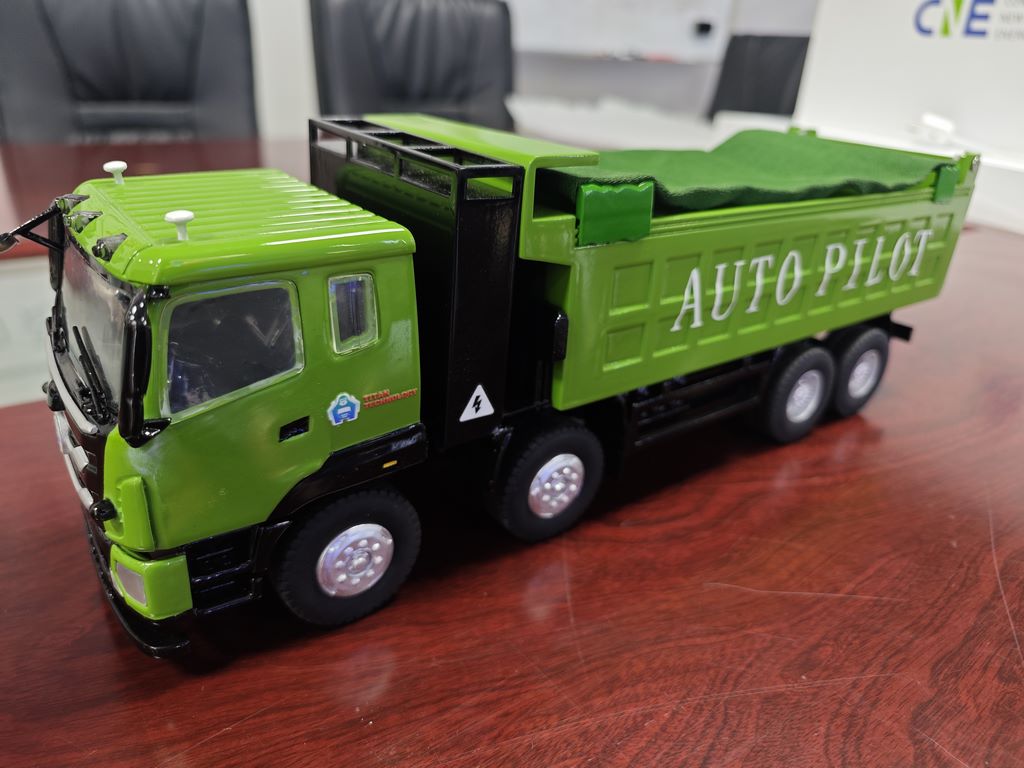
Material selection and basic production
The main body of the vehicle was spelled in ABS engineering plastic sheet form, with a 2 mm stainless steel bar embedded in the sorghum to enhance carrying strength. A modular design is used for the fights, with 1 mm polystyrene on the floor and additional horizontal reinforcement details on the sides. Hydraulic lifting institutions are made of brass tubes combined with etchings to achieve real mobility. A chair and operating table with wood engraving is added to the driver ' s room, and the windows are shaped with 0.8 mm transparent occult. Tyres are selected with high-flex rubber and wheeled thallium for secondary processing to enhance details.
Precision assembly processes
A "mechanical priority" assembly programme is used: the chassis transfer system and hydraulics are completed before the upper structure is assembled. Precision chains are used to ensure the accuracy and reliability of the lifting angle at the point where the fight is connected to the frame. The hydraulic poles are installed with an activity surplus of 0.8 mm and a spring is added to the piston to simulate the real pressure structure. The driver's room and chassis are fixed by magnetic insulation and can be shown separately. All the slabs are treated in thermal bends and are perfectly radical.
Professional paint system
Standard for coating of engineering machinery:
1.
Bottom processing: grey base paints throughout the vehicle, smooth surfaces obtained through grinding of 1,500 sandpapers
2.
Main coating: Cover colouring with a visible green main project colour and drying with a black bumper
3.
Marking: Exact reduction of AUTO PILOT by custom water stickers and de-sorting of edges into car body
4.
Details are colored: rim sprays are coated with chromium silver, and a grey wear line is added to the tyre side wall
5.
Protection coatings: overall photo-painting, balancing colour saturation with mechanical Sensor.
Detailed presentation techniques
Focus on the characteristics of the engineering vehicles: add a printer dashboard film to the driver ' s room and make a sense of rubber on the wheel. A smooth-lined road is laid inside the bar, with additional hydraulic pipe details at the bottom. The headlight group is made of microtransparents, with silver reflectors added internally. Post-vision mirrors are replaced by metal pieces to enhance authenticity, and rain scrapers are finely made with etchings. The pyrotechnic lifts are partially shown to add hydraulic oil stains to enhance mechanical authenticity.
Professional ageing
Moderate use of traces:
1.
Work marks: dry-cleaning of metal grey representation material inside the bar
2.
Oil stains: Simulation of oil stains with transparent brown-colored detergent around the hydraulic interface
3.
Dust effect: accumulation of mixed dust at the bottom hanger to demonstrate the site operating environment
4.
Metal wear: dry-cleaning of silver grey at pedals and arms, displaying a high level of use