
Truck gift model development case: brand customized van model
The case is carried by a 1:20-scale customized van model, which reproduces the commercial appearance and brand characteristics of modern logistics vehicles through precision production. The production focused on the representation of vehicle flow line design, the precision reduction of business markings and the visual impact of commercial coatings, leading to an actual reduction of about 90 per cent.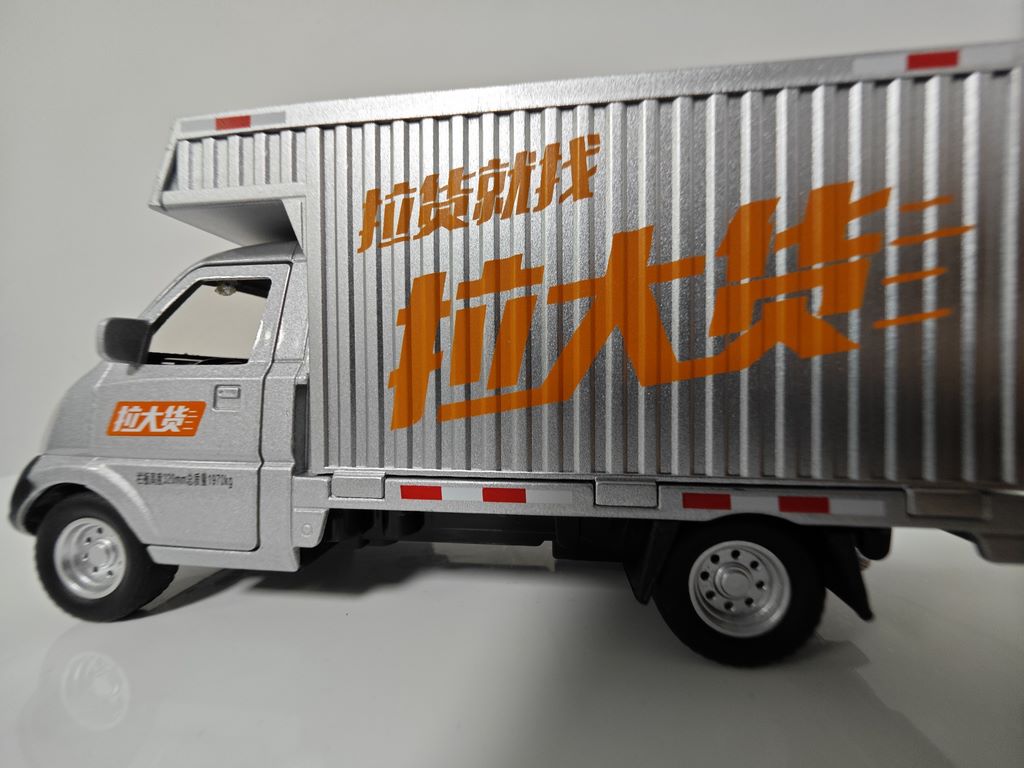
Material selection and basic production
The main body of the vehicle is formed with zinc alloy pressure to ensure sufficient weight and structural stability of the model. The section of the car was formed using 0.8 mm cold-rolled steel plates, which were processed through a bending machine to produce a standard compartment structure. The beam of the chassis is made of stainless steel, which guarantees the carrying capacity. The car windows are convulsed with 2 mm organic glass with more than 93% transparency. The wheel uses high-precision rubber plating plastics, and the wheel plating is used to enhance the metallic sense.
ii. Precision production processes
The production process using "Framework Priority": first the structural assembly of the chassis and frame is completed, then the skin is covered. The car connects to the cabs using microlinks to make the displays available. The roof reinforcements are made using the etching technique to accurately recreate the original design details. Minor components, such as rear-view mirrors, are engraved in copper rods to ensure stability through ad hoc glue fixation. All seams are filled with atomic ash, which has been sharpened three times to a seamless effect.
Professional paint process
Implementation of a seven-layer coating process:
1.
Surface pre-treatment: car-wide epoxy base paint, finely polished through 2000 mesh
2.
Base colour spraying: Equal coverage of silver grey metal paints and maintenance of 0.1 mm even thickness using electrostatic spraying techniques
3.
Marking location: use of laser locator to accurately mark the cover and ensure accurate location of the pattern
4.
Orange coating: three high saturated orange paints with 24-hour intervals
5.
Painting protection: overall amino-photo oil sprayed to form a protective layer after 72 hours of natural solidification
IV. Detailed processing techniques
Focused on business characteristics: the body text uses silk-net printing techniques and the edges reach 0.1 mm accuracy. Light gray spraying of inside windows simulates privacy glass effects. The doorknob is chromium plating to enhance the quality of detail. Car vents are made of etchings to maintain an even distribution of the holes. Part of the chassis is sprayed with deep gray and the exhaust is treated with high temperature oxidation.
V. Quality control measures
Establishment of a rigorous quality-checking process: Ensure that the size error is less than 0.5 per cent through a 3-D scan against the original vehicle data. Colour differentials are tested under the standard light tank to ensure consistency. (c) Conduct vibration tests to verify structural strength and simulate the transport environment. Finally, dustless packaging is used to prevent surface cuts.