
Case of Smart Equipment Modeling: Mobile Low Air Early Warning System Demonstration Model
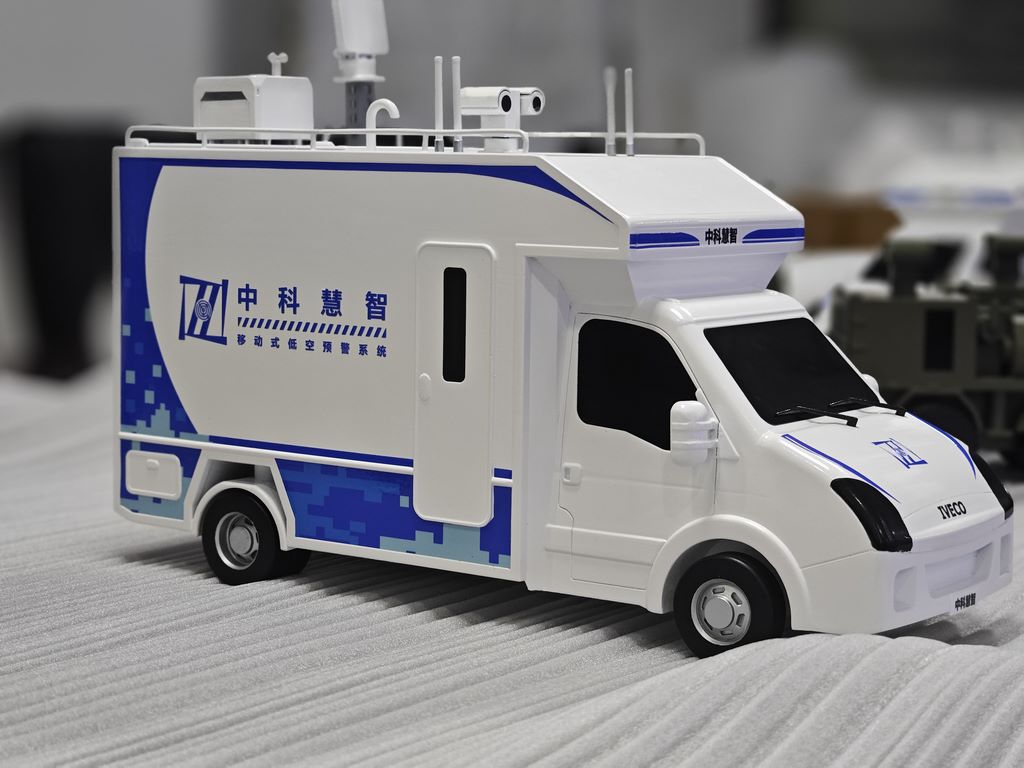
The case is carried by a 1:18-scale mobile low-altitude early warning system vehicle model, which reproduces the professional appearance and functional features of high-tech equipment through sophisticated manual production. The production focused on the unique configuration of special vehicles, the specialized coating programme and the fine reduction of roofing equipment, leading to a physical reduction of about 90 per cent.
Material selection and basic production
The main body of the vehicle is designed to shape the contours of a fluid-type cab using a high-intensity ABS engineering plastic sheet. Part of the car is based on the use of wood panels to ensure structural stability. A composite structure is used for the roof equipment platform: the base layer is 2 mm of the maccoboard and the upper layer equipment is made of fine 3D resin printout. Antenna arrays are formed by a combination of copper wires and etchings to ensure the structural strength of small components. The window uses a 0.5 mm transparency PET film with light grey spraying inside to achieve a one-way visualization.
ii. Precision production processes
Production process using "Strengthening": First the chassis and trunk main structure is completed and then the roof equipment system is installed at the top. The equipment platform is equipped with positioning kits to ensure that radar and cameras remain horizontal. The door can be opened using a mini-comparable page connection to add the console details internally. The top fence is made of 0.8 mm copper rods by hand, and welding points are finely polished. The earth is filled with epoxy at all seams, with five grindings resulting in seamless effects.
Professional coating programme
Implementation of standards for the painting of scientific and technical equipment:
1.
Bottom treatment: white water floors painted throughout the vehicle and smooth surfaces extracted from 2000 eye water
2.
Main coating: Cover colouring, first white main paint, then dry and then laser-cut covers to locate blue decorations And...
3.
Marking: the Chinese logo and the English logo "NVECO" using high-level water reproduction techniques
4.
Discrepancies of equipment: light gray spraying of radar masks on top of the vehicle and infrared filtering of cameras with black bottoming points Colour
5.
Protection treatment: overall spraying of light protection paint to ensure lasting colour stability
IV. Detailed processing techniques
Emphasis is placed on the technical equipment characteristics: the roof alert radar uses transparent resins to make masks and internal metal grid details. The LED screen reproduces the pixel dot effect by using ultra thin print membrane techniques. The navigation equipment antennas are chromium plating, enhancing metallic feel. The doorknob is made of metal pieces and black sheet details are added to the edge of the window. The wheel rims are carefully coloured and the tire wall is marked with wear marks.
V. Special effects treatment
Use of intelligent detail: add micro-LED beads to the radar cover, simulate the working state of the equipment. Ventilating vents are made using etchings to maintain an even distribution of the net. The equipment connection line is made of 0.2 mm paint line and is accurately reduced to the original cable layout. The roof equipment platform adds smoother texture to operate pedals to produce wear and tear effects.